
A child head bump singapore is one of those parenting moments that makes your heart lurch. A toddler topples off the sofa, a school-age child collides during play, or a little one slips near the void deck, and suddenly you are trying to stay calm while checking they are alright. The good news is that most head bumps in children are minor and heal on their own. The important part is knowing the warning signs that mean you should not wait, and acting quickly when they appear. This is general information only, not medical advice.
First Moments After a Head Bump
Take a breath. Your calm helps your child settle, which makes it easier to tell how they really are. Comfort them first, then take a look.
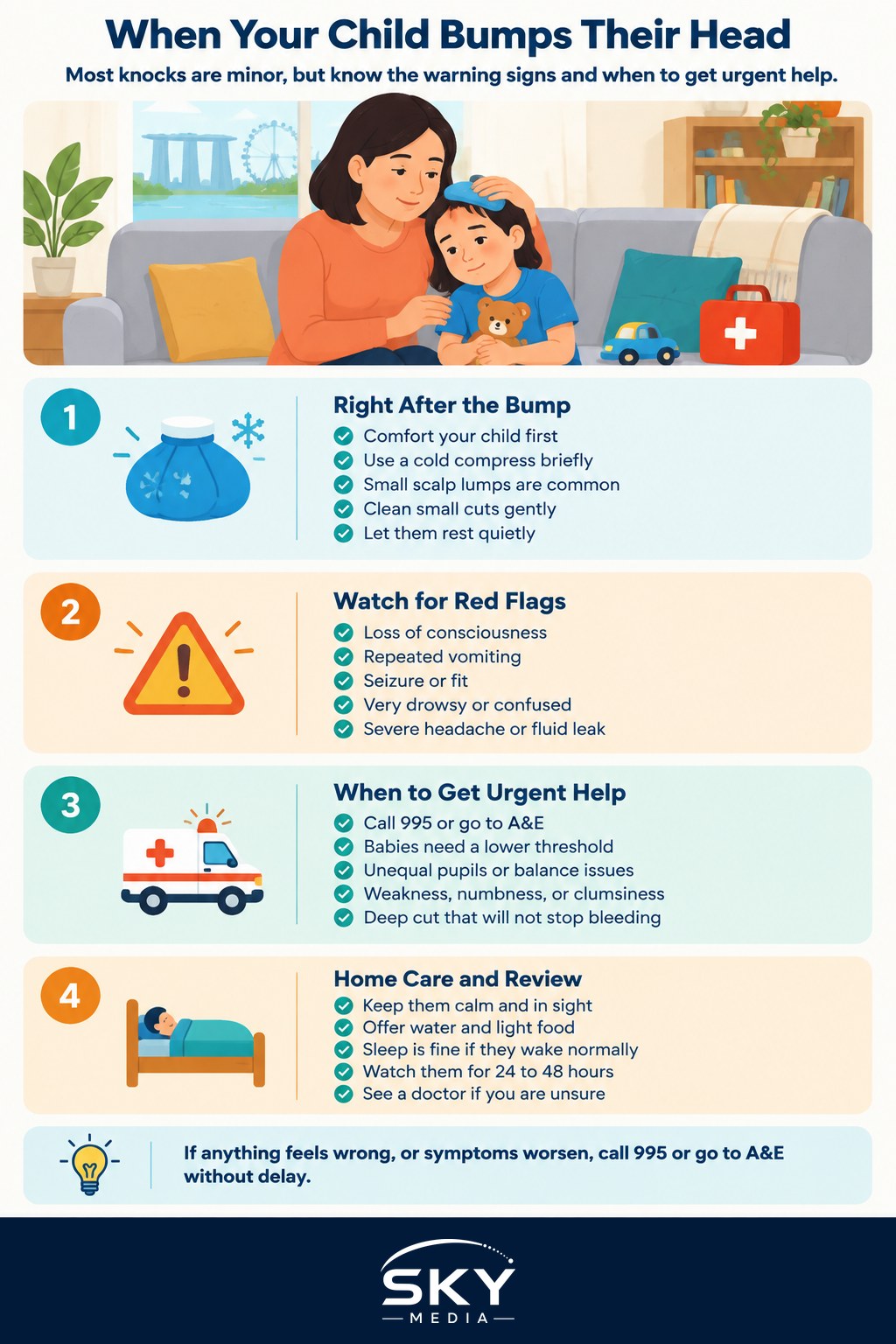
For a minor knock, you can gently apply a cold compress or a cloth-wrapped ice pack to the area for short periods to help with swelling. A soft egg-shaped lump on the scalp is very common and, on its own, is usually not a sign of anything serious, since the scalp bleeds and swells easily. Small cuts to the head can also look dramatic because they bleed a lot, so clean and gentle pressure often settles them.
After the initial upset, watch how your child behaves. A child who cries at first, then calms down and goes back to playing, eating, and talking normally is generally reassuring. Keep an eye on them over the next day or so, including overnight, and trust your instincts. You know your child best, and if something feels off, seek medical advice.
Avoid giving any medicine without proper guidance, since some can affect how you interpret symptoms, and speak to a doctor or pharmacist if you are unsure. Let your child rest quietly rather than diving straight back into rough play.
Red-Flag Signs That Need Urgent Care
Some signs mean you should not wait and see. If your child shows any of the following after a head injury, call 995 or go straight to A&E:
- Any loss of consciousness, even briefly, or difficulty waking them.
- Repeated vomiting.
- A seizure or fit.
- Unusual drowsiness, confusion, or not behaving like themselves.
- A worsening or severe headache that does not ease.
- Clear or bloody fluid leaking from the nose or ears.
- In a baby, a bulging or tense soft spot on the head.
Other worrying signs that warrant urgent medical attention include weakness, numbness or clumsiness, slurred or unusual speech, unequal pupil sizes, problems with vision or balance, a fit, or a deep cut that will not stop bleeding. A head injury from a significant height or a fast impact, such as a hard fall or a road accident, also deserves prompt medical assessment even if your child seems alright at first.
For babies and very young children who cannot tell you how they feel, have a lower threshold for getting checked. If you are ever in doubt, it is always better to have a doctor take a look. In a true emergency, calling 995 or heading to A&E is the right call, and no one will think you overreacted.
Watching at Home and When to See a Doctor
If there are no red flags and your child seems well, you can usually watch them at home. Keep them calm and within sight, offer sips of water and light food if they want it, and let them rest. It is fine for them to sleep, and you do not need to keep waking a settled, normally rousable child through the night. What matters is that if you do check on them, they rouse and respond as usual.
Over the next 24 to 48 hours, keep a gentle eye on them. Milder symptoms such as a mild headache, feeling a bit off, or being a little more tired can appear after a knock and often settle. However, if any symptom worsens, if new red-flag signs appear, or if you simply feel increasingly worried, do not delay. Contact a doctor, or go to A&E if the signs are urgent.
For anything that is clearly not an emergency but still needs a professional opinion, such as a bump that is not settling or a child who seems generally unwell, arrange to see a doctor. If you are weighing up whether to head to the hospital or your usual clinic, our guide on when to take your child to A&E vs GP can help you decide. It is also worth having the basics ready before you ever need them, which is where our overviews of family first aid and emergency preparedness and childproofing your home in Singapore come in useful.
Most head bumps end with a cuddle, a cold cloth, and a child who is soon back to their usual self. Keep the red flags in mind, watch your child over the following day, and trust your instincts. If you notice any warning sign, or you are seriously worried, call 995 or go to A&E without hesitation, and see a doctor for any injury you are unsure about.
Frequently Asked Questions
Is it safe for my child to sleep after a head bump? Usually yes. If there are no red flags, a settled child can sleep, and you do not need to keep waking them. If you check, they should rouse and respond normally. Seek urgent help if they are hard to wake or confused.
Why does the lump on my child’s head get bigger after a fall? Scalp bumps can swell quickly because the area is rich in blood vessels, so a growing egg-shaped lump is common and often harmless. A cold compress may help. See a doctor if the lump is large, soft or boggy, or your child seems unwell.
Should I take my baby to the doctor after any head knock? Be more cautious with babies, who cannot say how they feel. Have a doctor check a baby after a fall from height, a hard knock, or if there is a bulging soft spot, vomiting, unusual drowsiness or crying that will not settle.
What symptoms can appear a day or two after a head bump? A mild headache, tiredness or feeling off can appear and usually settle. Worsening headache, repeated vomiting, confusion, a fit or new weakness are not normal. Seek urgent care for these rather than waiting.
How can I prevent head bumps at home and at the playground? Pad sharp corners, use gates and window safety measures, and keep children off furniture edges. Supervise climbing and wet floors. Helmets help when cycling or skating. Our house layout and constant supervision matter more than any one gadget.
Official sources: HealthHub
Further reading: Flat Head Syndrome and Your Baby · Fractures and Sprains in Kids: How to Tell When It’s More Than a Bump · Managing Nosebleeds in Children