
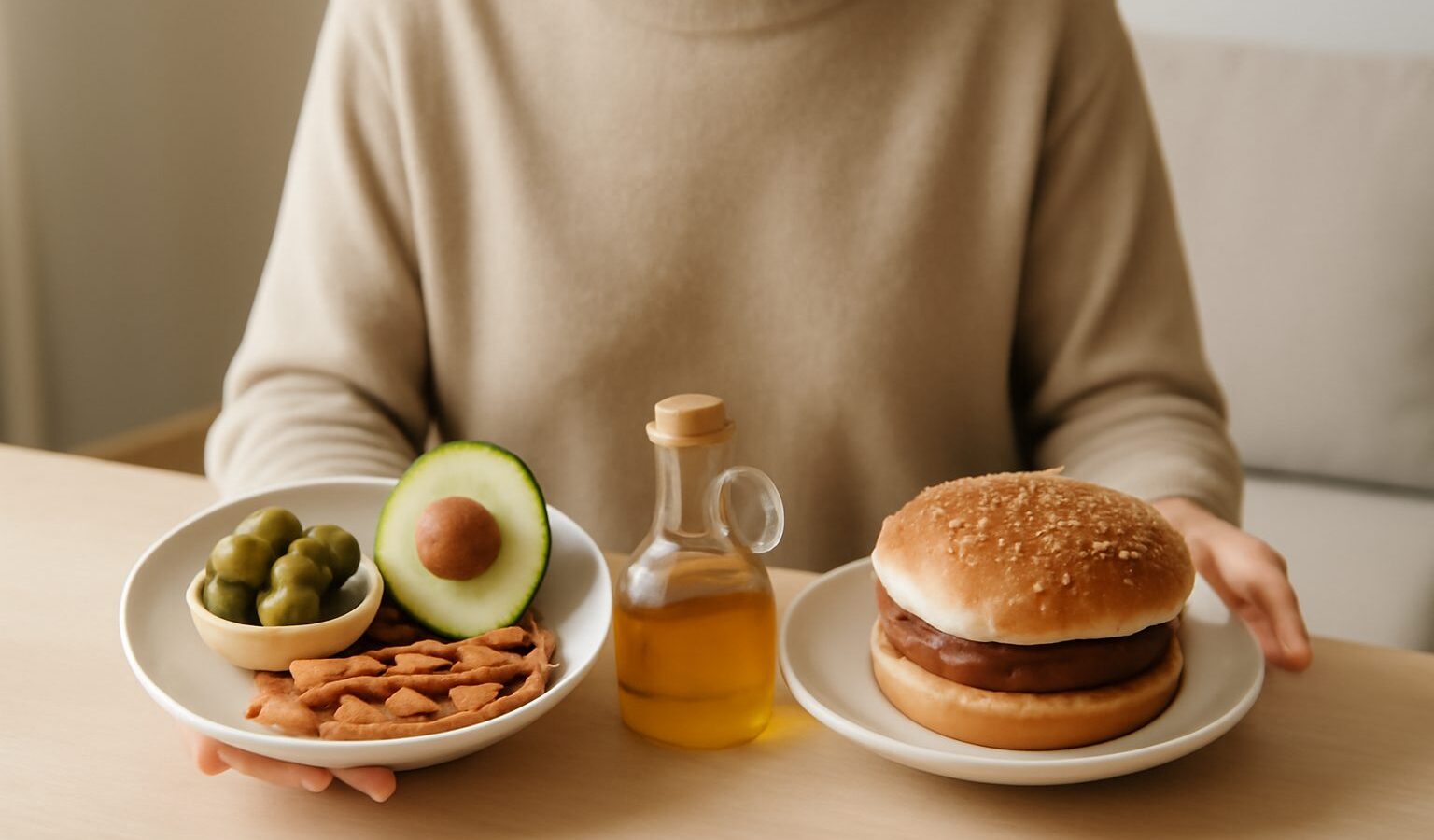
For years, fat was treated as the villain of the dinner table, and low-fat everything filled supermarket shelves. The truth is kinder and more interesting. Fat is a nutrient your body genuinely needs, and the real question is not whether to eat it, but which kinds and how much. Understanding healthy fats vs unhealthy fats helps you cook, order and snack with a lot less guilt and a lot more sense, whether you are frying an egg at home or picking a hawker stall on a busy weekday.
This is general information to help you make everyday choices, not medical or dietitian advice. If you have a heart condition, high cholesterol, or another health concern, or you are planning a big change to how you eat, please speak to your doctor or an accredited dietitian for guidance that fits you.

Why Your Body Needs Fat At All
Fat is one of the three macronutrients, the big categories of nutrients that give us energy, alongside protein and carbohydrates. Beyond energy, fat helps your body absorb certain vitamins (A, D, E and K), supports your cells, and carries much of the flavour and satisfaction in a meal. That feeling of a dish being rich and filling often comes from its fat, which is one reason plain low-fat food can leave you reaching for a snack an hour later.
So the goal is not to fear fat. It is to be a little choosier about the type. Broadly, dietary fats fall into unsaturated fats, saturated fats and trans fats. The first group is the one to lean into, the second is fine in moderation, and the third is the one worth avoiding wherever you reasonably can. If you want the wider picture of how fat fits with protein and carbs, our guide to understanding macronutrients sets out the basics.
The Fats Worth Enjoying
Unsaturated fats are the ones most often described as heart-friendly, and happily they are all over Singaporean kitchens and menus.
- Oily fish such as salmon, mackerel, sardines and the humble ikan kembung sold at wet markets. These carry omega-3 fats that many of us do not eat enough of.
- Nuts and seeds, from peanuts and cashews to sesame and the ground nut sauce in a good satay or rojak. A small handful is a genuinely useful snack.
- Avocado, now easy to find in supermarkets, plus the oils pressed from plants such as canola, sunflower, soybean, peanut and olive.
- Tofu, tempeh and soy, which are woven through local cooking and bring useful fats along with plant protein.
You do not need exotic or expensive ingredients to eat well here. A piece of steamed fish with rice, a handful of nuts in the afternoon, or tau huay instead of a fried snack all quietly add better fats to your day.
The Fats To Keep An Eye On
Saturated fat is not poison, but most of us do best treating it as a sometimes food rather than an everyday habit. It turns up in fatty cuts of meat, chicken skin, butter, ghee, full-cream dairy, and very generously in coconut milk, which means our beloved laksa, curries, rendang and nasi lemak lean rich. Palm oil, common in fried and packaged foods, is another source.
Trans fat is the one to genuinely limit. A small amount occurs naturally in some foods, but the type worth avoiding is the industrially made kind, historically found in some margarines, shortenings and the oils used for repeated deep-frying. It is the reason very greasy fried snacks and certain commercial pastries and biscuits are best kept as occasional treats. When a packaged product lists “partially hydrogenated” oil, that is a signal to put it back.
None of this means giving up the food you love. It means noticing how often the rich stuff appears and balancing it across the week, rather than at every single meal.
Healthy Fats vs Unhealthy Fats: A Quick Comparison
The table below sums up the practical differences. Treat the “everyday” column as your default and the others as smaller supporting acts.
| Feature | Enjoy most days (unsaturated) | Keep moderate (saturated) | Limit (industrial trans) |
|---|---|---|---|
| Common sources | Oily fish, nuts, seeds, avocado, most plant oils, tofu | Fatty meat, chicken skin, butter, coconut milk, palm oil | Some deep-fried snacks, certain pastries, “partially hydrogenated” oils |
| State at room temp | Usually liquid | Usually solid | Often in processed solids |
| Everyday role | Main source of fat | Smaller, occasional part | Best avoided where you can |
| Local example | Steamed ikan kembung, tau huay | Laksa, rendang, curry | Very greasy fried snacks |
Everyday Swaps That Actually Work In Singapore
Small, sustainable changes beat dramatic overhauls that never last. A few that suit local life:
- Steam, grill or stir-fry more, deep-fry less. Choose steamed fish over fried, chicken rice with the skin removed sometimes, or a grilled item at the food court. Our piece on healthy cooking methods at home has more ideas for the HDB kitchen.
- Ask for less oil and gravy. At the cai png (economy rice) stall, request less oil, go easy on the curry gravy, and add an extra vegetable. Nobody will bat an eyelid.
- Enjoy coconut-rich dishes with intention. There is nothing wrong with laksa or rendang. Just balance a rich meal with lighter ones around it rather than eating rich every day.
- Snack on nuts, not the fried stuff. Keep a small pack of unsalted or lightly salted nuts at your desk instead of reaching for keropok or crisps.
- Read labels calmly. Look for the Healthier Choice Symbol on cooking oils and spreads, and glance at the fat listing. You are looking for lower saturated fat and no partially hydrogenated oils, not perfection.
For a fuller set of easy substitutions, our guide to healthy food swaps that work is a friendly next read.
Putting It All Together Without Obsessing
If you take one idea from all this, let it be balance rather than fear. Build most of your fat intake around unsaturated sources, treat saturated fat as a regular but modest guest, and keep industrial trans fats to a rare visitor. You still get to enjoy your favourite hawker dishes and family recipes. The shift is in the everyday pattern, not in banning specific foods.
It also helps to remember that fat is only one part of the plate. Portion size, how much you move, and your overall mix of foods matter just as much. Singapore’s Health Promotion Board offers general guidance through resources such as My Healthy Plate and the Healthier Choice Symbol, which are useful starting points if you want a simple visual to follow.
Finally, be gentle with yourself. Eating well is a long game made of ordinary choices, not a test you pass or fail at each meal. If you would like advice tailored to your health, your cholesterol, or a specific condition, an accredited dietitian or your doctor can help you build a plan that actually fits your life, your budget and the food you love to eat.
Frequently Asked Questions
Is coconut oil healthy enough to cook with every day? It is best treated as an occasional choice rather than an everyday oil. Coconut oil is high in saturated fat, so most health guidance favours oils such as canola, sunflower or olive for regular cooking. Using a little for flavour now and then is fine within a balanced diet.
Are eggs bad for my cholesterol? For most healthy people, eating eggs in moderation fits into a balanced diet, since they also provide protein and nutrients. How much suits you depends on your cholesterol levels and overall diet, so if you have high cholesterol or heart disease, ask your doctor or dietitian for personal guidance.
Which cooking oil is best for stir-frying at home? Oils that are mostly unsaturated and can handle heat, such as canola, sunflower, soybean or peanut oil, are common everyday choices. Whichever you pick, use less of it and avoid reusing oil repeatedly, as heavily reheated oil is a concern. Check labels for the Healthier Choice Symbol.
Are fish oil supplements worth taking? For most people, eating oily fish regularly is the better route, since you also get protein and other nutrients. Supplements may suit some people, but they are not a substitute for a varied diet, and they can interact with certain medicines. Ask your doctor or pharmacist before starting.
When should I get my cholesterol checked? Cholesterol usually causes no symptoms, so a blood test is the only way to know. Speak to your doctor about when to start and how often to repeat it, especially if you have a family history, are overweight, have diabetes or high blood pressure, or are over a certain age. MOH and HPB have general guidance on health screening.
Official sources: Health Promotion Board