

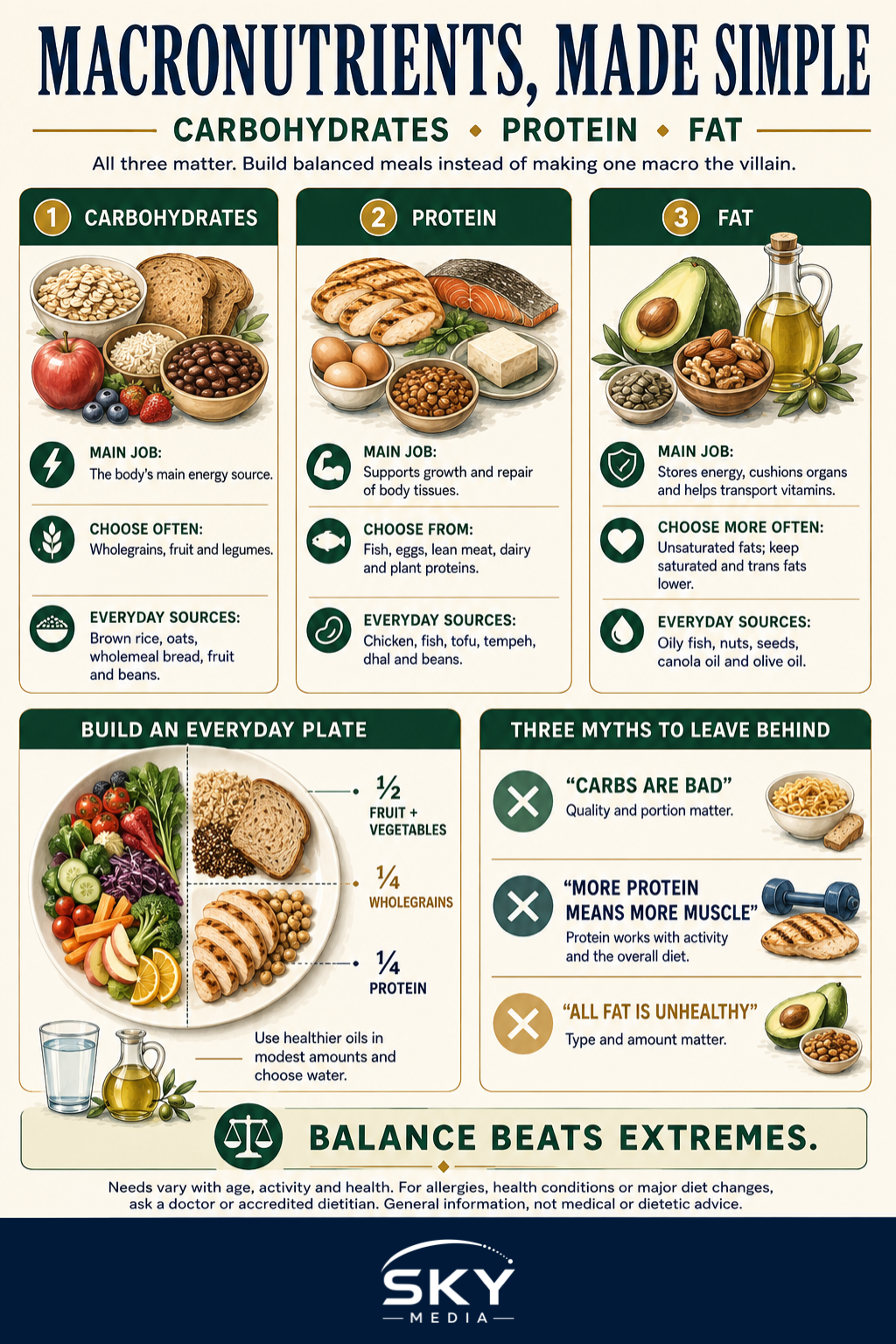
Scroll through any fitness feed and you will see people talking about “macros” as if it were a secret code. It is not. Macronutrients are simply the three types of nutrient your body needs in larger amounts for energy and building materials: carbohydrates, protein and fat. Understanding what each one does takes the mystery out of eating well and helps you make sense of your plate, whether that plate is chicken rice at lunch or a home-cooked dinner in your HDB kitchen.
This is general information to get you oriented, not medical or dietitian advice. If you have a health condition, food allergies or intolerances, or you are considering a major diet change, please speak to a doctor or an accredited dietitian who can advise for your situation.
What Macronutrients Are and Why They Matter
The prefix “macro” means large, and it refers to quantity rather than importance. You need macronutrients in gram amounts each day, unlike micronutrients, the vitamins and minerals you need in tiny traces. All three macronutrients supply energy, but they are not interchangeable, because each plays distinct roles beyond just fuelling you.
Think of them as a team. Carbohydrates are the quick and steady energy source, protein is the builder and repairer, and fat supports the slower, structural work of the body and helps you absorb certain vitamins. A diet that leans far too heavily on one while starving the others tends to leave you feeling off, whether that is sluggish, constantly hungry, or low on energy for exercise. If you are just getting started, our nutrition basics: a beginner’s guide sets the wider scene.
Carbohydrates: Your Body’s Main Fuel
Carbohydrates are your body’s preferred and most efficient source of energy, especially for your brain and for physical activity. When people cut carbs drastically, they often feel foggy and drained, which tells you how central this macronutrient is.
Not all carbohydrate foods behave the same way, though. Wholegrains such as brown rice, oats and wholemeal bread come packaged with fibre, the indigestible part of plants that slows digestion, feeds a healthy gut and keeps you full for longer. More refined choices, like white bread, sugary drinks and many snacks, tend to be digested quickly and give a sharper, shorter energy hit. Neither is forbidden, but shifting the balance towards wholegrains supports steadier energy through the day.
Fibre is worth calling out because most of us could use a little more of it. Fruit, vegetables, wholegrains and legumes are all easy local sources. To understand how different carbohydrates affect your energy and blood sugar, see understanding carbohydrates and blood sugar and, for the grain angle, wholegrains and why they matter.
Protein: The Body’s Builder and Repairer
Protein is the macronutrient your body uses to build and repair muscle, skin, hair and countless other tissues, and to make enzymes and other essential compounds. It is also very satisfying, which is why a meal with enough protein tends to keep hunger at bay longer than one without.
Singapore’s food scene makes protein easy and affordable. Fish, chicken, eggs, lean meats, tofu, tempeh, dhal, edamame and beans all count. You do not need protein powders or huge steaks; spreading modest amounts of protein across your meals is generally more useful than piling it all into dinner. Plant eaters can meet their needs comfortably by combining different plant proteins across the day, which we explore in understanding plant-based proteins.
A common myth is that more protein automatically means more muscle. Muscle is built by combining enough protein with the right activity, not by protein alone, and very high intakes offer no magic bonus for most people.
Fat: Essential, Not the Enemy
Fat spent years being unfairly cast as the villain, but you genuinely need it. Fat cushions organs, forms part of every cell, helps your body absorb the fat-soluble vitamins A, D, E and K, and adds flavour and satisfaction to food.
The useful distinction is between types of fat rather than fat overall. Unsaturated fats, found in oily fish, nuts, seeds, avocado and oils like canola and olive, are generally the ones to favour. Saturated fats, common in fatty meats, butter, coconut milk and many fried and baked treats, are best enjoyed in smaller amounts. Because fat is energy-dense, gram for gram it carries more energy than carbohydrate or protein, so portion awareness helps even with the healthier oils. For a fuller picture, read healthy fats vs unhealthy fats.
How the Three Compare at a Glance
Seeing the macronutrients side by side makes their different jobs click into place. The idea here is roles, not rigid rules or numbers, so treat this as a mental map rather than a prescription.
| Macronutrient | Main job in the body | Everyday Singapore sources | Handy portion cue |
|---|---|---|---|
| Carbohydrates | Main energy supply, especially for brain and activity | Brown rice, oats, wholemeal bread, noodles, fruit | About a cupped hand of grains per meal |
| Protein | Builds and repairs tissue, keeps you full | Fish, chicken, eggs, tofu, tempeh, dhal, beans | Roughly a palm-sized portion |
| Fat | Cell structure, vitamin absorption, flavour | Oily fish, nuts, seeds, avocado, cooking oils | A thumb-sized amount of added oils |
These cues are deliberately loose. They give you a feel for balance without any weighing or calorie counting, which suits real life far better than a spreadsheet.
Balancing Your Macros in Everyday Meals
You do not need to track grams to eat a well-balanced mix of macronutrients. The simplest approach is a plate you can picture. Singapore’s Health Promotion Board offers My Healthy Plate on HealthHub as a visual guide: roughly half fruit and vegetables, a quarter wholegrains, and a quarter protein foods, with healthier fats used in cooking. That single image quietly balances all three macronutrients for you.
A few practical moves make it real:
- At the hawker centre, pair a protein dish with vegetables and a sensible portion of rice or noodles, rather than a huge plate of carbohydrates alone.
- When ordering delivery, add a vegetable side or choose dishes that already include one, so the meal is not all rice and gravy.
- For snacks, combine a little protein or fat with your carbohydrate, such as fruit with a handful of nuts, to stay fuller for longer.
- Watch the balance over the day, not the single meal. A lighter breakfast can be balanced by a heartier, veg-rich dinner.
Beware anyone insisting you must cut out an entire macronutrient to be healthy. Extreme or very restrictive diets can leave you short on nutrients and are hard to sustain. Any big shift, especially cutting a whole group, is worth discussing with a professional first.
Putting It All Together
Understanding macronutrients is really about understanding balance. Carbohydrates fuel you, protein builds and repairs you, and fat supports the structural and absorbing work behind the scenes. You need all three, in sensible proportions, from mostly wholesome sources. No single macro is a hero and none is a villain.
Keep it simple: aim for a plate with vegetables, a wholegrain, a protein and a little healthy fat, adjust to how your body feels, and let the rest go. For advice tailored to your health, goals or any medical condition, consult a doctor or an accredited dietitian, and lean on HPB’s HealthHub for reliable general guidance. Master this one idea and most nutrition advice suddenly makes a lot more sense.