
Water heating is one of the quieter contributors to a household electricity bill. In a hot country it is easy to assume showers barely need heating, yet most Singapore homes run a water heater every day. If you are renovating, replacing an old unit or trying to cut your energy use, a heat pump water heater Singapore suppliers offer is one option worth understanding properly, alongside the familiar storage, tankless and solar systems.
This guide explains how heat pump heaters work, how they compare with the alternatives on cost and energy, and which homes they genuinely suit.
How a Heat Pump Water Heater Works
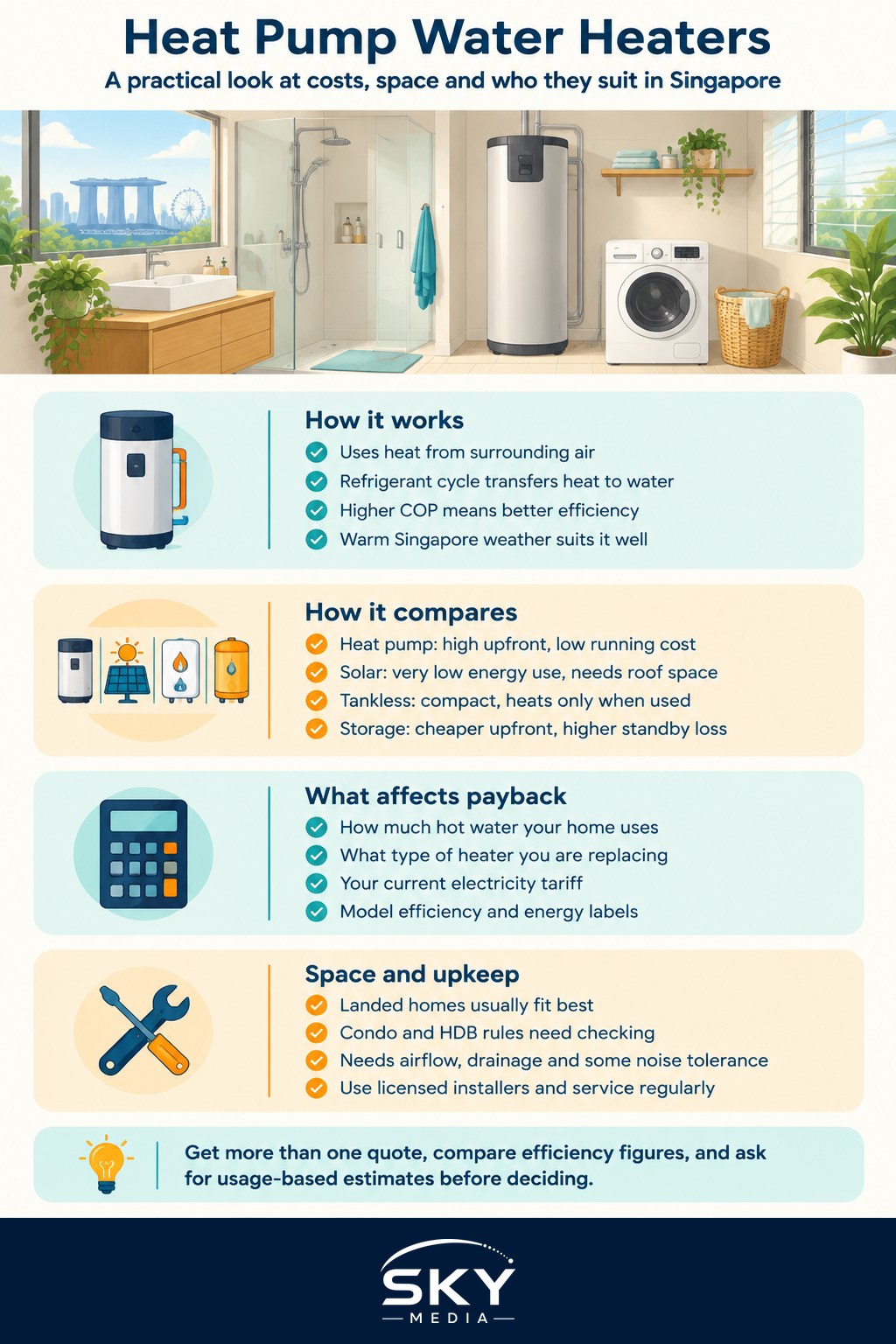
A conventional electric water heater uses a heating element, which turns electricity directly into heat. A heat pump works differently. It uses a refrigerant cycle, much like an air-conditioner running in reverse, to pull heat from the surrounding air and transfer it into the water.
Because it is moving heat rather than creating it, a heat pump can deliver several units of heat for each unit of electricity it uses. Manufacturers describe this with a coefficient of performance (COP). The higher the COP, the more efficient the unit.
Singapore’s climate suits this technology well. Heat pumps work best when the surrounding air is warm, and our year-round warmth means they do not face the cold-weather drop-off that affects units in temperate countries.
A typical system has two parts:
- A heat pump unit, which contains the compressor and fan, and needs good airflow.
- An insulated storage tank, which holds the heated water until you need it. Some models combine both in one cabinet.
Comparing Heat Pumps With Solar, Tankless and Storage Heaters
Each type of water heater has trade-offs. The table below gives a general comparison. Actual costs and efficiency depend on the specific model, your household’s usage and installation, so check product specifications and quotes from licensed installers.
| Type | Upfront cost | Energy use | Space needed | Best suited to |
|---|---|---|---|---|
| Heat pump | High | Low, very efficient | Tank plus a ventilated spot for the unit | Larger households, landed homes, renovations |
| Solar | High | Very low, with electric backup for cloudy days | Roof space for panels plus a tank | Landed homes with suitable sunny roofs |
| Tankless (instant) | Low | Moderate, heats only when used | Very compact | Single bathrooms, smaller households |
| Storage (electric) | Low to moderate | Higher, with standby heat loss | Tank in ceiling or bathroom | Multiple bathrooms, simple replacement |
A few points behind the table:
- Heat pumps and solar have higher upfront costs but lower running costs. Over many years of daily use, the energy savings can offset the higher purchase price, especially for households that use a lot of hot water.
- Tankless heaters are cheap to buy and compact, and they only use power when the tap is on. They draw a lot of power at once and usually serve one outlet each. Our guide to tankless vs storage water heaters covers that choice in detail.
- Storage heaters keep a tank of water hot, losing some heat over time even when no one is using it. Good insulation and sensible timer use reduce this loss.
- Solar heaters use the sun’s energy and suit homes with the right roof. Read more in our guide to solar water heaters for homes in Singapore.
Running Costs and Payback: What to Consider
It is tempting to look for a single payback figure, but the honest answer is that it depends on your household. Factors that affect how quickly a heat pump pays for itself include:
- How much hot water you use. A large family taking several hot showers daily benefits far more than a single person who often showers cool.
- What you are replacing. Switching from an old, poorly insulated storage heater saves more than switching from an efficient tankless unit.
- Electricity tariffs. Rates change over time, which affects savings. Check your current tariff with your electricity retailer or SP Group.
- Model efficiency. Compare published COP figures and any energy labels. Singapore’s National Environment Agency (NEA) runs energy labelling schemes for some appliances; check its website for which water heater types are currently covered.
Ask installers to give you an estimate based on your actual usage rather than a generic claim, and treat any very fast payback promise with healthy scepticism.
Space, Installation and Noise in Singapore Homes
The practical constraints are often what decide the matter.
Landed homes are usually the best fit. There is typically space for an outdoor heat pump unit and a tank, and the higher hot water demand makes the investment more worthwhile.
Condominiums may be possible, depending on the layout, available service yard or ledge space, and the rules of the condo’s management corporation (MCST). Check your by-laws and get approval before installing any external unit.
HDB flats are more challenging. Space is limited, and many flats use compact storage heaters in the bathroom ceiling or instant heaters. Any renovation work involving plumbing or external fixtures must follow HDB’s renovation guidelines, so check with HDB before planning a heat pump installation.
Other installation points to consider:
- Ventilation. The heat pump unit needs fresh air to work efficiently. A cramped, enclosed space reduces performance.
- Noise. The compressor and fan make some sound, similar to a small air-conditioner unit. Consider placement relative to bedrooms and neighbours.
- Condensate drainage. The unit produces water as it cools the air, so it needs a proper drain.
- Licensed professionals. Use licensed plumbers and electricians for installation, as the work involves both water and electrical connections.
Maintenance and Lifespan
Heat pumps have more moving parts than a simple storage heater, so servicing matters. Typical maintenance includes cleaning air filters, checking the refrigerant system and inspecting the tank and valves. Follow the manufacturer’s recommended service schedule, and keep warranty terms in mind, as some require regular professional servicing. Our guide to servicing your water heater covers the general habits that keep any system running safely.
So, Is a Heat Pump Worth It?
A heat pump water heater tends to make sense when:
- you have a larger household with steady daily hot water use,
- you live in a landed home or have suitable outdoor space with good airflow,
- you are planning a renovation or replacing an old storage heater anyway,
- you value long-term energy savings and lower emissions over the lowest purchase price.
It is likely less suitable if you live alone or as a couple with light hot water use, if space is tight, or if your building rules make installation difficult. In those cases, an efficient tankless heater or a well-insulated storage heater on a timer may give you most of the benefit at a fraction of the cost.
Whichever you choose, get more than one quote, compare published efficiency figures and ask for usage-based estimates. Small habits, like shorter showers and switching storage heaters off when not needed, cut energy use regardless of the technology.
Official sources: Energy Market Authority