
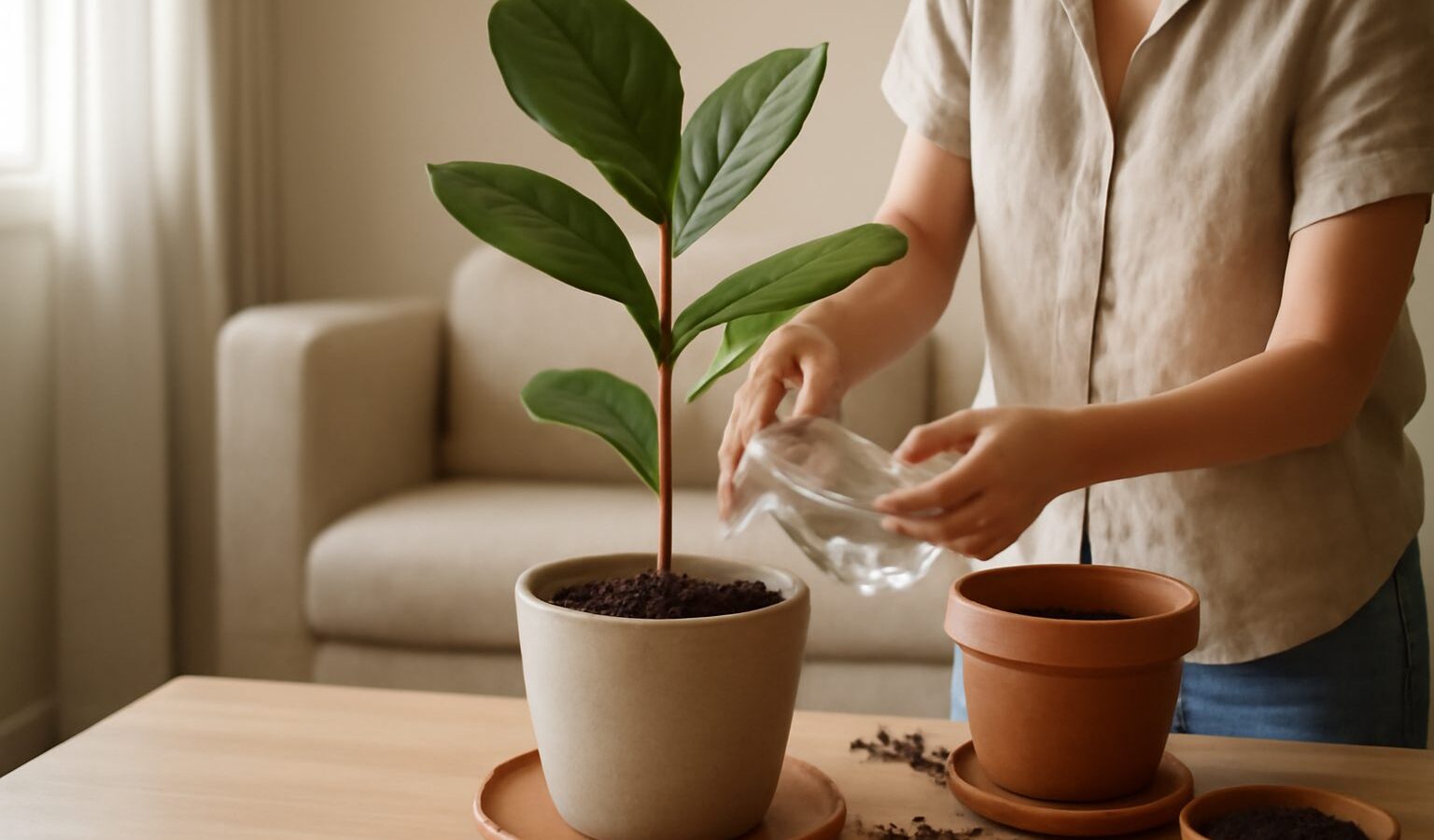
You did everything right. You gave your plant a bigger home, fresh mix, and a fighting chance to grow, and instead of thanking you it wilted, dropped a few leaves, and now looks thoroughly sorry for itself. This is repotting shock, and in Singapore it catches out plenty of well-meaning gardeners. The reassuring news is that it is usually temporary. Understanding what causes repotting shock in Singapore, and knowing what to do and what not to do, is the difference between a plant that sulks for a fortnight and one that never recovers.
What Repotting Shock Actually Is
Repotting shock is the stress a plant shows after its roots have been disturbed. During repotting, no matter how gently you work, some of the fine feeder roots that absorb most of the plant’s water get damaged or broken. Until those roots regrow, the plant simply cannot take up water fast enough to supply all its leaves, so it wilts, droops, and may shed a few of them to reduce demand. It is not dying. It is rationing.
The common signs appear within a day or two of repotting:
- Drooping or wilting leaves even though the soil is moist.
- A few older or lower leaves yellowing and dropping.
- A general limp, tired look, and a pause in new growth.
The mistake many people make is to read wilting as thirst and respond by watering more, which in fresh, moisture-holding mix can push the plant straight into soggy roots and rot. Recognising shock for what it is stops you from making it worse. If you are new to the whole process, our guide on how to repot a houseplant walks through doing it gently in the first place, which is the best way to keep shock mild.
The Recovery Routine
Once you spot shock, the most important thing is to do less, not more. A recovering plant needs stability above all else, so resist the urge to fuss, feed, or keep moving it around.
Start with light. Move the plant out of harsh direct sun into bright, indirect light. Strong sun makes a plant lose water through its leaves faster than damaged roots can replace it, which deepens the wilt. A gentler spot lets the plant hold on to what moisture it can while the roots rebuild.
Water carefully and only as needed. Keep the fresh mix lightly moist but never soggy, and always check by feeling the soil first rather than watering on a schedule. Because the plant is drinking less than usual, it is easy to overwater a shocked plant, and our note on overwatering vs underwatering your plants helps you judge the balance while the roots recover.
Then follow these principles while it settles:
- Do not fertilise. Feeding damaged roots can burn them, so wait until you see new growth before you feed again.
- Do not repot again or move it around. Pick one good spot and leave it there.
- Do not prune healthy leaves. Even a droopy leaf is still feeding the plant, so only remove leaves that have gone fully brown and dead.
- Keep it out of draughts from air-conditioners and away from hot windows, which add stress it does not need.
Some gardeners like to keep humidity a little higher around a recovering plant, which can ease the strain on the leaves. In our already humid climate this is rarely essential, but grouping plants together or keeping it out of a dry, air-conditioned room can help.
Patience and Prevention
The hardest part of recovery is waiting. Most plants shake off repotting shock within one to three weeks, and the clearest sign of recovery is fresh new growth, which tells you the roots have re-established and the plant is confident again. Until then, a stable, gently-lit, lightly-watered plant is doing exactly what it needs to do, even if it looks miserable in the meantime.
You can reduce shock next time with a few simple habits. Repot when the plant is actively growing so it recovers faster, disturb the roots as little as possible, choose a pot only one size larger rather than a huge jump, and water the plant in well after repotting to settle the roots. If a plant has been badly stressed and slides past sulking towards genuine decline, our guide on how to revive a dying plant covers the deeper rescue steps.
Repotting shock feels like a setback, but it is really just a plant catching its breath. Give it calm, steady conditions and a little patience, and in Singapore’s forgiving growing weather it will almost always reward you with a flush of new leaves and roots that are stronger than before.