

Many households have quietly dropped the home phone line in Singapore, but plenty of older residents still rely on it every day. If you or your parents are wondering whether the landline is worth keeping, the answer depends less on technology and more on habits: who calls you on it, what is connected to it, and how comfortable you are with a mobile phone. This guide is written with seniors and their families in mind. It explains what a home line is today, the alternatives, and how to make the change safely if you decide to switch.
Plans, prices and service names change often, so check current details with your telco before deciding.
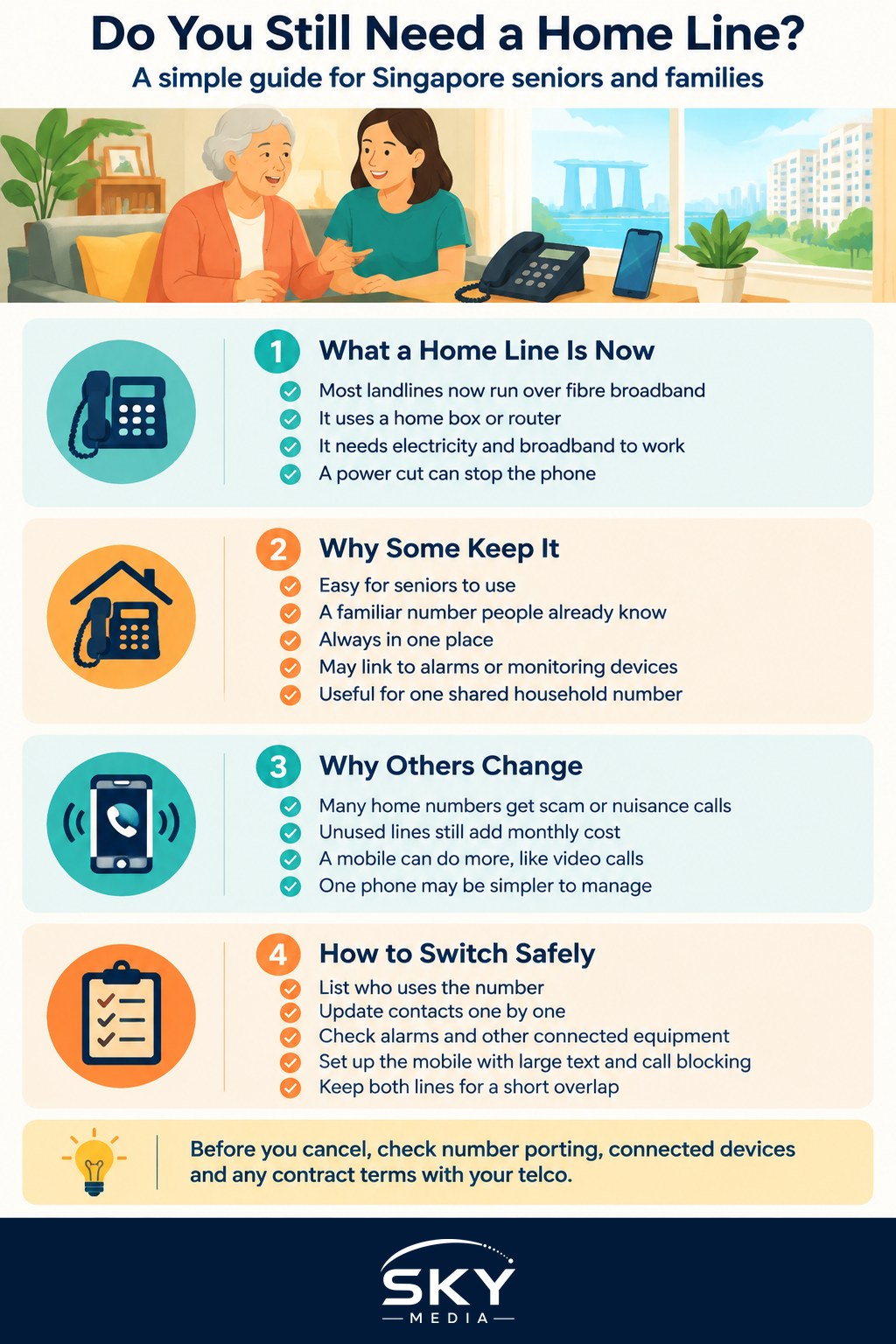
What a Home Fixed Line Means Today
The old copper telephone line that once ran into every flat has largely been replaced. In most homes, what people still call a “landline” now runs over the fibre broadband connection, through a small box or router in the home. This is usually called a fibre voice or home voice service. You plug in a normal home telephone, and it works much like before, with a fixed home number.
The key difference is that it depends on electricity and your broadband equipment. If the power goes out or the router is switched off, the home phone may stop working, unlike old copper lines that carried their own power. Many people do not realise this until they need it.
Reasons Some Seniors Keep the Landline
There are good reasons to keep a home number, and nobody should feel pressured to give it up.
- Familiarity. A large-button home phone is easy to use, with no screens, passwords or updates.
- A number people know. Friends, relatives, clinics or community groups may have used the same home number for decades.
- Always in one place. A home phone does not get lost, left uncharged or switched to silent by accident.
- Connected devices. Some homes have alarm systems, personal alert devices or older monitoring services that use the phone line. Check with the provider before cancelling.
- Shared household number. A single number that reaches whoever is at home can be useful for families with several generations under one roof.
Reasons to Drop It or Change It
On the other hand, many households find the home line rarely rings except for unwanted calls.
- Scam and nuisance calls. Home numbers are frequent targets for scam calls. If most calls are unwanted, the line may be causing more worry than help. You can learn more about scam awareness from the ScamShield resources supported by the Singapore Police Force and the National Crime Prevention Council.
- Monthly cost. Even a small monthly charge adds up over years if the line goes unused.
- A mobile does more. A smartphone can make video calls to grandchildren, receive messages from the clinic and connect to HealthHub, Singapore’s health records app.
- Fewer devices to manage. One phone is simpler than two for some people, especially if they already carry a mobile everywhere.
Comparing the Main Options
| Option | Good for | Things to check |
|---|---|---|
| Keep a home voice line | Seniors who like a fixed phone and a familiar number | Monthly charge, whether it works during a power cut |
| Bundle voice with broadband | Households already paying for fibre broadband | Contract length, what happens to the number if you change plans |
| Port the number to a mobile | People who want to keep the old number but drop the landline | Whether your telco supports porting a home number to mobile |
| Mobile phone only | Seniors comfortable with a mobile | A senior-friendly phone, call blocking, emergency contacts set up |
Number porting rules depend on telcos and the regulator, IMDA (the Infocomm Media Development Authority). Ask your telco what is possible for your specific number before you cancel anything.
Thinking About Emergencies
Emergency access is the most important part of this decision, so take it slowly.
- Emergency numbers work from mobiles. You can dial 995 for ambulance and fire, and 999 for police, from a mobile phone.
- Power cuts. A fibre voice line may not work without power. A charged mobile phone is often more reliable in that situation.
- Alert devices. If a senior lives alone and uses a personal alarm, find out how it connects. Some use mobile networks, others use the phone line. Do not cancel the line until you know.
- Who answers? If you rely on relatives to call the home phone to check in, agree a new routine first.
If you live alone, ask your family, a neighbour or your nearby Active Ageing Centre about check-in arrangements. These centres support seniors in many HDB neighbourhoods and can advise on community support.
How to Switch Safely if You Decide to Drop the Line
Moving away from a home line goes more smoothly with a short plan.
- List who uses the number. Clinics, banks, insurers, CPF records, community centres, family and friends.
- Update your contact details. Change your phone number with organisations one by one. For government records, you can update contact details through official channels such as Singpass and the relevant agencies.
- Check connected equipment. Alarms, intercoms or monitoring services that rely on the line.
- Set up the mobile well. Large text, saved emergency contacts, call blocking for unknown numbers, and the ScamShield app if suitable.
- Ask your telco about contract terms. Some lines are bundled with broadband, and cancelling early may involve a charge. Get the details before you act.
- Keep both for a short overlap. Running both for a month lets you catch anyone who still uses the old number.
Our guide to using widgets and your home screen well can help make a smartphone friendlier for first-time users, with large shortcuts to favourite contacts.
A Middle Path for Families
Not every household has to choose all or nothing. Some families keep a basic home voice line for a parent who prefers it, while setting up a simple mobile for outings and emergencies. Others give a senior a smartphone with only a few big icons on the screen. You can also turn an old phone into something useful at home: our article on setting up an old phone as a home security camera shows one way to give a retired handset a second life.
If budget is part of the decision, especially in retirement, our guide to budgeting on a fixed income in retirement can help you weigh small recurring charges like this.
Making the Decision
Ask three simple questions. Does anyone you care about still call this number? Is anything in the home connected to it? Would a mobile phone be easy and reliable for you day to day? If the answers point to the mobile, plan the switch carefully. If the home phone still brings comfort and connection, keeping it is a perfectly sensible choice. Either way, speak to your telco for current plans and terms before making changes.
Frequently Asked Questions
Will my home phone still work during a power cut? Probably not. Most home lines now run over fibre broadband through a box or router, so they depend on electricity, unlike the old copper lines. A charged mobile phone is usually the more reliable backup, and you can dial 995 or 999 from it.
Can I keep my old home number if I switch to a mobile? Possibly, depending on your telco. Some allow a home number to be ported to a mobile, but support varies, and porting rules involve the regulator IMDA. Ask your telco about your specific number before cancelling anything.
What happens to my senior’s personal alarm if I cancel the landline? It may stop working if it relies on the phone line. Some personal alert devices use mobile networks while others connect through the line, so find out how yours connects first. Check with the alarm provider before you cancel.
Are there fees for ending a bundled home voice and broadband plan early? There might be. Some lines are bundled with broadband, and cancelling early can involve a charge depending on your contract. Ask your telco for the contract terms in writing before acting, and ask what happens to your number.
How can a senior living alone stay reachable without a landline? Set up a simple mobile with large text, saved emergency contacts and call blocking, then agree a new check-in routine with family. A neighbour or your nearby Active Ageing Centre can also help with check-in arrangements. Running both lines for a month helps catch anyone still using the old number.