
Most homes in Singapore have a few things that would be painful to lose: passports, property papers, wills, jewellery, watches, gold, spare keys and backup hard drives. A home safe gives these a protected place, but not every safe protects against the same risks. Choosing a home safe in Singapore comes down to understanding what you are protecting against, picking the right size and lock, and installing it properly. This guide walks through each step.
Fire-Rated vs Burglary Safes: Know What You Are Protecting Against
The biggest misunderstanding is assuming every safe protects against both fire and theft. Many do one well and the other only somewhat.
| Feature | Fire-rated safe | Burglary-rated safe |
|---|---|---|
| Main purpose | Keeps the inside below a damaging temperature for a rated time | Resists forced entry for a rated time |
| How it works | Insulated walls, often with a fire-resistant seal | Thick steel body and door, hardened locks, anti-drill plates |
| Best for | Paper documents, certificates, photos, some media | Jewellery, watches, cash, gold, small valuables |
| Weakness | Thin steel can be pried open more easily | May not insulate contents well in a fire |
| Look for | An independent fire rating stating time and temperature | An independent burglary or security grade rating |
Many safes are sold as “fire and burglary” combined. That is ideal for most homes, but check what each rating actually means rather than trusting the label. Ratings are issued by testing bodies under specific standards, and the product should state which standard it was tested to. A generic “fireproof” sticker with no stated test is a warning sign.
For electronics and media like USB drives and hard drives, note that they are damaged at lower temperatures than paper. Some safes carry a separate data or media rating, or you can use a media-rated insert inside a larger safe. A digital backup is still wise; our guide to scanning and organising documents at home explains how.
Water damage is another real risk, whether from fire sprinklers, firefighting or a leaking pipe. Some safes are water-resistant to a stated level. If not, store documents in sealed waterproof pouches inside the safe.
Choosing the Right Size
People commonly buy a safe that feels big enough and fill it within months. Before shopping:
- List what you will store: passports, NRIC copies, birth and marriage certificates, property and insurance papers, jewellery boxes, watch boxes, cash, gold, drives.
- Measure the bulkiest items. A4 folders and document boxes need a safe whose interior, not exterior, fits them flat. Thick insulated walls make the interior much smaller than the outside.
- Add room to grow. Leave space for future documents and valuables.
- Check the shelves and trays. Adjustable shelves, drawers and door pockets help keep small items organised.
Typical size categories you will see:
- Compact or personal safes: for passports, a few jewellery pieces and cash. Small enough to fit in a wardrobe or drawer.
- Medium safes: fit A4 documents flat plus jewellery and watches. A common choice for HDB flats and condos.
- Large or floor safes: for larger collections, multiple family members, or long guns where licensed. Very heavy and need careful delivery and installation planning.
Weight matters both ways: heavier safes are harder to carry away, but also harder to deliver up stairs and onto certain floors. Ask the seller about delivery and whether the lift and corridor can take it.
Lock Types: Pros and Cons
- Key locks: simple, no batteries. The key itself must be hidden well, which defeats part of the purpose if it is kept nearby.
- Mechanical dial combination: durable and no batteries, but slower to open and the combination can be tricky to change.
- Electronic keypad: fast and easy to change the code. Needs batteries; most have an override key or external battery contact if the batteries die. Change batteries on a schedule.
- Biometric (fingerprint): very quick, good for valuables you access often. Quality varies a lot, and fingerprints may read poorly with wet or cut fingers, so a backup method is important.
- Dual locks: require two methods (for example, code plus key) for extra security.
Whatever you choose, do not use obvious codes such as birthdays, unit numbers or 123456, and do not store the override key inside the safe itself.
Where to Install Your Safe
Location affects both theft and fire protection.
Good places
- Inside a built-in wardrobe or cabinet, bolted to the floor or a solid wall. It is hidden and harder to work on.
- A low, out-of-sight spot in a bedroom or study, away from windows.
- Near a structural wall that can take anchor bolts.
Places to avoid
- Under a bathroom or near the kitchen where pipes may leak.
- In plain view of the front door or windows.
- The master bedroom’s most obvious spot, such as the bedside, which is the first place a burglar searches.
Anchoring
An unbolted small safe can simply be carried out. Most safes have pre-drilled holes for anchoring to the floor or wall. In an HDB flat, drilling into floors and walls may involve hidden pipes, wiring or concealed services, and some works need approval. Check the HDB website for current rules on renovation works, and for condos check your MCST (Management Corporation Strata Title, the condo management body) by-laws. Many safe sellers offer installation; ask whether it is included and confirm the installer will check for pipes and cables before drilling.
Families with young children or older relatives should think about who can access the safe and whether a heavy door could trap fingers. For broader home safety, see how to create a safe home for seniors in Singapore.
Buying Tips and What to Check
- Read the ratings carefully: what standard, how long, at what temperature or attack level.
- Check the interior measurements, not just the exterior.
- Ask about warranty and after-sales service, including lockout support if you forget your code.
- Confirm delivery and installation: whether they carry it in, how many people, and whether it fits your lift.
- Look for a reputable seller with clear contact details and a physical presence.
- Consider insurance. Some home contents policies have conditions or limits for jewellery and cash. Read your policy wording and ask your insurer whether storing items in a safe affects your cover.
What to Keep Inside, and What Not To
Commonly stored items:
- Passports, birth and marriage certificates, property documents, wills, insurance policies.
- Jewellery, watches, gold and small heirlooms.
- A small amount of emergency cash.
- Backup drives with family photos and scanned documents.
Keep elsewhere or make copies:
- Your will’s original might need to be accessible to others after you pass away. Discuss with your lawyer where it should be kept, and tell a trusted person where the safe and its access details are.
- Daily-use items you take out often, which tempt you to leave the safe unlocked.
- Medicines that need to be refrigerated or reached in an emergency.
A good habit is to keep a simple list of what is in the safe, stored separately. Our guide to paper and document organisation at home has tips for sorting what to keep in the first place.
The Bottom Line
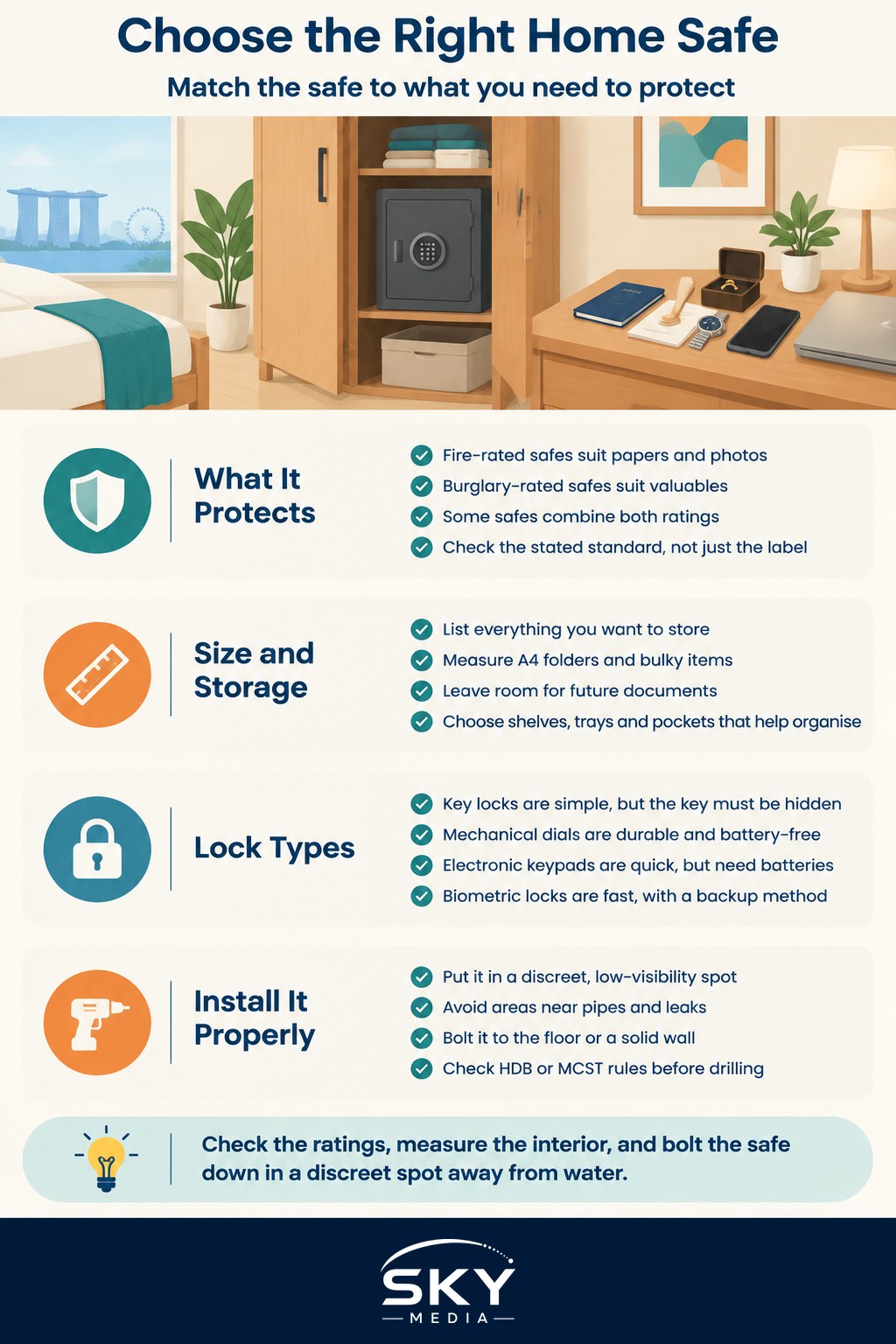
The best home safe in Singapore is one that matches your actual risks: fire-rated for papers, burglary-rated for valuables, or a properly rated combination for both. Measure the interior, pick a lock you will use correctly, bolt it down in a discreet spot away from water, and keep digital backups of your most important documents. Done right, it brings real peace of mind.
Frequently Asked Questions
Are USB drives and hard drives safe inside an ordinary fire-rated document safe? Not necessarily. Electronics and media are damaged at lower temperatures than paper, so look for a safe with a separate data or media rating, or use a media-rated insert. A digital backup stored elsewhere is still wise.
Can I drill into my HDB wall or floor to bolt down a safe? Take care before drilling, as walls and floors may hide pipes, wiring or concealed services, and some works need approval. Check HDB’s website for current renovation rules, and ask any installer to check for pipes and cables first.
Which lock type is best if I open my safe often? An electronic keypad is fast and easy to change, while a biometric lock is very quick but varies in quality and may misread wet or cut fingers. Keep a backup method, change batteries on schedule and avoid obvious codes such as birthdays or 123456.
Where should I keep the original of my will? Discuss it with your lawyer, since others may need to reach the original after you pass away. Whatever you decide, tell a trusted person where the safe is and how to access it, and keep a simple list of its contents separately.
Does a home safe affect my contents insurance? It can, as some home contents policies set conditions or limits for jewellery and cash. Read your policy wording and ask your insurer whether storing items in a safe changes your cover before you buy.
Further reading: How to Shred and Dispose of Old Documents Safely at Home