

Most Singapore homes have a drawer or box of paper that nobody wants to deal with: old bank statements, telco bills, payslips, insurance letters, expired passports and stacks of marketing mail with your name and address on them. Learning to dispose old documents safely matters because a single page can carry your full name, NRIC number, address, account numbers and signature, which is everything a scammer needs to impersonate you. This guide covers which papers to keep, which to shred, how to choose a shredder, and how to get rid of the shreds once you are done.
If you are still at the stage of sorting and filing, start with our guide to paper and document organisation at home, then come back here when you have a “to destroy” pile.
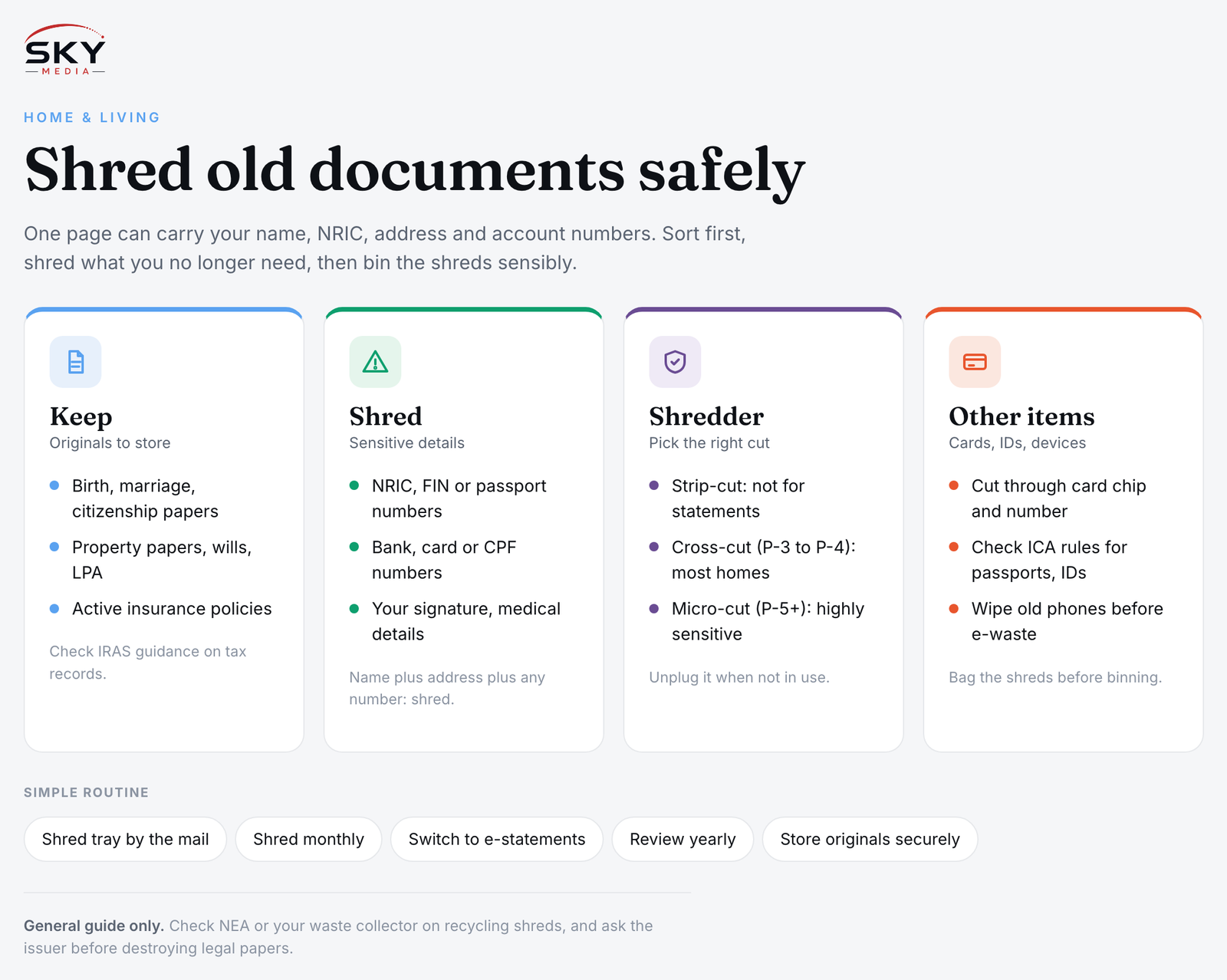
Decide What to Keep Before You Shred Anything
Shredding is permanent, so sort first. A simple rule is to keep originals that prove identity, ownership or legal status, keep financial records for as long as you might need to show them, and shred the rest once the information is captured elsewhere.
Keep (in a safe, dry place):
– Birth, marriage and death certificates, adoption papers and citizenship or PR documents
– Property documents such as your HDB or private property purchase papers, title documents and lease agreements in force
– Wills, powers of attorney (including a Lasting Power of Attorney) and trust documents
– Educational certificates and professional licences
– Insurance policy contracts that are still active
– Warranty cards and receipts for big-ticket items still under warranty
Keep for a period, then shred:
– Tax-related records and supporting receipts. Individuals and especially the self-employed should check IRAS guidance on how long records must be kept, because the period can differ depending on your situation.
– Payslips and employment letters, at least until you no longer need them for loan or visa applications
– Medical bills and claims paperwork until the claim is settled and you are sure there is no dispute
– Bank and credit card statements, unless the bank already offers the same statements online for the period you might need
Usually safe to shred once checked:
– Duplicate statements you can download from your bank’s app
– Pre-approved credit offers, loan flyers and marketing letters with your name and address
– Old utility and telco bills once paid and not needed as proof of address
– Expired cards (cut these separately, see below)
When in doubt about a legal or financial document, ask the issuing body or a professional before destroying it. Our guide on how to scan and organise documents at home explains how to keep a digital copy so you are not relying on paper alone.
What Counts as Sensitive Information
You do not need to shred every scrap of paper. Focus on anything that contains:
- Your NRIC, FIN or passport number, even partially
- Bank account, credit card or CPF-related numbers
- Your signature
- Your date of birth together with your name and address
- Login IDs, one-time PIN letters or security questions
- Medical details, test results or prescriptions
- Children’s school documents with their full name, school and class
A useful habit is to shred anything where your name and address appear together with any number.
Choosing a Home Shredder
Home shredders are rated by how small they cut paper. Many manufacturers use the DIN 66399 security levels, labelled P-1 to P-7, where a higher number means smaller particles. Check the packaging or product listing for the level.
| Shredder type | Typical security level | How the shreds look | Best for |
|---|---|---|---|
| Strip-cut | P-1 to P-2 | Long thin ribbons that can be pieced back together | Non-sensitive paper only, not recommended for statements |
| Cross-cut | P-3 to P-4 | Short confetti-like pieces | Most households: bills, statements, payslips |
| Micro-cut | P-5 and above | Tiny particles, very hard to reconstruct | Highly sensitive papers, home offices, anyone handling client data |
Other things to compare when you shop:
- Sheet capacity. A small home shredder may take only a few sheets at a time. If you are clearing years of paperwork, a higher capacity saves a lot of time.
- Run time and cooling. Cheaper units overheat after a few minutes and need to rest. Look for the stated continuous run time.
- Bin size. Micro-cut shreds compact well, but a small bin fills quickly when you do a big clear-out.
- Extra slots. Many models also shred credit cards, and some handle CDs and DVDs.
- Safety features. If you have young children or pets, look for an auto-off when hands or paws come near the slot, and a lock switch. Always unplug the shredder when not in use.
- Noise. In a small HDB flat, a quieter motor makes a difference, especially in the evening.
Remove large clips and binder rings, and do not feed more than the stated sheet count.
Ways to Destroy Documents Without a Shredder
If you only have a small pile, or you are waiting for a shredder to arrive, there are other options:
- Hand tearing. Tear account numbers and signatures into small pieces and split them across different rubbish bags.
- Soaking. Soak papers in a pail of water until they turn to pulp, then squeeze and bin the pulp.
- Shredding scissors. Multi-blade scissors give roughly strip-cut security, so combine them with tearing.
- Redaction stamps. Useful for envelopes and labels, but not for full statements.
Burning paper at home is not a good idea in Singapore flats and estates. It is a fire risk, causes smoke for your neighbours and may breach local rules. Stick to shredding or pulping.
Plastic Cards, IDs and Other Non-Paper Items
Expired credit and debit cards, membership cards and old access cards often carry your name and a chip. Cut through the chip and the number in several directions, then throw the pieces away in different bags. Many shredders have a card slot for this.
For an expired or cancelled passport or identity document, follow the instructions of the issuing authority, since some must be returned or will be cancelled officially rather than thrown away. ICA (the Immigration and Checkpoints Authority) sets the rules for Singapore passports and identity cards, so check its website before destroying anything it issued.
Old phones and drives need a proper wipe or factory reset before going to an e-waste channel, since deleting files does not remove them.
Disposing of the Shreds Responsibly
Once your papers are shredded, you still need to get rid of the shreds sensibly:
- Bag the shreds. Loose shreds blow around chutes and bins and can make a mess for cleaners. Put them in a tied paper or plastic bag.
- Recycling. Shredded paper is still paper, but loose small particles can be harder to sort. Check the guidance on the recycling bin or from your estate’s public waste collector or the National Environment Agency (NEA) on whether shredded paper is accepted and how it should be bagged.
- General waste. If you are not sure the shreds will be accepted for recycling, or the paper is greasy or laminated, put it in your normal rubbish.
For other household items that need careful disposal, see our guides on disposing of old medicine safely and disposing of broken glass.
Building a Simple Shredding Routine
The easiest way to stay on top of paper is to deal with it little and often:
- Open mail near a “shred” tray so sensitive paper you do not need goes straight in.
- Shred monthly, for example the weekend after bills are paid.
- Switch to e-statements with your bank, telco and utility providers to cut incoming paper.
- Review yearly and shred what you no longer need from your “keep for a period” folder.
- Store originals securely in a locked drawer, file box or home safe, away from humidity.
A little routine goes a long way. When you dispose old documents safely as a regular habit, you reduce clutter and make it much harder for anyone to misuse your personal details.
Frequently Asked Questions
Can I use a professional shredding service instead of buying a shredder? Yes, document destruction companies and some community or workplace shred events handle bulk paper. Ask how they secure the papers, whether they provide a destruction certificate, and what they charge. This suits one-off clear-outs, while a home shredder suits regular small batches.
Do I need to shred junk mail that only has my name and address? It is sensible to, since name plus address is a start for impersonation, and pre-approved offers can carry more. At minimum, tear off or black out the address and any numbers. A simple habit is to shred anything where your name and address appear together with a number.
How should I dispose of old receipts printed on thermal paper? Receipts can carry card digits or purchase details, so tear or shred ones you no longer need. Thermal paper has a coating and is often not accepted for paper recycling, so put it in general waste unless NEA or your collector says otherwise.
What should I do with the documents of a family member who has passed away? Do not shred anything until the estate is settled and you are sure which papers are needed. Keep identity documents, property papers, insurance and financial records safely, and ask a lawyer or the relevant agencies before destroying them. Shred non-essential items afterwards.
Further reading: How to Choose a Home Safe for Valuables and Documents