

Good fishballs are springy, almost bouncy, with a clean taste of fish and a smooth, tight surface. Many of the ones sold in supermarkets are mostly flour, which is why they feel soft and taste bland. Making your own takes some elbow grease, but this homemade fishball recipe rewards you with fishballs that taste like the ones from a good Teochew noodle stall, plus a freezer full of them for quick meals.
This guide focuses on the three things that decide success: choosing the right fish, working the paste until it turns bouncy, and freezing batches so they keep their texture.
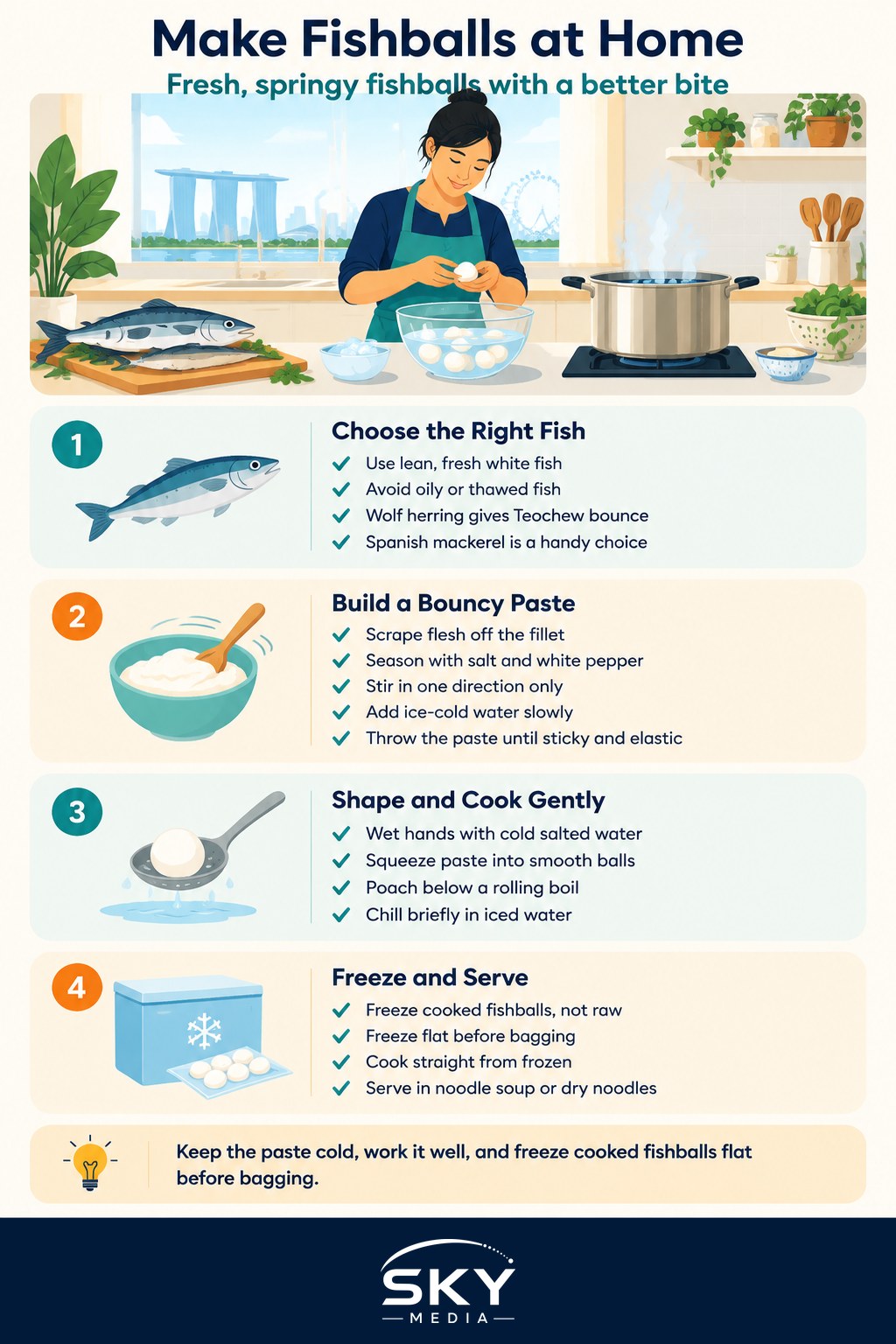
Choosing the Right Fish
The fish matters more than any other ingredient. You want lean, white, very fresh flesh with plenty of natural protein, because that protein is what binds into a springy texture. Oily fish or fish that has been frozen and thawed several times tends to give a mushy, crumbly result.
Fish commonly used for fishballs in Singapore include:
- Wolf herring (ikan parang or dorab). The traditional choice for Teochew-style fishballs. Very bony, which is why it is usually scraped rather than filleted, but the flesh gives excellent bounce and flavour.
- Spanish mackerel (ikan batang). Easier to handle, with firm, meaty flesh. A good all-rounder for home cooks.
- Yellowtail and similar white fish. Mild and widely available, useful for mixing with a stronger fish.
- Threadfin (ikan kurau). Pricier, with a sweet, delicate taste. Lovely but often saved for steaming or porridge.
Buy from a fishmonger at your wet market early in the morning, when the catch is freshest. Look for clear, bright eyes, red gills and firm flesh that springs back when pressed. Ask the fishmonger to fillet or butterfly the fish for you, and many will also remove the skin. Some stalls sell ready-made raw fish paste, which is a handy shortcut, though you lose control over what goes into it.
Ingredients and Equipment
This makes enough fishballs for about four meals of noodle soup. Treat the quantities as a starting point and adjust to your taste.
Ingredients
– About 500g fresh white fish flesh, skinned and boned
– About 1 teaspoon salt
– A pinch of white pepper
– About 1 tablespoon tapioca starch or potato starch (optional, for extra hold)
– About 100 to 150ml ice-cold water, with a small pinch of salt dissolved in it
Equipment
– A metal spoon for scraping the flesh
– A large, sturdy mixing bowl
– A pot for poaching and a bowl of iced water
– A food processor (optional, but it saves effort)
Keep everything cold. Chill the bowl and the water before you start. Warm paste loses its springiness quickly in Singapore’s heat, so work in an air-conditioned room if you can.
Making the Paste: How to Get the Bounce
This is where most first attempts go wrong. The bouncy texture comes from working the fish proteins until they form a stretchy, sticky network. You cannot rush it.
- Scrape the flesh. Lay each fillet skin side down and scrape along the grain with a spoon. The soft flesh comes away and leaves the fine bones and connective tissue behind. This is slower than chopping, but it removes small bones and gives a much smoother paste.
- Season. Put the scraped flesh in the chilled bowl with the salt and white pepper. Salt is essential: it draws out the proteins that make the paste sticky.
- Mix in one direction. Using your hand or a pair of chopsticks, stir firmly in one direction only. Changing direction breaks the network you are building.
- Add the cold water bit by bit. Add a spoonful of the salted iced water, mix until absorbed, then add the next. The paste should become glossy and smooth, not wet.
- Throw the paste. Gather the paste into your hand and slap it hard back into the bowl, again and again. This traditional step pushes out air and tightens the texture. Keep going for 10 to 15 minutes, or until the paste is sticky, elastic and holds together in one mass.
- Add starch last, if using. Mix it in at the end. Keep it small, since too much starch makes the balls rubbery rather than springy.
If you use a food processor, pulse the fish with salt, then add the water gradually and process until smooth. Finish by throwing the paste by hand for a few minutes, because the machine alone often leaves it less springy.
Test before shaping. Drop a teaspoon of paste into hot water. If it holds its shape and feels springy once cooked, you are ready. If it falls apart, work the paste longer.
Shaping and Cooking the Fishballs
Wet your hands with cold salted water to stop the paste sticking.
- Squeeze, do not roll. Take a handful of paste, close your fist, and squeeze so a ball of paste pushes up between your thumb and index finger. This is the hawker method and gives round, smooth balls.
- Scoop with a spoon. Use a wet spoon to scoop the ball off your hand and drop it into a pot of cold or barely warm water.
- Poach gently. Once all the balls are in, heat the pot slowly over medium-low heat. Do not let the water boil hard, as rapid boiling makes the surface rough and the inside spongy.
- Watch for floating. When the fishballs float and turn opaque white, they are cooked. Cut one open to check it is cooked through.
- Chill in iced water. Transfer to a bowl of iced water for a minute. This firms the texture and gives the surface its tight bite.
Keep the poaching water. It is lightly flavoured and makes a good base for soup, especially combined with a proper stock. Our guide to making stock and broth from scratch shows how to build a richer soup.
Troubleshooting Common Problems
Here is a quick guide to fixing the usual issues.
| Problem | Likely cause | What to do next time |
|---|---|---|
| Soft, mushy fishballs | Fish not fresh enough or paste not worked long enough | Buy fresher fish and throw the paste longer |
| Rubbery, chewy texture | Too much starch | Use less starch or leave it out |
| Rough, pitted surface | Water boiled too hard | Poach gently below a rolling boil |
| Balls fall apart in water | Too little salt or too much water added | Add water more slowly and check seasoning |
Freezing Batches the Right Way
Fishballs freeze very well, which makes a big weekend session worth it.
- Freeze cooked, not raw. Poach and chill the fishballs first, then drain and pat them dry. Cooked fishballs keep their shape and texture better than raw paste.
- Freeze flat first. Spread them on a tray lined with baking paper so they do not touch, and freeze until hard. Then transfer to freezer bags or containers. This stops them clumping into one block.
- Label and date. Write the date on each bag. For best taste, use them within a few weeks, and follow general food safety guidance from the Singapore Food Agency on storing and thawing seafood.
- Cook from frozen. Drop frozen fishballs straight into simmering soup and heat until hot all the way through. There is no need to thaw first.
- Do not refreeze. Once thawed, use them up.
Ways to Serve Your Fishballs
- Fishball noodle soup with mee pok or bee hoon, a clear soup, lettuce and a dash of fried shallot oil. Try it with fresh noodles made from scratch.
- Dry noodles tossed with chilli, vinegar and lard or shallot oil, with fishballs on the side. A spoon of homemade sambal chilli works well for a spicier version.
- Yong tau foo, using the same paste to stuff tofu, chillies and bitter gourd.
- Steamboat, where homemade fishballs are a real upgrade.
Once you have tasted fishballs made with fresh fish and patient hand work, the store-bought kind is hard to go back to.
Frequently Asked Questions
Can I make fishballs with frozen fish? You can, but fresh fish gives the bounciest result. Fish that has been frozen and thawed several times tends to turn mushy or crumbly. If you must use frozen fish, thaw it once, slowly in the fridge, pat it dry and keep it cold throughout. Buying fresh from the wet market in the morning is still best.
What is the difference between a fishball and a fish cake? Both are made from a seasoned fish paste, but the shape and cooking differ. Fishballs are squeezed into rounds and poached, while fish cakes are usually shaped into flat pieces or slices and steamed, fried or baked. The same springy paste can be used for either.
Are homemade fishballs gluten-free? They can be. The basic recipe is fish, salt, pepper and iced water, with optional tapioca or potato starch, which are naturally free of gluten. Ready-made fish paste or shop-bought balls may contain wheat flour, so read labels or make your own if you need to avoid gluten.
What can I do with the fish bones and skin left over? Use them for stock rather than throwing them away. Simmer the bones and skin gently with ginger and a little salt, then strain, and you have a light base for fishball noodle soup. Rinse off any blood first and keep the heat low so the stock stays clear.
Can I use ready-made fish paste from the wet market? Yes, it is a handy shortcut, though you cannot control what goes into it. Keep the paste cold, test a teaspoon in hot water, and work in a little more throwing by hand if it feels loose. Squeeze and poach gently as you would for homemade paste.