
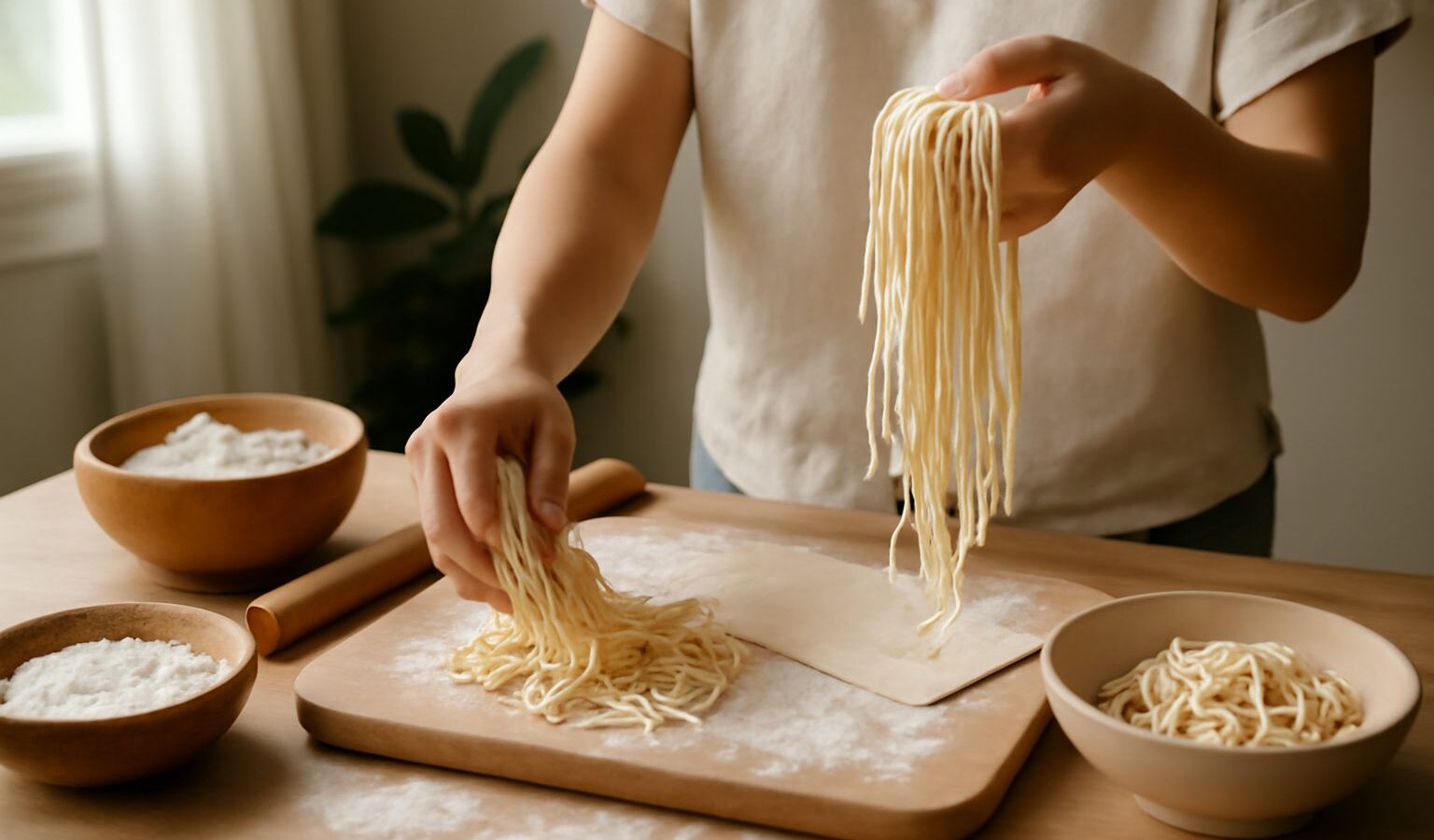
There is a particular pleasure in eating noodles you rolled and cut yourself. They cook faster than dried ones, carry sauce beautifully, and have a springy, tender bite that boxed noodles rarely match. Making homemade noodles singapore cooks might assume needs special gear is actually within reach of any kitchen with a rolling pin, a knife, and a little patience.
This guide covers wheat and egg noodles from scratch, the two most versatile types for home cooking. You will learn the ingredients, the method step by step, troubleshooting tips, and how to serve the results. If you want to understand how to boil and finish noodles well once you have made them, pair this with our guide to cooking noodles perfectly at home.
Ingredients and Getting the Dough Right
Fresh noodles rest on a very short ingredient list, which is exactly why technique matters so much.
For a basic wheat noodle you need plain flour, water, and a pinch of salt. Bread flour, with its higher protein, gives a chewier, more elastic noodle, while plain all purpose flour gives a softer result. For egg noodles, replace some or all of the water with beaten egg, which adds richness, colour, and structure. A common ratio is around two parts flour to a little under one part liquid by weight, but flour absorbs differently depending on humidity, so treat the numbers as a starting point rather than a rule.
Allergen note: wheat flour contains gluten, and egg noodles obviously contain egg. Some cooks add a small amount of alkaline lye water or an alkaline salt to make springier, yellow noodles in the style of many local dishes. Lye water is caustic in its concentrated form, so handle it with care, keep it away from children, and add only the tiny quantity a recipe calls for.
To make the dough, mix the flour and salt, then add the liquid gradually while stirring. Once it comes together into a shaggy mass, turn it out and knead. The dough will feel stiff and dry compared with bread dough, and that is correct. Knead for around ten minutes until it becomes smooth, then cover it and let it rest for at least thirty minutes. Resting relaxes the gluten and makes the dough far easier to roll. This step is the one most people skip, and it is the one that makes the biggest difference.
Rolling, Cutting, and Cooking
Once rested, the dough is ready to shape. Divide it into a few pieces so it is easier to handle, and keep the pieces you are not using covered so they do not dry out.
Dust your work surface and the dough generously with flour, then roll each piece out as thinly as you can manage. Aim for an even sheet, turning and flipping it often so it does not stick. The thinner you roll, the more delicate the noodle. If you have a pasta machine, it makes light work of this, but a rolling pin and some persistence do the job.
To cut the noodles, dust the sheet well, then either fold it loosely into a flat roll and slice across with a sharp knife, or cut it into strips directly. Unfold or separate the strands immediately and toss them with a little extra flour so they do not clump. Wide strips suit stir fries and saucy dishes, while thin strands suit soups.
Cooking fresh noodles is quick. Bring a large pot of water to a rolling boil, add the noodles, and stir gently to stop them sticking. Fresh noodles usually need only two to four minutes, far less than dried, so taste often. When they are tender with a slight bite, drain them. For soup, add them straight to the bowl. For stir fries or dry noodle dishes, rinse briefly and toss with a little oil to keep the strands separate.
Storage, Safety, and Serving
Fresh noodles are best cooked the day they are made, but you can store them. Dust them heavily with flour, coil into loose nests, and keep them in the fridge for a day or two, or freeze them for up to a month. Cook frozen noodles straight from the freezer without thawing, adding a minute to the cooking time.
On safety, remember that egg noodles contain raw egg until cooked, so wash your hands, boards, and utensils after handling the dough, and cook the noodles thoroughly before eating. In Singapore’s warm kitchens, do not leave raw dough or cooked noodles sitting out for long. Cool cooked noodles quickly if you are not eating them at once, refrigerate within two hours, and reheat until piping hot.
As for serving, the options are wide open. Toss fresh noodles with dark soy, sesame oil, and blanched greens for a simple dry bowl, drop them into a clear stock for soup, or stir fry them with prawns and vegetables. They also shine in local style dishes where a good springy texture is prized. Once you have the knack, you may find yourself making a batch just to see what sauce it inspires. For more ideas on what to pair them with, our roundup of must try hawker food in Singapore is full of noodle dishes worth recreating at home.