
If you have just moved from the mainland, your first Spring Festival here can feel both familiar and slightly off. The lanterns, the reunion dinner and the wish for good fortune are all present, yet the pace, the food and even the sounds are different. Understanding Chinese New Year China vs Singapore is less about right or wrong and more about seeing how the same festival has grown its own local character over generations. Singapore’s Chinese community carried these traditions from Fujian, Guangdong, Hainan and beyond, then adapted them to a multiracial, tropical, tightly regulated city. Here is what to expect, and how to enjoy it fully.
The Rhythm of the Holiday and Public Days Off
The most practical difference is time. In China, the Spring Festival holiday stretches across a long official break, and many people travel home in the enormous migration known as chunyun. Cities empty, shops shut for days, and the celebration unfolds slowly over a week or more.
In Singapore, Chinese New Year is a public holiday of two days, usually the first and second days of the lunar new year, gazetted by the Ministry of Manpower. Most offices reopen soon after, though the festive mood lingers for the full fifteen days up to Chap Goh Mei. This shorter break shapes everything: visiting is compressed into a busy long weekend, and you will rarely see the whole city pause the way a mainland town might.
There is no mass homecoming either, because most families already live on the island. Instead of long-distance train journeys, the pressure point is a scramble for reunion dinner reservations and last-minute shopping at wet markets and malls. If you plan to travel back to China during this period, book very early, as flights fill fast and fares climb.
The Reunion Dinner and Festive Food
The reunion dinner on New Year’s Eve is sacred in both places, but the menu tells you exactly where you are. In China, dishes vary sharply by region: dumplings dominate in the north, while the south leans towards fish, sticky rice cakes and a spread of auspicious plates.
Singapore’s table blends southern Chinese roots with local flavours. The signature ritual here is lo hei, the tossing of yusheng, a colourful raw fish and shredded vegetable salad. Everyone stands, adds ingredients while calling out auspicious phrases, then tosses the salad high with chopsticks for rising fortune. This custom is beloved across Singapore and Malaysia and is largely unfamiliar on the mainland, so do join in even if you feel shy the first time.
Other local staples include bak kwa, the sweet barbecued pork jerky people queue hours for, pineapple tarts, love letters, kueh bangkit and mandarin oranges given in pairs. You will still find steamboat, nian gao and abundant seafood, but the mix reflects Hokkien, Teochew, Cantonese, Hakka and Hainanese heritage layered with Nyonya influences.
Red Packets, Greetings and Everyday Etiquette
Hongbao, or ang bao in the local Hokkien pronunciation, are exchanged in both countries, yet the customs differ in ways worth knowing. On the mainland, digital red packets sent through apps like WeChat are now everywhere, often with playful grabbing games among friends. In Singapore, physical red packets remain the norm for family visits, though PayNow and bank e-hongbao are growing.
A few local conventions help you avoid awkwardness:
- Only married people give red packets; single adults receive them and are not expected to give to children.
- Amounts are usually modest and personal, with even numbers preferred and anything involving the number four avoided, as it sounds like the word for death.
- Give and receive with both hands, and never open the packet in front of the giver.
- Bring two mandarin oranges when visiting and exchange them with your host as a gesture of gold and good wishes.
Greetings sound familiar but carry a local accent. Alongside standard Mandarin wishes, you will hear Hokkien and Cantonese phrases, and the cheerful, all-purpose “Gong Xi Fa Cai” everywhere. Learning a couple of dialect greetings from your hosts is a warm way to connect.
Lion Dances, Chingay and the Quiet You Might Notice
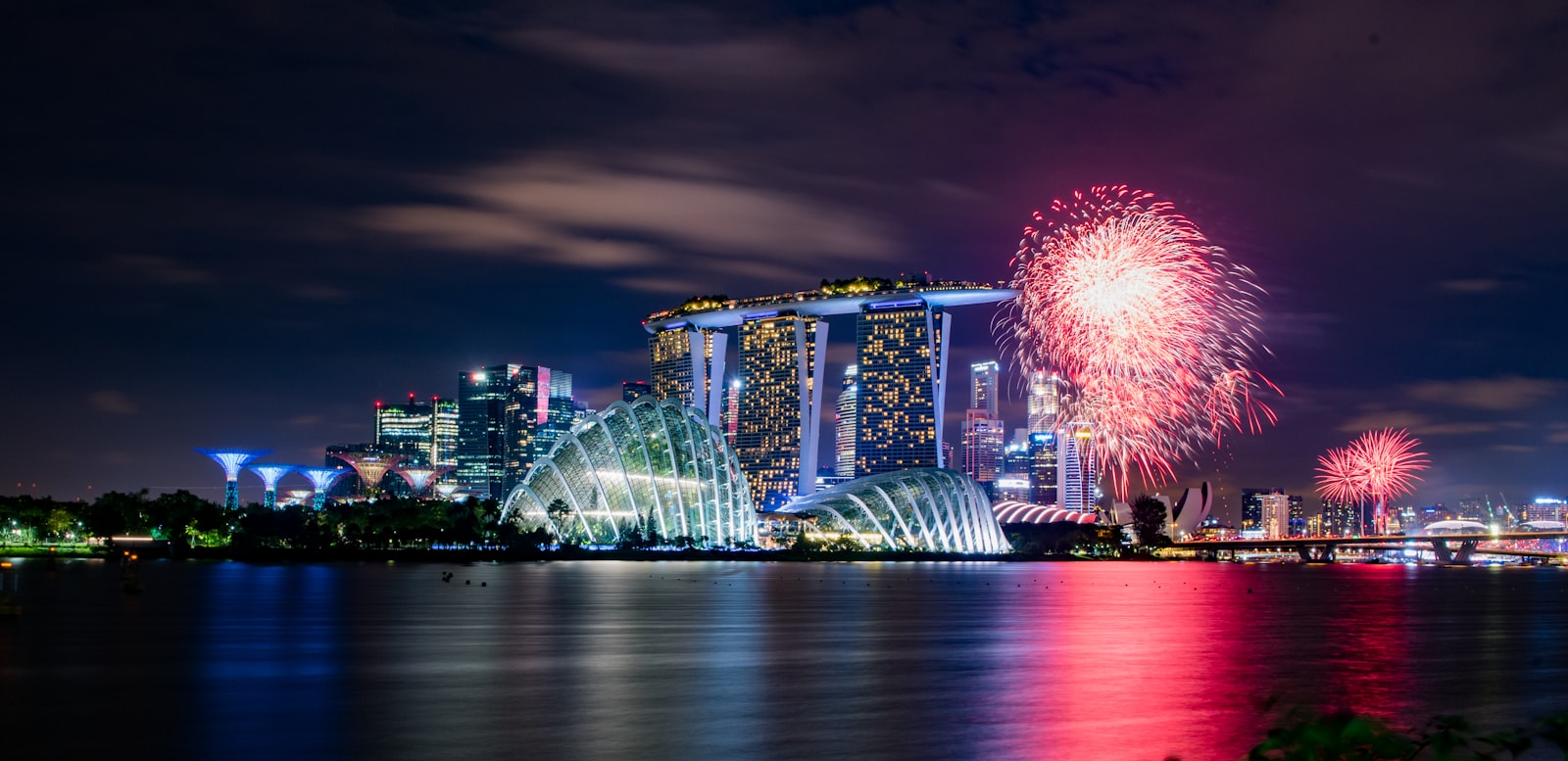
Step outside and the sensory differences become obvious. The single biggest surprise for many newcomers is the near-total absence of firecrackers and fireworks. Firecrackers have been banned in Singapore for public safety since the early 1970s, so the constant crackle that defines a mainland new year is simply not part of the street soundscape here, except at a few licensed, organised displays.
What you gain instead are vibrant lion and dragon dances at malls, offices and temples, accompanied by drums and cymbals believed to chase away bad luck. Businesses often invite troupes to perform for prosperity, and the lion plucking greens for a red packet is a joyful sight. The River Hongbao carnival and the dazzling Chingay street parade, a uniquely Singaporean multicultural procession, add scale and colour that draw the whole community, not only Chinese Singaporeans.
Here is a quick side-by-side to anchor the main contrasts:
| Aspect | Mainland China | Singapore |
|---|---|---|
| Public days off | Long official Spring Festival break | Two gazetted public holidays |
| Big travel pattern | Mass homecoming (chunyun) | Local visiting, few long journeys |
| Signature dish | Dumplings or regional fish spreads | Yusheng tossed in lo hei |
| Red packets | Often digital via apps | Mostly physical, some e-hongbao |
| Firecrackers | Widespread where permitted | Banned; lion dances instead |
| Language mix | Mostly Putonghua | Mandarin plus Hokkien, Teochew, Cantonese |
Making the Most of Your First Singapore New Year
The kindest approach is curiosity rather than comparison. Say yes to a lo hei invitation, accept mandarin oranges graciously, and ask your Singaporean colleagues what their family does, because customs differ between dialect groups and households. Visiting, or bai nian, often runs as informal open houses where friends drop by across the fortnight, so keep a small stock of oranges and snacks at home for guests.
Practically, note that many hawker stalls, shops and clinics close for the first day or two, so buy essentials in advance and check polyclinic and pharmacy hours on HealthHub if you take regular medication. Public transport runs, though timings may shift on the holidays, so check the LTA or app schedules. If you miss the mainland’s fireworks, the organised River Hongbao and countdown events offer a spectacular substitute without the noise at home.
Most of all, remember that these differences are a feature, not a loss. The festival you know has simply put down roots in a new place and picked up new friends along the way. Joining in as it is celebrated here is one of the warmest ways to feel at home in Singapore.
Explore More
To keep learning the local ways, read our guide to giving and receiving hongbao, which unpacks the etiquette in more detail. For the bigger cultural picture behind these customs, see Singaporean Chinese identity explained, and when you are ready to host, try hosting a Chinese dinner party with local ingredients.