

This question sounds simple, which is exactly why so many candidates fumble it. When an interviewer asks the “why do you want this job” Singapore hiring managers are really checking whether you have thought seriously about the role, the company and your own direction, or whether you are just applying everywhere and hoping. A strong answer shows genuine interest, a clear fit, and a sense that this role is a deliberate choice. This guide shows you how to build one that sounds true, because it is.
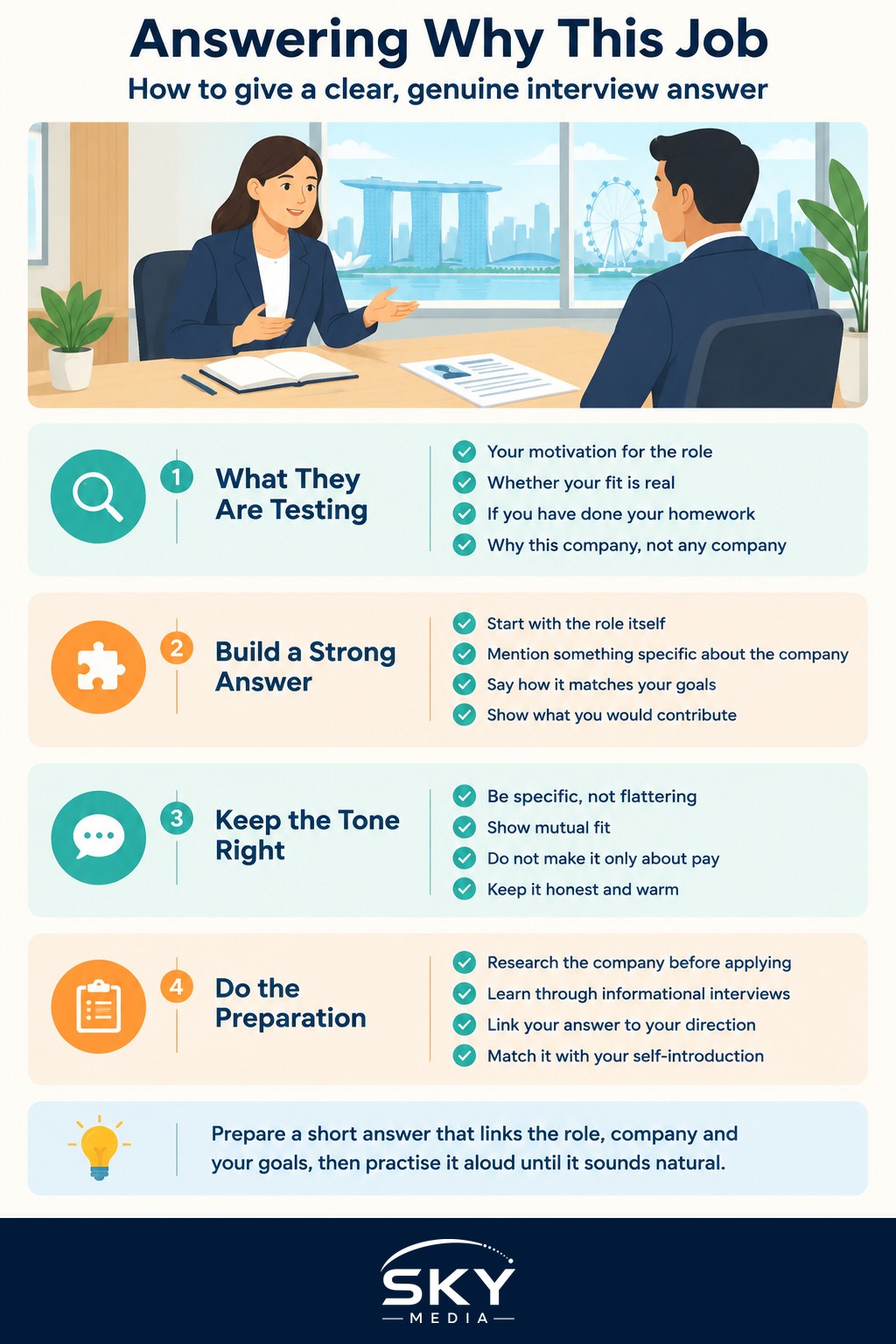
What the Question Is Really Testing
Interviewers ask this to gauge three things: your motivation, your fit, and your homework. They want to know that you understand what the job involves, that your skills and goals align with it, and that you are drawn to this company rather than any company that will have you. Enthusiasm matters, but only when it is backed by specifics.
A weak answer stays generic. “I want to work here because it is a great company and I need a job” tells them nothing and quietly signals that you have not looked closely. A strong answer connects the dots between what the role offers and what you bring, so the interviewer can picture you doing the work and staying for the right reasons.
A Structure and Some Examples
A dependable approach covers three angles: the role, the company, and you. Weave them together rather than listing them.
- The role: what about the actual work excites you or fits your strengths.
- The company: something specific and genuine that draws you to this employer.
- You: how this connects to your goals and what you would contribute.
Here is how that might sound. “I am drawn to this role because it combines client work with data analysis, which is exactly the mix I enjoy and want to grow in. I have followed your company’s move into sustainability reporting, and that focus really appeals to me because it is an area I care about. With my background in account management, I think I could contribute quickly while also developing the analytical side of my work, which is my next goal.”
For a career changer: “This role is attractive because it lets me use my communication skills in a more technical environment, which is the direction I have been moving towards. I was impressed by how your team describes its onboarding and mentoring, because as someone transitioning industries, that support matters to me. I would bring strong client instincts and a real willingness to learn the technical side.”
Both answers feel specific and honest. They avoid empty flattery and instead point to real features of the role and company. To answer at this level, you need to have done your reading, so it is worth researching the company before applying and, where you can, learning through informational interviews with people who know the place.
Getting the Tone Right
- Be specific, not sycophantic. Praising the company is fine, but tie it to something concrete you found or admire.
- Focus on mutual fit. Show what you gain and what you give. Employers want people who will thrive and contribute, not just take a paycheck.
- Avoid making it only about you. “I want this job because it pays well and is near my home” may be partly true, but it is not what they are asking. Keep the answer centred on the work and the fit.
- Keep it genuine. If you cannot find real reasons to want the role, that is worth reflecting on before the interview, not during it.
- Connect to your direction. Linking the role to your goals shows you are thoughtful about your path, which reassures employers you are likely to stay and grow.
This answer should sit comfortably alongside the rest of your interview story. It naturally builds on how you introduce yourself, so line it up with your take on tell me about yourself, and remember that thoughtful questions to ask your interviewer at the end reinforce the same genuine interest you express here.
Wrapping Up
The “why do you want this job” Singapore interviewers ask is your chance to prove this is a considered choice, not a scattershot application. Cover the role, the company and yourself, ground every claim in something specific, and keep the tone honest and warm. Do your research beforehand so your reasons are real, and practise saying them aloud until they flow. When your enthusiasm is backed by substance, this question stops being a hurdle and becomes one of the clearest ways to show an employer you belong on their team.
Frequently Asked Questions
What if I am applying mainly because I need a job soon? Be honest with yourself, but lead with what genuinely appeals about the work rather than your urgency. Almost every role has something real you can point to, such as the type of tasks, the industry or the skills you would build. Employers prefer a candidate who can name those reasons over one who sounds desperate.
How can I answer if I know very little about the company? Do a quick round of research before the interview: the company website, recent news, its products or services, and the job description itself. If you still come up short, focus the answer on the role and what you bring, then ask the interviewer a thoughtful question about the team.
Is it fine to mention career growth or pay as a reason? Career growth is a perfectly good reason when linked to what you would contribute. Pay is better left out of this answer, since the question is about the work and fit. If you mention development, tie it to specific skills the role would let you build.
How do I answer if the job is a step down from my current one? Explain the reason openly and positively, such as wanting a different focus, better work-life balance or a move into a new field. Show that you understand the scope and want it deliberately. Avoid criticising your current employer, and reassure them that you are committed to staying.
Is the answer different for ‘why this company’ and ‘why this role’? They overlap but are not identical. The role question is about the work and your strengths, while the company question is about its mission, culture or direction. A good answer to either weaves in a bit of both, but check which one is being asked and put the weight there.
Further reading: How to Answer “Why Should We Hire You?” With Frameworks and Sample Replies · How to Answer “Where Do You See Yourself in Five Years?”