

Almost every interview opens with it, and yet it still trips people up. Learning how to answer the “tell me about yourself” Singapore interviewers ask is one of the highest-value things you can prepare, because it sets the tone for everything that follows. A clear, warm answer buys you confidence and steers the conversation towards your strengths. A rambling one wastes your best moment. The good news is that this question rewards structure, not memorising, and anyone can build a solid answer with a little practice.
Why Interviewers Ask It
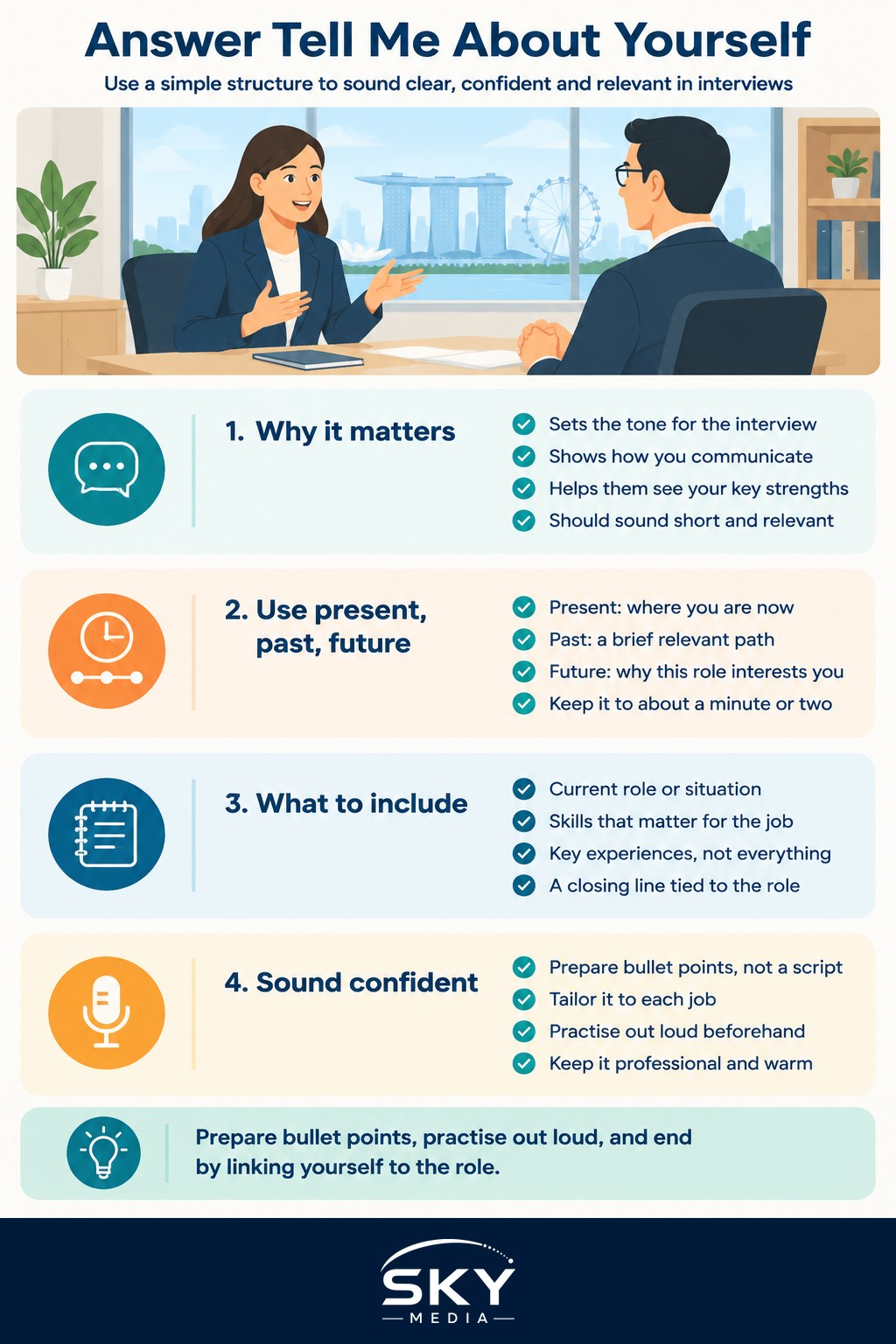
This question is rarely about your life story. Interviewers use it to settle the room, hear how you communicate, and see whether you can pick out what matters. They want a quick, relevant picture of who you are professionally and why you are sitting there. They are also listening for focus. Can you summarise yourself without wandering into your primary school achievements or your entire family background?
Knowing this changes how you answer. You are not reciting your resume line by line. You are offering a short, confident narrative that connects your background to this role. Keep it to roughly a minute or two, stay professional, and lean towards the parts of your story that matter to the job in front of you.
A Simple Structure That Works
A reliable format is present, past, future. It keeps you on track and sounds natural when spoken aloud.
- Present: start with where you are now. Your current role or situation, and a line on what you do well.
- Past: give a brief, relevant path that led you here. Pick the highlights that matter for this job, not everything.
- Future: connect to why you are excited about this role and this company.
Here is how that might sound for an experienced candidate: “I am currently a marketing executive at a retail company, where I run social media and email campaigns and grew our newsletter engagement over the past year. Before this, I studied communications and interned in PR, which taught me how to write for different audiences. I have really enjoyed the hands-on campaign work, and I am now looking to join a bigger team where I can develop my analytics skills, which is exactly why this role caught my attention.”
For a fresh graduate or career changer, the same shape holds: “I recently graduated in business, and during my studies I led the events committee for a student club, which is where I discovered how much I enjoy coordinating people and details. I also did an internship in operations. I am now looking to start my career in project support, and your team’s focus on delivery is a great fit for what I want to grow into.”
Notice that both answers are short, specific and end by pointing at the role. That final turn matters, because it signals you have done your homework. If you have not yet, take time researching the company before applying so your closing line feels genuine.
Tips to Sound Confident, Not Rehearsed
- Prepare bullet points, not a script. Knowing your three or four beats lets you speak naturally each time instead of freezing when a word slips.
- Tailor it to the job. Read the job description and choose the past experiences that map to what they need. The same person can tell slightly different versions for different roles.
- Keep it professional. A brief personal touch is fine, but this is not the place for deep personal history. Save warmth for tone, not content.
- Practise out loud. Say it to a friend or record yourself on your phone. You will quickly hear where you ramble.
- End with the future. Finishing on why you want this role hands a natural next question to the interviewer.
This opener also flows smoothly into everything else you will be asked, so treat it as the front door to your whole interview. It pairs well with preparing for tricky interview questions and thinking through why you want this job, since your answers should tell one consistent story rather than four separate ones.
Bringing It Together
The “tell me about yourself” Singapore interviewers pose is your chance to frame the conversation before anyone digs into the hard questions. Use the present, past, future structure, keep it to a minute or two, choose details that fit the role, and finish by connecting to why you are there. Prepare your beats rather than a word-for-word speech, practise until it feels comfortable, and walk in knowing your opening moment is handled. Do that, and you give yourself a calm, confident start, which is exactly what a strong first impression is built on.
Frequently Asked Questions
Is it okay to mention hobbies or family when introducing myself in an interview? A short personal touch is fine, but keep it brief and let the professional story lead. One line about an interest that shows a useful trait, such as teamwork or discipline, can make you memorable. Skip detailed family or life history, since interviewers mainly want to hear how you fit the job.
What should I say if I have gaps in my work history? Acknowledge the gap in one calm, factual sentence and move straight on to what you did or learned and what you want next. You do not need to apologise or over-explain. If you studied, cared for family, upskilled or took a break, say so plainly and steer back towards the role.
Should I answer differently in a panel or video interview? The structure stays the same, but delivery needs small adjustments. In a panel, make eye contact with everyone rather than only the person who asked. On video, look at the camera, speak a little slower and keep the answer tight, because it is harder to read the room through a screen.
What if I blank out halfway through my introduction? Pause, take a breath and return to your next beat; a short silence feels longer to you than to the listener. Because you prepared bullet points rather than a script, you can simply pick up the next one. If needed, say you want to put it clearly, then continue with your present role.
Is this question the same as asking me to walk through my resume? Not quite. A walk-through goes through your history in order, while this opener is a short, curated pitch that picks only the highlights relevant to the role. Treat it as a headline and let the interviewer dig into the details afterwards with their own follow-up questions.
Further reading: How to Answer “Where Do You See Yourself in Five Years?”