

Humility has a bit of an image problem. Many people hear the word and picture someone timid, self-deprecating, or a pushover who never speaks up. In truth, real humility is none of those things. It is a quiet confidence: knowing your worth without needing to prove it, staying open to learning, and giving other people and their contributions their fair due. Practising humility in Singapore, where achievement and status are often on display, can feel countercultural, yet it is one of the most attractive and useful qualities a person can grow.
This article looks at what humility actually is, why it is a strength rather than a weakness, and how to build it in small, everyday ways. There is no moral lecture here. Humility is simply a practical, warm way of moving through the world that tends to make life richer and relationships easier.
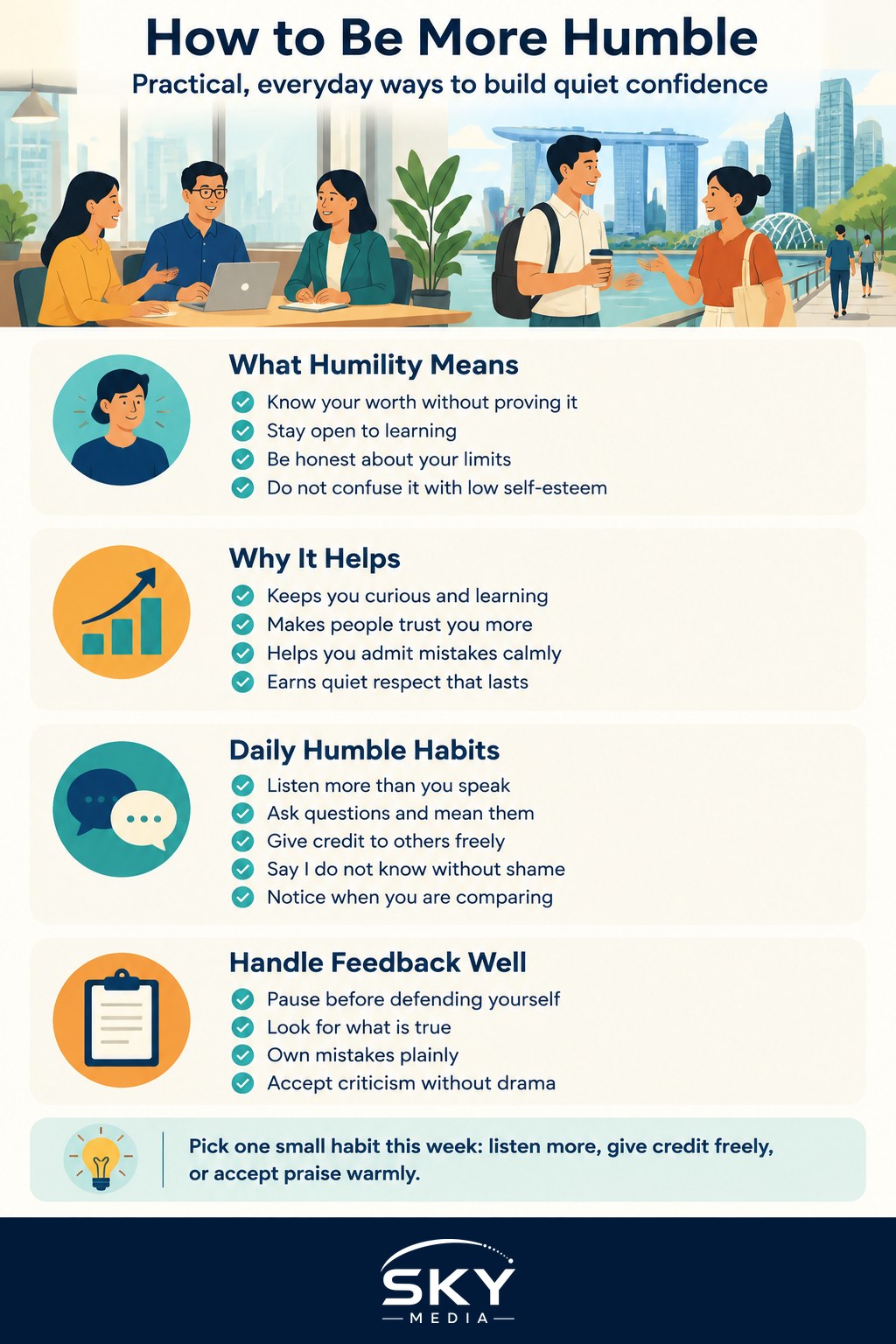
What Humility Really Is (and Is Not)
Let us clear up the confusion first. Humility is not thinking less of yourself. It is, as the saying goes, thinking of yourself a little less often. A humble person can be very capable and quietly proud of good work; they just do not need constant applause, and they do not assume they are the smartest one in the room.
Humility is not the same as low self-esteem either. Putting yourself down, dismissing compliments, or shrinking so others feel bigger is not humility; it is often a form of insecurity. Genuine humility actually rests on a stable sense of self-worth. Because you are secure, you do not need to inflate yourself or compete for every bit of credit. In fact, learning how to accept a compliment gracefully is itself a mark of healthy humility, receiving praise warmly without either brushing it off or fishing for more.
At its heart, humility is an accurate, honest view of yourself: aware of your strengths, honest about your limits, and open to the possibility that you might be wrong.
Why Humility Is a Strength
It may seem like humble people get left behind while the loud and self-promoting get ahead. In everyday life, though, humility quietly opens more doors than arrogance ever does.
For one, humble people keep learning. When you do not assume you already know best, you stay curious, ask questions, and take in new ideas. That makes you better at almost everything over time. This is closely tied to developing a growth mindset, the belief that you can keep improving, which is impossible if you think you have already arrived.
Humility also makes you far easier to be around. People trust those who listen, share credit, and admit mistakes. Colleagues, friends, and family relax around someone who is not always jostling to be right or to look impressive. And when things go wrong, a humble person can say “I was wrong” or “I need help” without it feeling like a crisis, which resolves problems far faster than defensiveness ever could.
Far from holding you back, humility tends to earn the kind of quiet respect that lasts.
Everyday Ways to Practise Humility
Humility is not a personality you either have or lack; it is a set of small habits you can practise. Here are a few gentle ones to try.
- Listen more than you speak. In your next conversation, focus on understanding the other person rather than waiting for your turn. Getting better at how to be a better listener is one of the most direct routes to humility.
- Ask questions, and mean them. Genuine curiosity about others quietly reminds you that everyone knows something you do not.
- Give credit freely. When something goes well, name the people who helped. It costs you nothing and builds real goodwill.
- Say “I don’t know” without shame. Admitting the limits of your knowledge is honest, and people respect it more than bluffing.
- Notice when you are comparing. In a status-conscious city, it is easy to size yourself up against others constantly. Comparison feeds ego, not humility; gently letting it go frees you.
None of these require grand gestures. They are quiet shifts in how you show up, and they compound over time.
Learn From Feedback and Mistakes
One of the clearest signs of humility is how you handle being wrong. When someone offers criticism, the ego wants to defend, explain, or push back. Humility pauses and asks, “Is there something true here I can learn from?” You do not have to accept every piece of feedback, but staying open to it is a gift you give yourself, because it is how you grow.
The same goes for mistakes. A humble person owns them plainly, without drama and without collapsing into self-blame. “I got that wrong, here is how I’ll fix it” is a genuinely strong sentence. It takes more security to say than any boast. If criticism tends to sting sharply, how to handle criticism well offers a calmer, steadier way to receive it, so that feedback becomes fuel rather than a threat.
Stay Grounded Without Shrinking
Here is the balance worth holding: humility does not mean disappearing. You can be humble and still speak up, share your ideas, and take pride in your work. Being humble is not about making yourself small so others feel big. It is about being honest and generous while still valuing yourself.
So do celebrate your wins, just without needing to broadcast them or lord them over anyone. Do accept praise warmly, without deflecting it. Do offer your view in a meeting, while staying genuinely open to being corrected. Humility and healthy self-worth are partners, not opposites. In fact, the most grounded people manage both at once: quietly confident, and quick to learn.
A Gentle Way to Begin
You do not become humble through effort and strain; it grows naturally as you practise curiosity, generosity, and honesty in small moments. Pick one habit from this article, perhaps listening a little more today, or giving credit to someone who helped you, and try it this week. Notice how people respond, and how it feels to move through your day with a little less need to prove yourself.
Humility is not about lowering yourself. It is about lifting your attention off yourself just enough to see other people clearly, keep learning, and enjoy easier, warmer relationships. That is not a weakness at all. It is one of the quiet strengths that makes a good life, and it is well within your reach.
Frequently Asked Questions
Can I be humble and still ambitious? Yes, the two sit together comfortably. Humility concerns how you treat credit, feedback and other people, not how high you aim. Ambitious people who stay curious, share credit and admit mistakes often go further because others want to work with them.
How do I talk about my achievements without bragging? State facts plainly, focus on what was done and who helped, and keep the tone matter-of-fact. Share them when they are relevant, such as in an interview or appraisal, rather than to impress. Being clear about your contribution is honest, not boastful.
Why do I feel the need to prove myself to others all the time? It often comes from insecurity or from comparing yourself with people around you, particularly in a status-conscious setting. Building a steadier sense of your own worth reduces the pull. If it causes persistent distress, a counsellor can help you explore it.
How can a manager lead with humility? Ask for input before deciding, give credit to the team, and admit when you are wrong or do not know. Listening to feedback and acting on it builds trust. Leading with humility does not mean avoiding decisions.
Is being humble a weakness in competitive workplaces? Not usually. Humble people keep learning, work well with others and recover quickly from mistakes, all of which tend to be valued. Speak up for your work clearly and calmly, and humility will not hold you back.