

Building emotional resilience in Singapore is not about becoming tough, unbothered or endlessly positive. It is about learning to bend without breaking when life throws challenges your way, from a stressful job and rising costs to family pressures and the occasional setback none of us can avoid. This is general information for wellbeing, not medical advice, and it is here to help you strengthen the skills that let you recover from hard times a little more steadily.
Resilience is often misunderstood as something you either have or you do not. In reality, it is a set of habits and skills you can grow at any age, much like fitness. You will still feel stress, sadness and disappointment, because resilient people are not immune to difficulty. The difference is that they tend to recover, adapt and keep going, and those abilities can be practised.
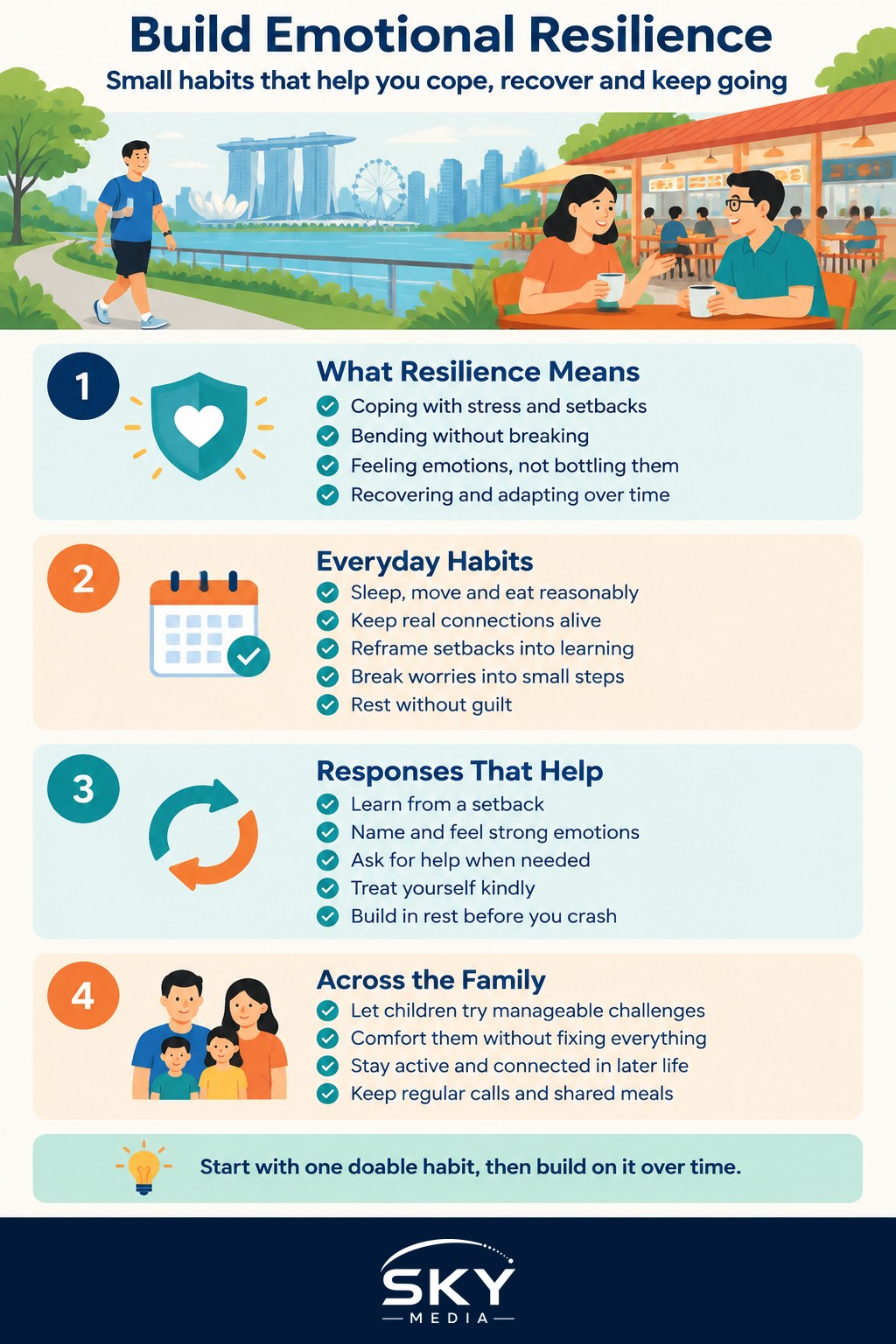
What Emotional Resilience Actually Means
At its simplest, resilience is your capacity to cope with stress and bounce back from setbacks. It shows up in small everyday moments, such as staying steady when plans fall apart, and in bigger ones, such as coping with job loss, illness or grief. It does not mean bottling things up or pretending you are fine. In fact, allowing yourself to feel and name difficult emotions is part of what makes recovery possible.
Resilience also is not about going it alone. In our culture, there can be pressure to be self-reliant and to save face, but leaning on others in hard times is a strength, not a weakness. Some of the most resilient people are simply the ones willing to ask for help.
Everyday Habits That Build Resilience
Resilience grows from small, repeated choices rather than one grand effort. Here are practical habits you can weave into ordinary life in Singapore:
- Tend to the basics. Regular sleep, movement and reasonable meals give your mind a stable base. A brisk walk or swim can clear your head as much as your body.
- Stay connected. Keep up real relationships with family, friends, colleagues or your community. A quick meal at the hawker centre or a genuine chat counts.
- Reframe setbacks. Ask what you can learn or control, rather than replaying what went wrong. This is not toxic positivity, just a more useful focus.
- Solve problems in steps. Break a worry into one small next action. Progress, however small, restores a sense of control.
- Practise self-kindness. Speak to yourself as you would to a good friend. Harsh self-criticism drains resilience fast.
- Find meaning. Faith, values, hobbies, volunteering or caring for others can anchor you when times are hard.
- Rest without guilt. Recovery time is not laziness. Even short breaks help you refill your reserves.
You do not need to adopt all of these at once. Pick one or two that feel doable and let them become second nature.
Resilient Versus Draining Responses
When something goes wrong, how you respond shapes how quickly you recover. The table below contrasts habits that tend to build resilience with those that quietly wear it down. It is a gentle guide, not a rule book.
| Situation | Resilient response | Response that drains you |
|---|---|---|
| A setback at work | Learn from it and adjust | Replay it and blame yourself |
| Strong emotions | Name and feel them | Bottle them up or numb out |
| Feeling overwhelmed | Break it into small steps | Try to do everything at once |
| Needing help | Reach out to others | Insist on coping alone |
| A mistake | Treat yourself kindly | Harsh self-criticism |
| Constant pressure | Build in rest | Push through until you crash |
If you notice yourself living mostly in the right-hand column, that is not a failure. It is simply a sign that a few new habits, and perhaps some support, could help.
Helping Children and Older Family Build It
Resilience matters across the generations under one roof. Children learn it partly by watching how the adults around them cope, so letting them face manageable challenges, and comforting them without rushing to fix everything, helps them grow steadier. Praising effort rather than only results teaches them that setbacks are normal and survivable. For older parents, staying socially connected, active and involved protects both mood and resilience, especially after retirement or the loss of a spouse. A regular phone call, a shared meal at the hawker centre, or a small routine to look forward to can do more good than you might expect. Loneliness chips away at resilience, so keeping those bonds warm matters at every age.
When to Reach Out for More Support
Building resilience is powerful, but it is not a substitute for professional care, and it does not mean you should cope alone with everything. If you feel persistently overwhelmed, if low mood, anxiety or hopelessness linger for weeks, or if daily life feels like too much, please speak to a GP, polyclinic doctor or a mental-health professional. Asking for help early is itself a resilient thing to do.
For emotional support, look up a current helpline yourself, since services change over time. In Singapore you can start with mindline.sg, or search for the Samaritans of Singapore (SOS) or the Institute of Mental Health (IMH). If you or someone you know is having thoughts of self-harm or suicide, please treat it as urgent, call 995 or go to the nearest A&E immediately, and reach a current crisis line such as SOS. Support is available, and reaching for it is a sign of strength.
Explore more
Resilience is easier to build alongside good daily habits. If stress has been piling up, start with our guide to understanding and managing everyday stress, and for a calming daily practice, try mindfulness and meditation for beginners. If low mood has been lingering, our guide to recognising the signs of depression can help you know when to seek support.
Frequently Asked Questions
How can I stay steady after losing my job or being retrenched? Give yourself time to feel the shock, then keep a basic routine of sleep, meals and movement. Break the next steps into small tasks and lean on people you trust. For job and skills support, check the Skills and Workforce Development Agency (SWDA) and MOM.
How long does it take to become more emotionally resilient? There is no fixed timeline, because resilience builds gradually through repeated small habits, much like fitness. Many people notice they recover faster from setbacks after a few months of steady practice. Progress is rarely a straight line, so be patient.
Does keeping a journal actually help with resilience? It can, as writing down worries and feelings helps some people sort their thoughts and spot patterns. A few minutes a day is enough, and there is no right way to do it. If writing stirs up distress, stop and talk to someone you trust.
How do I cope with grief or a big loss without bottling it up? Allow yourself to feel the loss, talk about it with someone you trust and keep gentle routines going. Grief has no set timeline, and rituals or faith may help. If it feels unbearable or lingers heavily, speak to a doctor or counsellor.
How do I ask colleagues or bosses for help without losing face? Be specific and calm, such as telling your supervisor which task is overloading you and what support would help. Framing it as getting the work done well makes it easier. Many managers respect early honesty far more than a late breakdown.
Further reading: How to Build Emotional Independence in Adult Life