
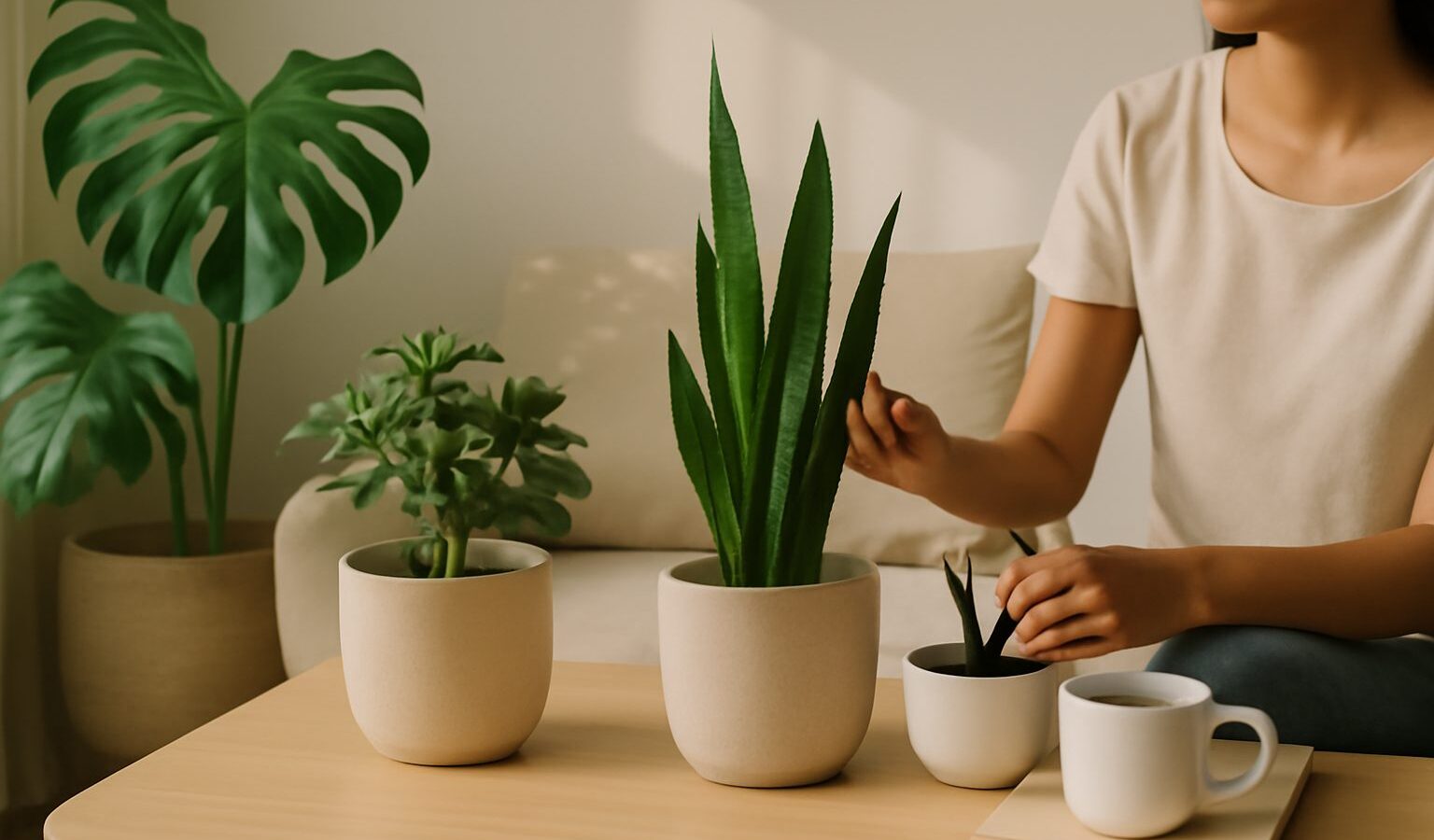
Not everyone wants a demanding plant. If you travel for work, forget to water, or simply want a bit of greenery that looks after itself, the good news is that some of the toughest, most forgiving houseplants are also among the most beautiful. The best low-maintenance indoor plants in Singapore ask for very little: the right spot, an occasional drink, and a saucer you empty after watering. In return they quietly clean up your corner of the flat and grow for years.
Our warm, humid, tropical climate actually works in your favour here, because many of these species come from similar conditions and thrive indoors all year. This guide runs through the most reliable picks, how to compare them, and the few simple habits that keep them alive with minimal effort.
What Makes a Plant Low-Maintenance
A truly easy plant shares a few traits. It tolerates a range of light, including the dimmer corners of an HDB flat. It stores water in thick leaves or roots, so it forgives you if you forget to water. It shrugs off our heat and humidity, and it does not need constant feeding, misting or fussing.
The plants that fail beginners are usually the opposite: thirsty, light-hungry, or fussy about humidity. If you want a plant that survives real life, look for words like drought-tolerant, hardy and shade-tolerant, and be a little wary of anything described as delicate or demanding. Choosing well at the start saves far more effort than any amount of care later.
The Toughest Plants for Busy Homes
These are the workhorses. Any one of them is a brilliant first plant, and together they cover most spots in a typical Singapore home.
- Snake plant (Sansevieria): perhaps the hardiest houseplant there is. It handles low light, tolerates weeks between waterings, and its upright leaves suit narrow spaces.
- ZZ plant (Zamioculcas): glossy, sculptural and almost indestructible. It stores water in thick underground rhizomes and copes happily with dim corners.
- Pothos (money plant): a fast, leafy trailer that grows in water or soil and forgives missed waterings. Perfect for shelves and hanging pots.
- Cast iron plant (Aspidistra): named for its toughness, it endures deep shade and neglect without complaint.
- Chinese evergreen (Aglaonema): patterned leaves in greens, silvers and pinks, and very tolerant of low light and irregular care.
- Peace lily: slightly thirstier, but it droops clearly when it needs water and perks up within hours, so it is hard to get wrong.
If you are completely new to all this, it is worth pairing this list with our broader beginner’s guide to houseplants, which covers the basics of light and watering in more detail.
Comparing the Best Low-Maintenance Indoor Plants
Different easy plants suit different corners and habits. Use this comparison to match a plant to your light, your watering style and how much space you have.
| Plant | Light needed | Watering | Best for |
|---|---|---|---|
| Snake plant | Low to bright | Every 2 to 3 weeks | Very forgetful owners, narrow shelves |
| ZZ plant | Low to medium | Every 2 to 3 weeks | Dim corners and offices |
| Pothos | Low to bright indirect | Weekly when dry | Trailing off shelves, quick growth |
| Cast iron plant | Deep shade to medium | When top soil is dry | The darkest spots in a flat |
| Chinese evergreen | Low to medium | When top soil is dry | Colourful foliage in low light |
| Peace lily | Medium indirect | When leaves start to droop | People who like a clear thirst signal |
As a rule, the plants at the top of that list are the most drought-tolerant, so reach for a snake plant or ZZ plant if your main worry is forgetting to water. If your home is genuinely dark, our guide to the best plants for low-light homes expands on the shade-loving options.
Simple Care That Keeps Them Alive
Low-maintenance does not mean no maintenance. A handful of easy habits will keep these plants looking their best for years.
- Water only when needed. Push a finger into the soil and water just the dry ones. In our heat, most of these plants prefer to dry out between drinks rather than sit damp.
- Use pots with drainage. Soggy roots are the number one killer of easy plants. A drainage hole and a free-draining potting mix solve most problems.
- Match light to plant. Keep sun-shy plants out of harsh, direct tropical sun through a west window, which can scorch leaves. Bright but indirect light suits almost everyone.
- Wipe the leaves. A quick dust with a damp cloth every few weeks helps big glossy leaves absorb light and lets you spot pests early.
- Feed lightly. A little balanced fertiliser during active growth is plenty. Always follow the product label and keep fertilisers and any pest sprays away from children and pets, choosing eco-friendly options where you can.
Even the toughest plant can run into trouble, and yellow leaves or brown tips usually point to watering going wrong. When that happens, our guide to common houseplant problems and fixes helps you read the signs.
Saucers, Watering and Staying Mosquito-Safe
Because most of these plants need only occasional watering, it is easy to forget the water that collects underneath them, and that is where Singapore’s dengue reality comes in. Never let water stagnate in pot saucers, drip trays or decorative outer pots. Standing water is a breeding ground for Aedes mosquitoes, and dengue is a genuine, year-round risk here.
Build a couple of simple habits into your routine:
- Tip out any water that collects in the saucer within a day of watering, and pour it away rather than leaving it to evaporate.
- Scrub saucers and trays occasionally so eggs cannot cling to the sides.
- Avoid soil that has hardened on top and traps a puddle, and loosen it if it does.
- If you use self-watering pots or pebble humidity trays, refresh the water regularly instead of letting it stand.
Following NEA’s anti-mosquito advice takes seconds and is simply part of keeping plants responsibly at home. It is the one bit of upkeep even the laziest plant owner should never skip.
Where to Buy and How to Start
You do not need to spend much to begin, and prices vary widely between shops and seasons, so treat any figure as a rough guide and check the nursery or store before buying. Small starter pots of snake plant, ZZ plant or pothos sit at the budget end, while large, mature specimens and designer planters are premium.
For browsing in person, Far East Flora and the nurseries clustered around Sungei Tengah and Thomson offer huge variety, IKEA stocks affordable common houseplants, and there is a lively online market for plants and cuttings. Community nurseries, plant swaps and NParks’ Community in Bloom groups are excellent low-cost ways to pick up hardy plants and honest local advice. Start with one or two of these easy species, keep them alive for a month, and you will quickly find yourself wanting more.
Explore more
New to all this? Begin with our beginner’s guide to houseplants in Singapore, then explore the best plants for low-light homes if your flat is on the dim side. When a leaf looks off, our guide to common houseplant problems and fixes will help you put it right.