
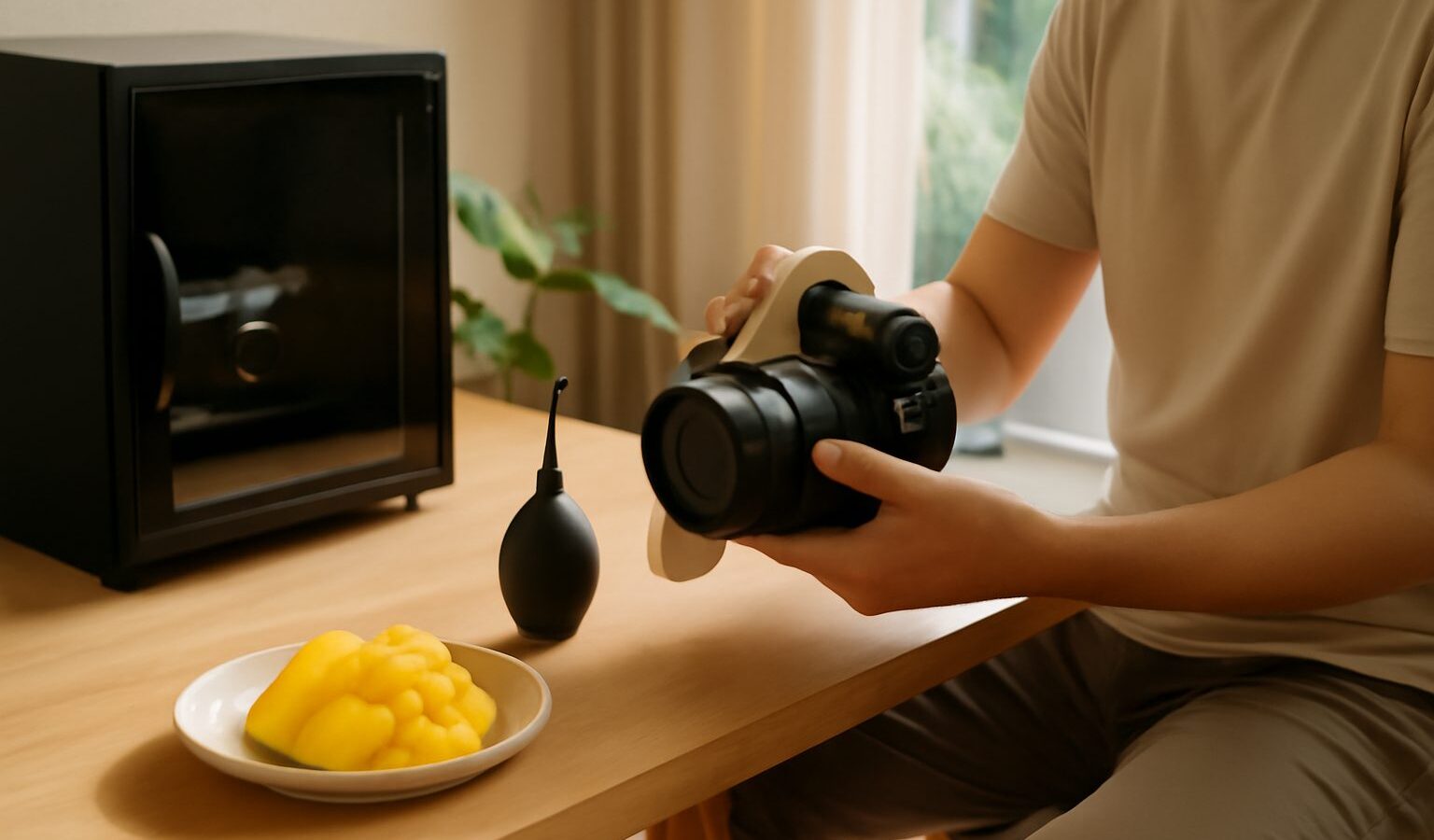
Singapore’s weather is wonderful for photographers in almost every way except one. The light is generous, there is always something to shoot, and you rarely need to worry about frozen fingers. What you do need to worry about is moisture. Our air sits at high humidity for much of the year, and that constant dampness is quietly hard on cameras and lenses. Good camera care in humidity is not fussy or expensive, but it is the difference between gear that lasts for years and gear that grows a fuzzy problem you cannot fix.
If you have just invested in your first proper camera, this is the maintenance habit worth building early. None of it is complicated, and most of it becomes second nature within a week or two.
Why Humidity Is Your Camera’s Real Enemy
The threat that catches most people out is fungus, often called lens mould. Mould spores are floating in the air all the time, and they only need two things to take hold: moisture and stillness. A camera left in a cupboard or a padded bag for weeks in our climate offers both. The spores settle on the glass and inside the lens, then slowly spread into fine, web-like or branching patterns across the elements.
This matters because lens mould is genuinely damaging. In its early stages it softens your images and adds haze. Left longer, it can etch the lens coatings permanently, and cleaning it often means a costly professional service or a lens that is simply written off. Prevention is far cheaper and easier than any cure.
Humidity troubles more than just your lenses. It can encourage corrosion on metal contacts, and it makes the sudden temperature swings we will come to below far more of a problem. The good news is that a few simple habits deal with nearly all of it.
Storing Your Gear: Dry Cabinets and Silica Gel
The single most effective thing you can do is control the air your gear sits in when you are not using it. A camera bag is the worst place to store equipment long term, because it traps damp air against the gear and keeps out light and airflow.
There are two common ways to store gear safely in Singapore:
- A dry cabinet. This is a sealed cabinet with an electronic system that keeps the internal humidity at a steady, safe level, usually somewhere in the range that discourages mould without over-drying. It plugs into the wall, sips very little power, and is the set-and-forget option that most keen local photographers eventually buy. If you have more than one lens, it quickly pays for itself in protected gear.
- An airtight box with silica gel. A cheaper starting point is a sealed plastic box with sachets of silica gel, the same moisture-absorbing beads you find in packaging. This works well as long as you stay on top of it, because the beads saturate over time and stop absorbing. Many types can be dried out and reused by heating them, so check the instructions for whichever you buy.
Whichever you choose, store lenses and camera bodies with any caps on but ideally not sealed in their individual soft pouches, so the dry air can actually reach the glass. And take your gear out to use it now and then, because equipment that is handled and exposed to moving air is far less likely to develop problems than gear that sits untouched for months.
The Condensation Trap: Moving Between Aircon and Outdoors
Here is the mistake almost every new photographer in Singapore makes at least once. You have been sitting in a strongly air-conditioned cafe or shopping mall, your camera cool from the cold air, and you step outside into the warm, humid street. Within seconds the lens fogs up, and a film of condensation forms on the cold glass and, worse, inside the camera and lens where you cannot wipe it away.
This is exactly what happens to a cold drink can on a hot day. Warm, moist air meets a cold surface and the moisture condenses. For your camera, that internal moisture is precisely the damp stillness that invites mould, so it is worth avoiding deliberately.
The fix is simple: let your gear change temperature slowly, sealed away from the humid air while it does. A few practical habits help:
- Before leaving the aircon, seal your camera in a bag. A ziplock bag or a well-closed camera bag lets the gear warm up gradually while any condensation forms on the bag, not the lens. Wait until it reaches the outdoor temperature before taking it out.
- Do the same in reverse. Coming indoors into strong aircon after shooting outside causes the same problem, so give your gear time to adjust before opening things up.
- Do not wipe internal fogging and keep shooting. If condensation appears, resist the urge to force it. Let the camera acclimatise fully, and give it time to dry before packing it away.
Simple Habits That Keep Gear Healthy
Beyond storage and condensation, a handful of small routines will keep your equipment in good shape for the long run. None of these takes more than a minute.
| Situation | Do this | Avoid this |
|---|---|---|
| After a beach or rainy shoot | Wipe gear down, then air-dry before storing | Sealing damp gear straight into a bag or box |
| Long-term storage | Keep in a dry cabinet or box with fresh silica gel | Leaving it for months in a padded camera bag |
| Moving between aircon and heat | Bag the camera and let it adjust slowly | Exposing cold glass to warm, humid air |
| Cleaning the lens | Use a blower and a proper microfibre cloth | Wiping grit across the glass with your shirt |
| Spotting early haze inside a lens | Get it checked and dried out promptly | Ignoring it and hoping it clears on its own |
A few more quick pointers worth keeping in mind. Carry a couple of spare silica gel sachets in your camera bag for day trips, especially in the rainy months. After shooting near the sea at somewhere like East Coast Park, wipe salt spray off your gear before storing it, because salt attracts moisture and speeds up corrosion. And check your lenses every so often by shining a light through them at an angle, so you catch any early haze while it is still easy to deal with.
Building the Habit Without Fuss
It is easy to read all this and feel that owning a camera in Singapore is a constant battle against the weather. It really is not. The whole routine boils down to three ideas: store your gear in dry, controlled air, let it change temperature slowly, and keep it clean and dry after each outing. Do those, and the humidity stops being a threat.
The photographers who lose gear to mould are almost never the ones who dropped a camera or shot in the rain. They are the ones who left a lovely lens sitting forgotten in a damp bag for half a year. A dry cabinet or a simple box of silica gel, plus a moment of care when you move between the aircon and the heat, is all it takes to keep your equipment ready for the next shot. Look after your gear, and it will keep looking after your photos.
Explore more
Caring for your camera goes hand in hand with knowing how to use and choose it well. If you are still building your kit, read choosing your first camera in Singapore and essential camera accessories for beginners, and once your gear is protected, get the most from it with photography basics for beginners in Singapore.