
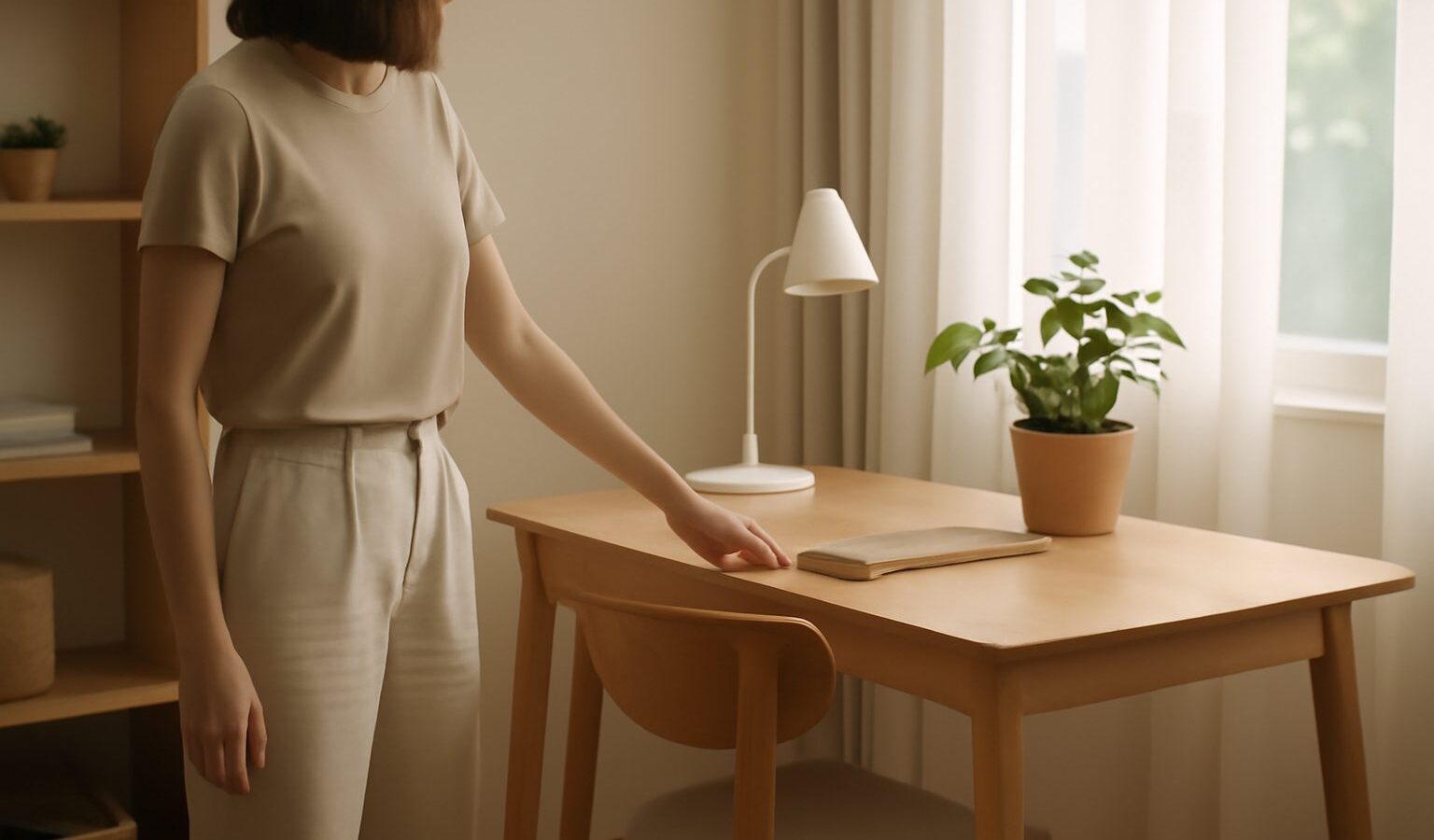
With more of us working and studying from home, a good desk has become essential, yet fitting one into a compact flat takes some planning. Choosing a study desk in Singapore means matching the size to a small HDB bedroom or condo corner, picking a comfortable working height, and selecting materials that hold up in our humidity. Whether it is for a child’s homework, remote work or exam revision, this guide covers dimensions, materials, space-saving shapes and how to set the desk up so it is comfortable to use for hours.
Get the Size and Height Right
A desk that is the wrong size or height quietly wrecks your comfort, so start here.
- Desk height. A standard desk sits around 72cm to 75cm tall, which suits most adults. When seated, your elbows should rest at roughly a right angle and your feet flat on the floor.
- Desktop width. Around 100cm to 120cm of width comfortably fits a laptop or monitor plus room to write. A narrow 60cm to 80cm desk works for a laptop-only setup in a tight space.
- Depth. Aim for at least 50cm to 60cm of depth so a screen sits far enough from your eyes.
- Legroom. Check there is clear knee and leg space underneath, especially if the desk has a drawer or a fixed shelf.
- Tape it out. Mark the footprint on the floor before buying so you can see how it fits against the wall and around the door.
If several people or a growing child will use the desk, an adjustable-height design or a sit-stand desk is worth considering, since it adapts to different users and lets you switch between sitting and standing during a long day.
Space-Saving Shapes for Small Homes
The right shape lets a desk fit a bedroom corner, a hallway nook or a shared living space without taking over.
- Compact rectangular desks are the simplest choice and slot neatly against a wall.
- Corner or L-shaped desks use an awkward corner well and give extra surface for work that needs spreading out, though they take more floor space.
- Wall-mounted fold-down desks drop down when you need them and fold flat afterwards, ideal for the tightest flats.
- Desks with built-in shelving stack storage upward instead of outward, saving precious floor area.
- Slim console-style desks double as a hallway table when not in use.
Wall-mounted and folding desks are especially useful in HDB bedrooms where floor space is at a premium. For more ideas on making a study corner work, see our guide to home office and study corner ideas, and our roundup of space-saving and multifunctional furniture for flexible pieces.
Choosing Materials for Our Climate
A desk sits in one spot for years, so pick a surface that copes with our humidity and daily use.
| Material | How it copes here | Upkeep | Best for |
|---|---|---|---|
| Engineered wood or laminate | Stable and affordable | Easy wipe-down | Budget, everyday study |
| Solid or sealed wood | Warm and sturdy; needs sealing against damp | Wipe spills, occasional oiling | A lasting, classic desk |
| Metal frame with wood top | Very sturdy and durable | Wipe clean | Modern setups, heavy use |
| Tempered glass top | Light look, shows marks | Frequent wiping | Making a small room feel open |
Laminate and engineered wood are practical all-rounders because they resist moisture better than untreated timber and are easy to keep clean. Solid wood is beautiful and hard-wearing but must be sealed and wiped dry, since our humidity can warp or mark unsealed surfaces. Our guide to caring for wood furniture in a humid climate is worth reading if you choose real wood. Whatever the surface, position the desk where there is some airflow rather than pressed into a still, damp corner, and keep it out of direct afternoon sun, which can fade and warp a top over time.
Storage and Cable Management
A tidy desk is far more pleasant to work at, and in a small home clutter shows quickly.
- Drawers or a pedestal keep stationery and documents out of sight. A single shallow drawer is often enough.
- Built-in or added shelving lifts books and files off the desktop. Pair a desk with a nearby bookshelf to keep the surface clear.
- Cable trays or clips stop chargers and cords tangling behind the desk, which matters when the desk sits in a bedroom or living area on show.
- A monitor riser or shelf frees up desk space and helps your screen sit at the right height.
Storage-smart desks are ideal for flats where the study area shares a room with sleeping or living space and needs to look neat when not in use.
Setting Up for Comfort and Choosing on Budget
A desk is only half the setup. Pair it with a supportive chair, since the two work together for comfort over long hours. Our guide on how to choose an office chair walks through the options. Position your screen at roughly arm’s length with the top of the display near eye level, and keep your keyboard and mouse close so your shoulders stay relaxed. For a fuller walkthrough, see our notes on home office ergonomics and desk setup.
On budget, decide how the desk will be used. A simple laminate desk is perfectly good for a child’s homework or occasional use, while a sturdy, larger or height-adjustable desk is worth investing in if you work from home full time. Second-hand and upcycled desks offer real value if you are furnishing on a budget. Measure your space, choose a humidity-friendly surface, and pick a shape that fits your flat, and you will have a study spot that stays comfortable and clutter-free for years.