
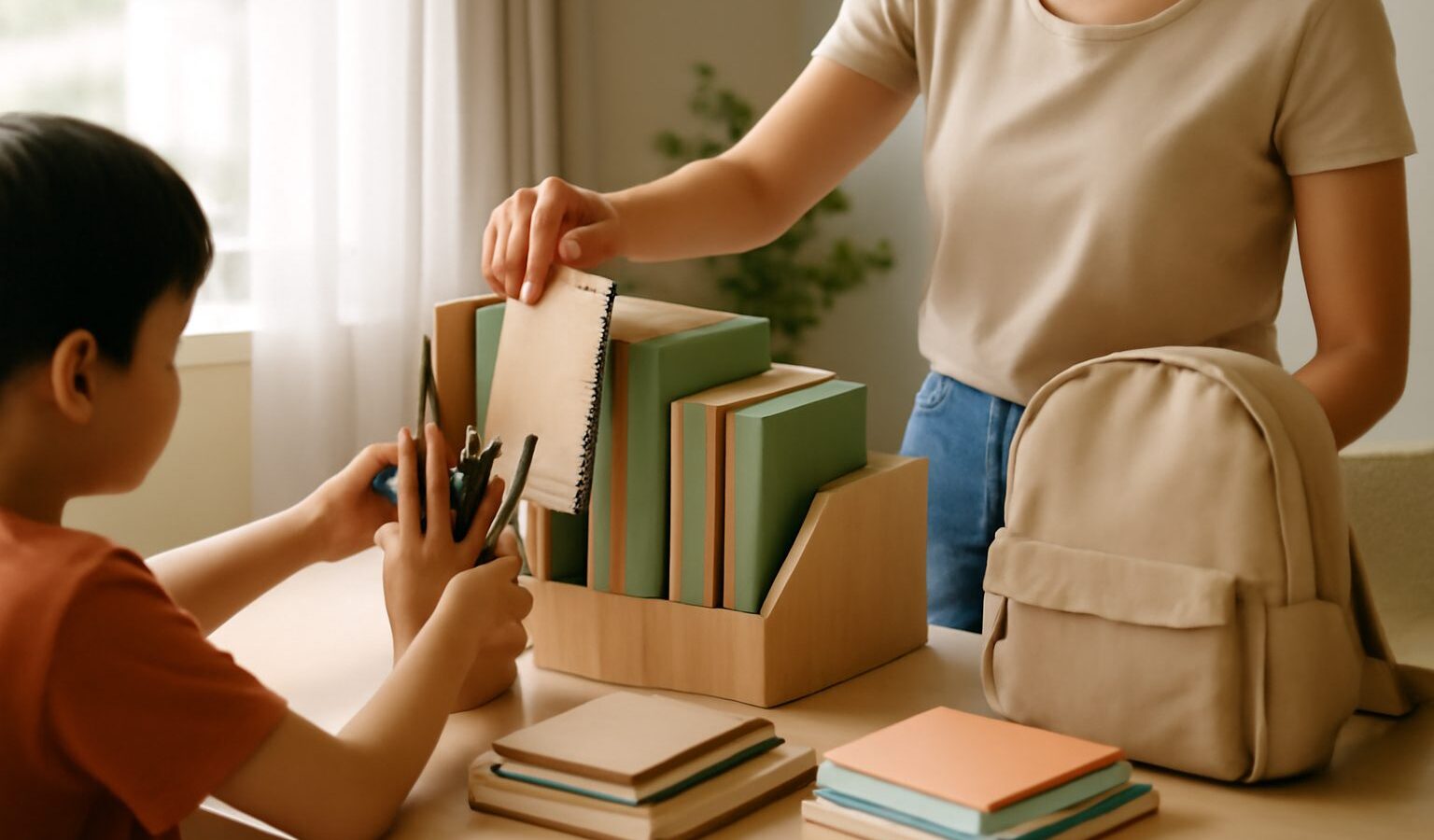
Every parent knows the morning scramble for a missing worksheet, the water bottle that never made it home, and the drawer that swallows pencils, glue sticks and assessment books whole. A child’s study space and school supplies generate a surprising amount of clutter, and in a compact HDB flat or condo there is rarely a whole room to spare for it. The good news is that organising school supplies singapore families deal with is less about buying more furniture and more about setting up simple systems a child can actually follow. When a child knows where things live, they can pack their own bag, find their own materials, and keep the space tidy without constant reminders.
This guide covers how to carve out a study corner in a small home and build storage that survives both our climate and daily use by a young child.
Setting up a study corner in a small home
You do not need a dedicated study room. Most Singapore children study at a corner of the bedroom, a section of the dining table, or a small desk in a shared space, and any of these can work well if it is set up thoughtfully. The key is consistency, giving the child one regular place to work so that studying has a home and the materials gather there rather than migrating around the flat.
Get the ergonomics right first, because a child who is uncomfortable will not sit still. The desk and chair should let them sit with feet flat and forearms level with the tabletop, and an adjustable chair or a footrest fixes an awkward fit cheaply. Good lighting matters just as much, so position the desk near a window for daytime study and add a desk lamp for evenings, placed so the child’s writing hand does not cast a shadow across the page.
Keep the desk surface clear of everything except what is in use, because a cluttered surface distracts a child and leaves no room to write. Store supplies within arm’s reach but off the tabletop, using a small drawer unit, a caddy or wall shelves beside the desk. A vertical approach saves precious floor space in a small room, so think shelves and pegboards on the wall rather than another cabinet on the floor. Our guide to storage and organisation solutions has more small-space ideas that apply here.
Zone the storage by type so everything has an obvious home. Stationery in a divided caddy or drawer, current textbooks and workbooks upright in a magazine file or bookend so they do not topple, art and craft supplies in a labelled box, and paper and worksheets in folders. Label everything, and for younger children use pictures as well as words so they can put things back independently. A child who can read the labels is a child who can tidy up.
Managing supplies, paper and the daily routine
Paper is the biggest source of school clutter. Worksheets, notices, artwork and old assessment papers pile up fast, and without a system they cover every surface. Set up a simple flow. An incoming tray or a wall pocket by the door catches everything that comes home in the school bag each day, so it does not scatter. Sort it weekly into three destinations, action items like forms to sign and homework, keepers like important notices and good artwork, and recycling for everything else. Our guide to paper and document organisation at home explains this flow in more detail, and it works for a child’s papers just as well as household bills.
For the keepers, a single folder or box file per child per year is enough for the artwork and work worth remembering. Photograph the bulky pieces rather than storing them all, a habit that saves enormous space, which our guide to decluttering your home supports. Give the child a hand in deciding what to keep, since it teaches them to let go and to value the few pieces they choose.
Build a launch pad for the daily routine. A fixed spot near the door for the school bag, water bottle, shoes and anything that must leave the house tomorrow turns the morning rush into a simple grab and go. Pack the bag the night before as part of the evening routine, using the timetable so nothing is forgotten. A small hook for the bag and a labelled bin for shoes cost little and save the daily hunt.
Keep a small stock of consumables so you are never caught out mid term. Pencils, erasers, glue, exercise books and the specific items the school requires run out at the worst moments, so a labelled restock box in a cupboard, topped up during the holidays, prevents the late night trip to buy a protractor. Let the child take responsibility for telling you when something is running low, which builds the habit of managing their own materials.
Protecting books and supplies from humidity
Our climate deserves a mention, because paper and books suffer in constant humidity. Textbooks and workbooks left in a damp corner grow foxing and mould, and pages cockle. Store books upright with a little air around them rather than packed tight against a cool external wall, and keep them off the floor where damp collects. A small moisture absorber or a few silica gel packs in a cupboard of books helps in a humid flat, and our guide to protecting your home from humidity has more prevention tips.
Watch the school bag too, since a wet umbrella or a leaking water bottle inside it can soak books and homework. A separate wet pocket or a small waterproof pouch for the bottle spares the books, and airing the bag out after a rainy day stops that musty smell from setting in.
Set up the corner, build the paper flow and the launch pad, and teach the child to run the system, and school mornings get calmer for everyone. Keep it simple enough that a child can follow it, and the space will stay tidy without you policing it every day.