
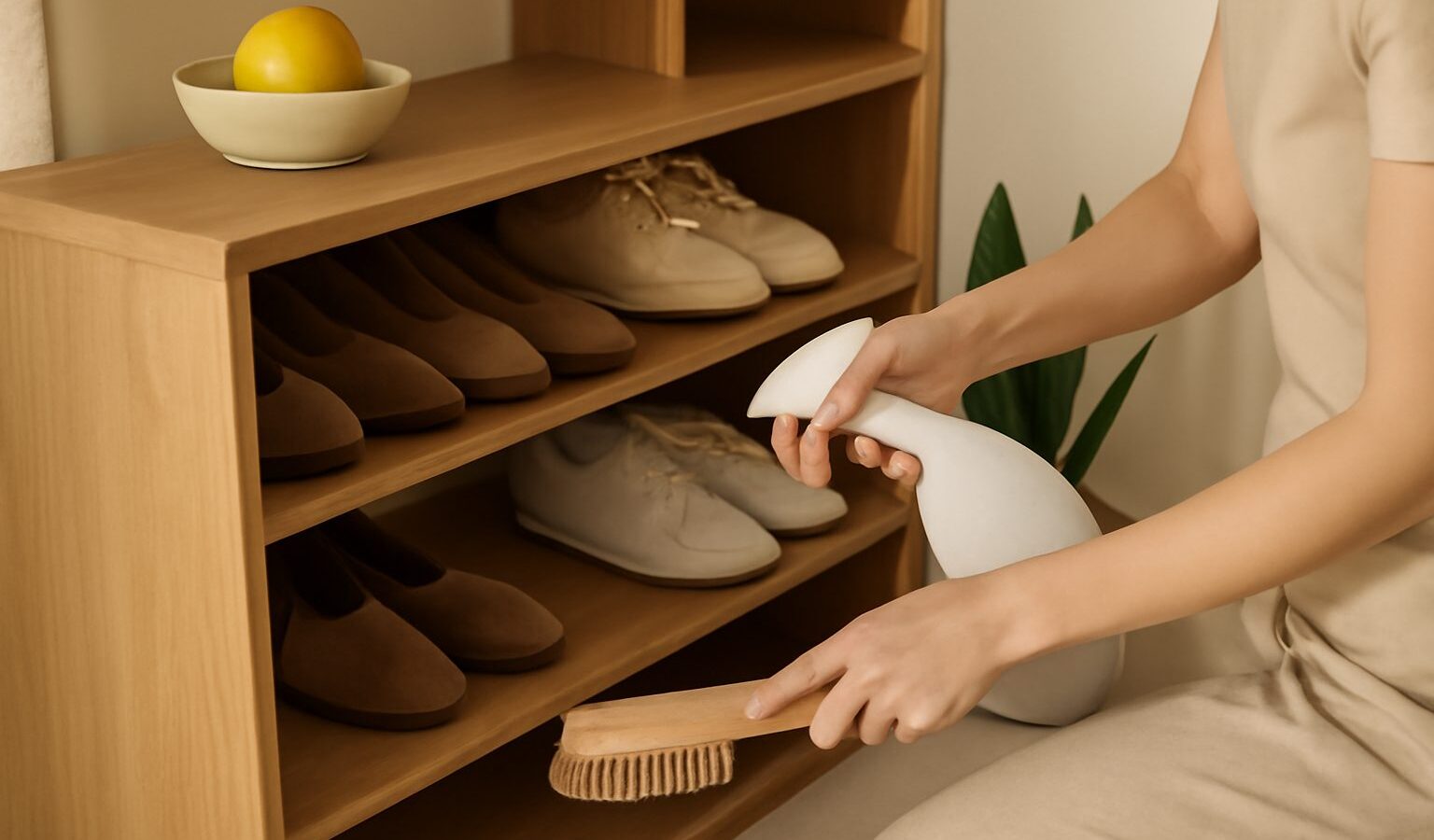
Cleaning your shoe cabinet is one of the most satisfying quick wins in the home, because the entryway is the first thing you and your guests notice. In Singapore’s heat and humidity, a closed cabinet full of worn shoes becomes a warm, damp box that traps odours and can even grow mould. This guide shows you how to clean it out properly and keep it smelling fresh for the long run.
Why shoe cabinets smell in our climate
Shoes come home damp with sweat and the odd splash of rain, then sit in a sealed compartment with almost no airflow. Bacteria feed on the moisture and produce that sour, musty smell. Add our year round humidity and you get the perfect conditions for mildew on leather, canvas and even the cabinet itself. The fix is not just masking the smell but removing the moisture and the source.
Tools and supplies you will need
- A rubbish bag for things to throw or donate
- A vacuum or a small hand brush
- A cloth and a bowl of warm soapy water
- White vinegar diluted with water for wiping
- Baking soda for deodorising
- Clean, dry cloths
- Optional: silica gel packs, activated charcoal or moisture absorber tubs
Step by step: cleaning your shoe cabinet
Set aside about an hour. Doing it in one go is far more effective than a rushed wipe.
- Empty it completely. Take every pair out so you can see and reach the whole interior.
- Sort as you go. Be honest about worn out, unworn or mouldy pairs. Bin or donate what you no longer wear. A less crowded cabinet breathes better.
- Vacuum or brush out the debris. Grit, dried mud and dust collect in the corners and on every shelf.
- Wipe down the interior. Use warm soapy water first, then a diluted white vinegar solution for any musty or mouldy patches. Vinegar helps neutralise odours and discourages mould.
- Dry thoroughly. This is the step most people skip. Leave the doors open and let the inside dry completely before anything goes back. Trapped moisture is what caused the problem in the first place.
Deodorising that actually works
Once the cabinet is clean and dry, tackle the smell at the source rather than spraying over it.
- Baking soda is the workhorse. Fill a small open container or a breathable pouch and leave it on a shelf to absorb odours. Refresh it every month or so.
- Activated charcoal absorbs moisture and smells and lasts for months. Give it a few hours of sunlight now and then to renew it.
- Silica gel packs, the kind that come with new shoes and bags, are excellent moisture grabbers. Save them and tuck a few onto each shelf.
- Air the shoes, not just the cabinet. Let sweaty shoes dry outside the cabinet before putting them away, and sprinkle a little baking soda inside smelly pairs overnight.
Comparison: shoe cabinet deodorisers
| Deodoriser | How it works | Lasts | Cost effort |
|---|---|---|---|
| Baking soda | Absorbs and neutralises odour | About a month | Very low |
| Activated charcoal | Absorbs moisture and smell | Several months | Low |
| Silica gel packs | Grab excess moisture | Reusable when dried | Free if saved |
| White vinegar wipe | Neutralises odour, fights mould | Cleaning use | Very low |
| Air freshener spray | Masks smell only | Hours | Low, least effective |
Keeping it fresh long term
The clean will only last if you change a few habits. Leave the cabinet doors ajar for an hour after you get home so air can circulate. Never put damp shoes straight in. Rotate your most worn pairs so no single pair stays sweaty and shut away. If you have space, a small gap between the cabinet and the wall improves airflow, and a compartment left slightly open helps too.
For layout ideas that keep the whole entryway tidy and ventilated, our entryway storage guide is a useful companion read.
Caring for different shoe materials
Different shoes need slightly different handling once the cabinet is clean, so they do not reintroduce damp or smell.
- Leather shoes should be wiped with a barely damp cloth and dried in a shaded, airy spot. Stuff them with paper to hold their shape and absorb moisture. A leather conditioner now and then keeps them from drying out and cracking in the air conditioning.
- Canvas and fabric shoes hold sweat and dry slowly, so air them fully outside the cabinet before storing. These are the pairs most likely to turn musty if put away damp.
- Sports and running shoes benefit from removable insoles taken out to dry separately, since the insole is usually where the smell lives.
- Rubber sandals and slippers are easy, just rinse, dry and return, but check the underside for trapped grit that scratches the cabinet shelves.
Whatever the material, the rule is the same. Dry first, store second.
Dealing with mould
If you find fuzzy grey or green patches, do not just wipe and hope. Take everything out, wipe the affected area with the diluted vinegar solution, let it dry fully in the open, and consider leaving a moisture absorber tub inside afterwards. Check leather shoes for mould too, wipe them down and dry them in a shaded, airy spot rather than direct harsh sun, which can crack the leather. If mould keeps returning despite drying and ventilation, the cabinet may be sitting against a persistently damp wall, which is worth investigating.
A fresher entryway
Cleaning your shoe cabinet is low cost, low risk and genuinely transforms how your home feels the moment you walk in. Empty it, clean it, dry it properly, then let baking soda and charcoal do the quiet work. Build in a little airflow and the sour smell simply stops coming back.
Explore more: Entryway and shoe storage ideas · How to clean high and hard to reach places · When to DIY and when to hire a professional