

A clean toilet is not just about appearances. In our warm, humid climate, a neglected toilet quickly becomes a home for mould, hard-water limescale and bacteria, and the smell follows soon after. The good news is that cleaning toilet singapore bathrooms is a simple, quick job once you have a proper routine, the right tools and a few safety habits. This guide walks through the whole process, from the bowl to the tank exterior, and explains how often to do it in a tropical setting.
Before you start, open a window or switch on the exhaust fan, put on a pair of rubber gloves, and gather your supplies so you are not searching mid-clean.
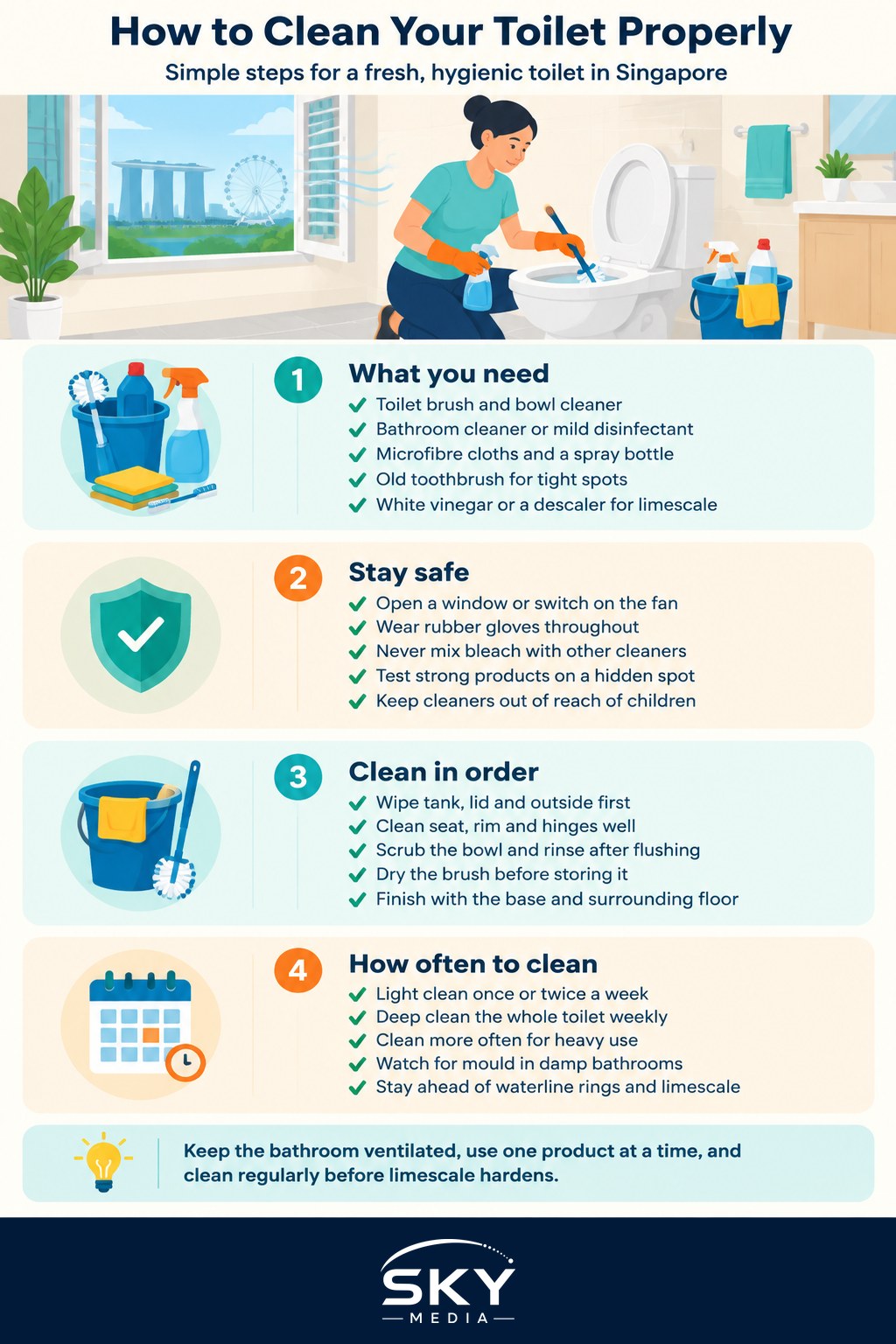
Tools, safe products and a golden safety rule
You do not need a cupboard full of chemicals. A basic kit covers almost everything: a toilet brush, a dedicated toilet bowl cleaner, an all-purpose bathroom cleaner or a mild disinfectant, a few microfibre cloths, an old toothbrush for tight spots, and a spray bottle. For limescale, which is a constant battle with our hard water, white vinegar or a dedicated descaler is your friend.
Here is the golden rule that matters most. Never mix cleaning products together, and in particular never mix bleach with ammonia, with vinegar, or with any other cleaner. Combining them can release dangerous fumes. Use one product, rinse, and only then consider a different one if you need it. Always keep the bathroom ventilated while you work, keep your gloves on, and test any strong product on a small hidden area first to make sure it does not stain or damage the surface. Store products out of reach of children and pets, and keep them in their original bottles so nobody mistakes one for another.
Have a cloth for surfaces and a separate cloth or the brush for the bowl. You never want to move germs from the bowl to the seat or the flush handle.
Step by step: cleaning the whole toilet
Work from the cleanest areas to the dirtiest so you are not spreading grime.
Start with the tank, lid and exterior. Spray your all-purpose or disinfectant cleaner onto a cloth, not directly onto the flush button, and wipe down the cistern, the lid, the flush handle or button, and the outside of the bowl. These high-touch points collect more germs than people realise, so do not skip them.
Next, do the seat and rim. Lift the seat and wipe both sides, then clean the hinges where grime and mineral deposits gather. The underside of the seat and the rim are the spots most often missed, so give them proper attention with your cloth or the old toothbrush for the fiddly hinge area.
Now the bowl. Apply toilet bowl cleaner under the rim so it runs down and coats the whole inside. Let it sit for a few minutes, which is the step most people rush, then scrub thoroughly with the brush, paying attention under the rim and around the waterline where a stubborn ring tends to form. Flush to rinse, and give the brush a rinse in the clean water before returning it to its holder. Let the brush dry before closing it away, because a wet brush in a closed holder breeds mould in our humidity.
Deal with limescale separately if you see it. The chalky white or orange staining around the waterline and under the rim is mineral deposit from hard water, and ordinary cleaner will not shift it. For that, our guide to removing hard water stains and limescale covers the vinegar and descaler methods in detail. As a quick approach, lower the water level, apply vinegar or descaler to the stain, leave it to work, then scrub. Remember, do not combine descaler with bleach.
Finish with the floor around the base of the toilet, where splashes and dust collect. Wipe the base and the bolt caps, then mop the surrounding floor. If your bathroom has grout lines that are darkening, our article on cleaning tile grout and bathroom surfaces will help you tackle that too.
Frequency and the tropical mould angle
In Singapore, a light clean of the bowl and high-touch points once or twice a week keeps things under control, with a more thorough scrub of the whole toilet weekly. Homes with more people, or a toilet that gets heavy use, may need it more often. The waterline ring and limescale build up faster here than in cooler, softer-water countries, so staying ahead of them saves you a much harder scrub later.
Humidity is the real enemy. A bathroom that stays damp encourages mould on the seat hinges, around the base and in the grout, and it lets odours linger. Keep the exhaust fan running during and after showers, wipe down surfaces so they dry, and do not leave wet cloths bunched up in the room. Good airflow makes a bigger difference than any product, and our guide to improving airflow and ventilation at home explains how to keep a bathroom drier. Fitting toilet cleaning into a wider schedule also helps, which is where a simple plan like our home cleaning routine comes in.
Clean regularly, ventilate well, tackle limescale before it hardens, and never mix your products. Follow that and your toilet will stay fresh, hygienic and stain-free through the year.
Frequently Asked Questions
How do I remove stubborn stains under the rim without damaging the toilet? Apply toilet bowl cleaner under the rim, let it sit for the full time on the label, then scrub with the brush. For mineral stains, use a descaler or vinegar on its own, never combined with bleach. Avoid abrasive tools that could scratch the ceramic.
Why does my toilet keep smelling even after I clean it? Check for hidden grime at the base, around the seat hinges and under the rim, and make sure the floor and grout are dry. Persistent odours may point to a plumbing or seal problem, so consider calling a licensed plumber. Good ventilation helps.
Is it safe to leave toilet cleaner in the bowl overnight? Only if the product label says so. Some are meant to sit briefly, and leaving a strong cleaner too long may be unsafe, particularly with children or pets around. Follow the instructions, keep the lid down and ventilate the bathroom.
How should I clean the toilet brush and its holder? Rinse the brush in the flushing water, spray it with a disinfectant, then let it dry before returning it to the holder. Wash the holder with soapy water regularly. A damp brush in a closed holder can grow mould in our humidity.
Should I use disinfectant on the toilet seat and flush handle? A suitable disinfectant or bathroom cleaner on a cloth works well for these high-touch spots. Spray the cloth, not the flush button, and wipe the seat, hinges and handle. Rinse where the label advises and use a separate cloth from the bowl.
Further reading: Toilet Bowl Leaking at the Base: Causes and Fixes · How to Clean Your Dishwasher