
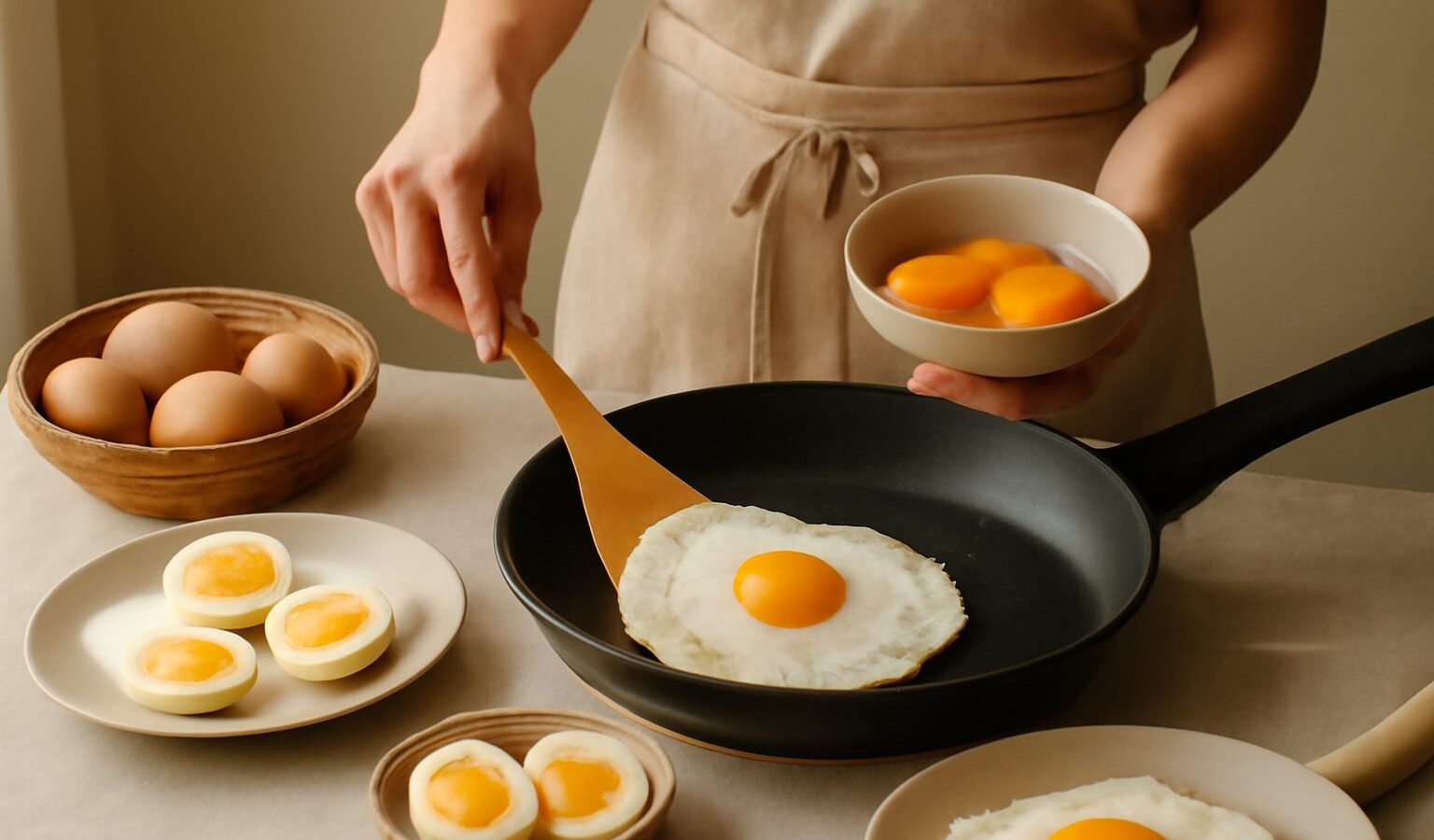
Eggs are the most forgiving ingredient in any kitchen, and also the one people most often get slightly wrong. Cooking eggs in Singapore well is a skill that pays off every single day, from the half-boiled eggs we love with kaya toast to a fast scramble before work or a silky steamed egg for dinner. The good news is that every style comes down to two things: heat and timing. Get comfortable with those and you can produce exactly the egg you want, on both gas and induction hobs, in the smallest HDB kitchen. Here is how to nail each method, plus the food-safety basics that matter in our warm climate.
Buying And Storing Eggs In Our Climate
Start with the eggs themselves. Any supermarket stocks plenty of grades and sizes; the wet market sells them loose too. Fresher eggs hold their shape better when fried or poached, while slightly older eggs peel more easily after boiling. In Singapore’s heat, keep eggs in the fridge rather than on the counter, ideally in their carton so they do not absorb fridge odours and stay protected. A simple freshness check is to lower an egg into a bowl of water: a fresh one sinks and lies flat, while a very old one floats and is best discarded.
On safety, cook eggs until set for anyone who is pregnant, very young, elderly or unwell, since fully cooked eggs are the safest choice. Runny yolks are a texture many enjoy, but they carry a little more risk, so use fresh, well-kept eggs and follow SFA guidance if you are cooking for someone vulnerable. Wash your hands and any surface that touched raw egg, and do not leave cooked egg dishes sitting out in the heat.
Boiled Eggs From Half To Hard
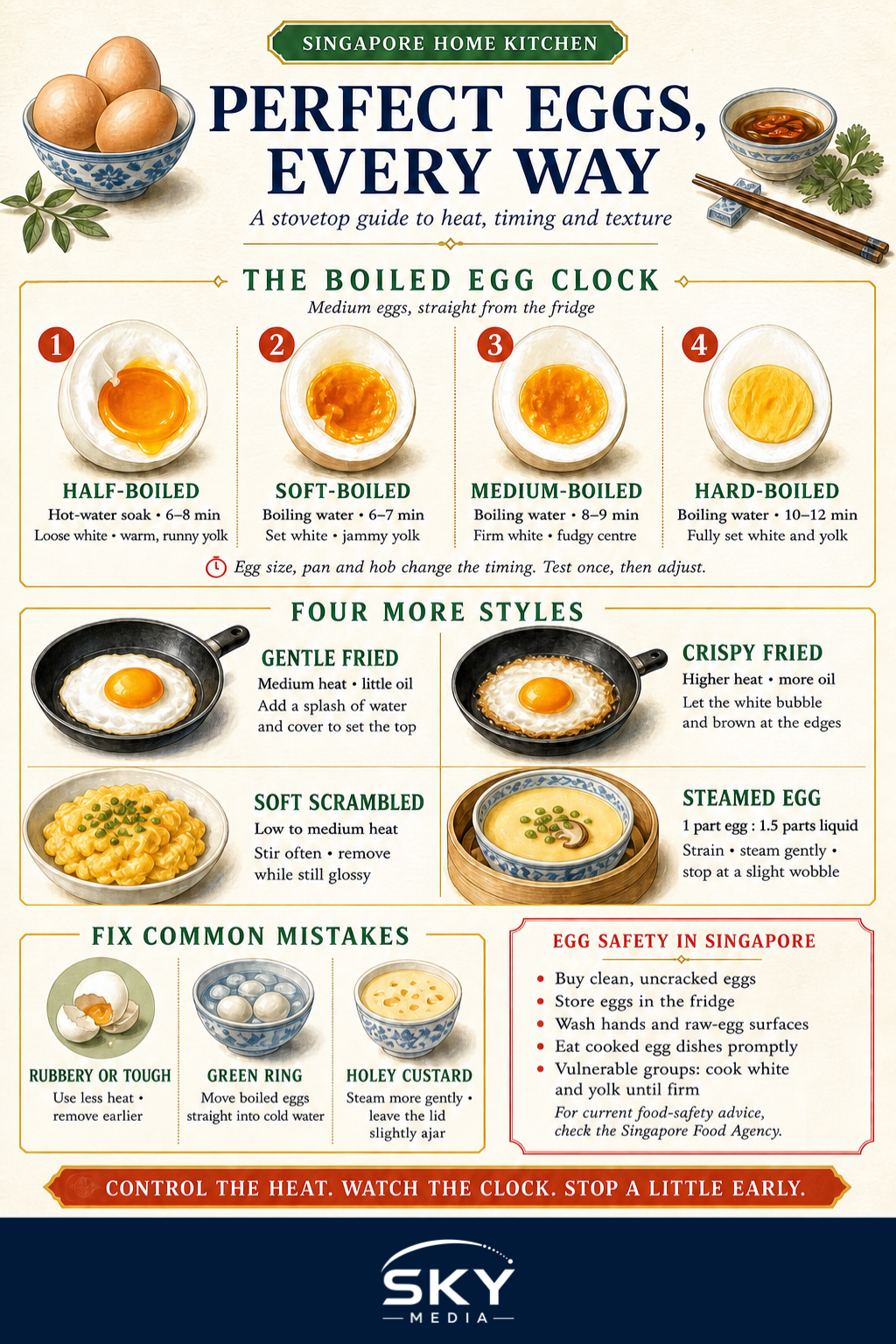
Boiled eggs are all about the clock. Bring a small pot of water to a gentle boil, lower in the eggs on a spoon so they do not crack, then time from that moment. The local half-boiled egg, with its just-set white and warm runny yolk, is slightly different: many hawkers pour hot water over eggs in a covered container and let them sit off the heat, which gives that signature soft, custardy result.
Here is a timing guide for medium eggs straight from the fridge, dropped into already-boiling water:
| Style | Approx. time | What you get |
|---|---|---|
| Half-boiled (soak method) | Hot water, sit 6 to 8 min | Loose white, runny warm yolk |
| Soft-boiled | 6 to 7 min | Set white, jammy yolk |
| Medium-boiled | 8 to 9 min | Firm white, fudgy centre |
| Hard-boiled | 10 to 12 min | Fully set yolk, no shine |
The moment the timer goes, plunge the eggs into cold or iced water. This stops the cooking, prevents that grey ring around the yolk, and makes peeling far easier. Tap, roll and peel under running water for the cleanest result.
Fried, Scrambled And The Everyday Pan
A fried egg is quick once you match heat to the finish you want. For a runny yolk with a set white, use medium heat and a little oil, crack the egg in, and let it cook gently; a splash of water and a lid steams the top without flipping. For crispy, lacy edges, the local kopitiam style, turn the heat up and use a touch more oil so the white bubbles and browns. Season at the end so the salt does not toughen the white.
Scrambled eggs reward low and slow. Beat the eggs with a pinch of salt, pour into a lightly oiled or buttered pan over low to medium heat, and stir often, pulling the setting egg into soft folds. Take the pan off the heat while the eggs still look slightly underdone and glossy, because they keep cooking from residual heat. If you like them firmer, simply leave them a touch longer, but stop before they weep water. A splash of milk is optional and makes them a little softer.
Follow these habits and the everyday pan becomes reliable:
- Use a non-stick pan or a well-seasoned one so eggs release cleanly.
- Do not crank the heat; most egg failures come from a pan that is too hot.
- Crack each egg into a small bowl first if you are worried about shell or freshness.
- Wipe the pan between styles so flavours and browning do not carry over.
Steamed Egg And Fixing Common Mistakes
Steamed egg, the smooth savoury custard known as chawanmushi in Japanese homes and a comforting dish across the region, is easier than it looks. Beat eggs with roughly one and a half times their volume in water or light stock, add a little salt or a dash of soy, then strain the mixture into a shallow bowl to remove bubbles. Steam gently over low heat with the lid slightly ajar so the surface stays silky rather than pocked with holes. It is done when just set with a slight wobble in the middle, usually a matter of minutes depending on the depth of the bowl.
Most egg problems trace back to heat that is too high or timing that runs long. Rubbery scrambled eggs, tough fried whites, green-ringed yolks and holey steamed custard are all signs to ease off the flame and pull the eggs a little earlier. Eggs carry over-cook after they leave the pan, so aiming to stop early is the single most useful habit. Store any cooked egg dishes in the fridge promptly, eat leftover boiled eggs within a couple of days, and reheat steamed or scrambled egg gently and only once.
Once you internalise the heat-and-timing idea, cooking eggs in Singapore becomes genuinely satisfying, and your first not-quite-perfect tries are just practice on the way there.
Explore more
Eggs pair with almost everything you cook at home. Serve them over fluffy stovetop rice for a fast meal, fold them into a quick stir-fry, or lift a steamed egg with a bowl of homemade stock or broth for extra depth.