

Stir-frying is the workhorse of home cooking across Singapore, and for good reason. A hot pan, a little oil and a few minutes turn raw vegetables and protein into a full dinner, using less energy and fewer dishes than almost any other method. Yet many people find their home stir-fries come out watery, pale or unevenly cooked. The secret is not a giant restaurant flame or years of practice; it is preparation and a clear order of operations. This guide covers stir-frying in Singapore from the ground up, focusing on the fundamentals that make the biggest difference on an everyday gas or induction hob.
Prep Everything Before The Heat Goes On
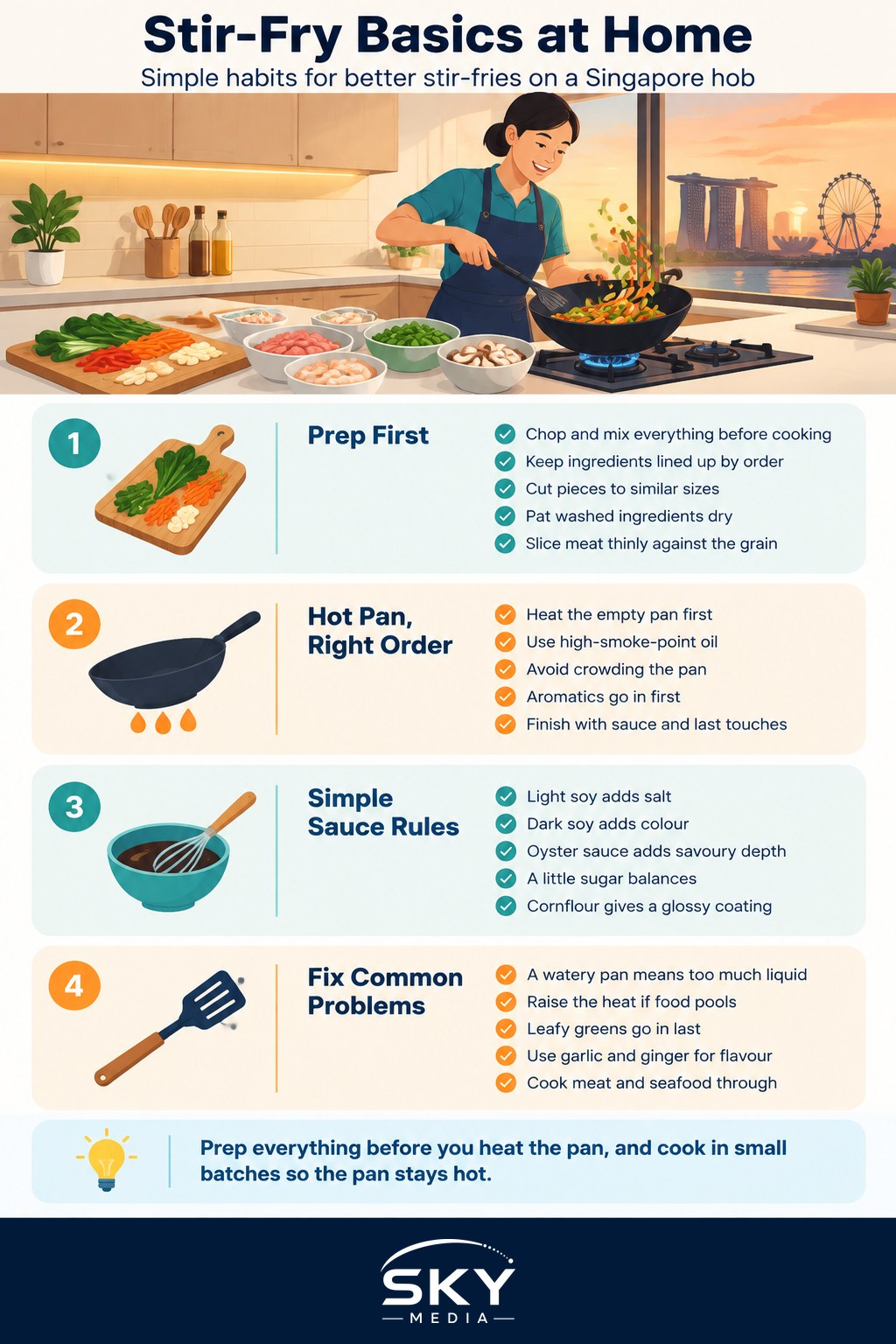
Stir-frying is fast, which means there is no time to chop halfway through. The single habit that transforms results is getting everything ready before the pan is even warm, what cooks call mise en place. Cut your vegetables and protein, mix your sauce in a small bowl, mince your aromatics, and line them up next to the stove in the order you will add them. Once the oil is hot, the whole dish moves in a couple of minutes, so scrambling for the soy sauce mid-cook is how things overcook.
Cut ingredients to a similar size so they cook evenly, and think about density. Firm items like carrot, broccoli stem and onion take longer, while leafy greens, beansprouts and garlic cook in moments. Slicing meat thinly and against the grain keeps it tender and quick to cook. Pat everything dry, especially anything just washed, because surface water is the enemy of a good stir-fry; it drops the pan temperature and steams the food instead of searing it. In our humid kitchens, giving washed vegetables a few extra minutes to drain in a colander really does pay off.
Heat, Oil And The Order Of The Pan
A stir-fry needs a genuinely hot pan before anything goes in. Heat the empty pan first, then add a high-smoke-point oil such as vegetable, peanut or canola; these handle the heat far better than butter or olive oil. The oil should shimmer and flow easily. Home hobs are less powerful than hawker burners, so the biggest mistake is crowding the pan, which crashes the temperature and creates a puddle. Cook in smaller batches if you are making a lot, and keep everything moving so nothing catches.
The order matters. A dependable sequence looks like this:
- Aromatics first. Garlic, ginger, shallot or chilli go into the hot oil for a few seconds until fragrant, not browned.
- Protein next. Add meat or seafood, spread it out, let it sear briefly, then toss until nearly cooked and lift it out if the pan is small.
- Hard vegetables. Carrot, broccoli and similar go in with a little tossing; a splash of water and a quick cover can steam them tender if needed.
- Soft vegetables and leaves. Beansprouts, cabbage and greens need only a moment.
- Return protein and add sauce. Pour the pre-mixed sauce down the side of the pan, toss to coat, and let it bubble and cling.
- Finish. Off the heat, add sesame oil, spring onion or a squeeze of lime.
Keep the food moving with a spatula in a lifting, folding motion rather than mashing it down. That constant motion is literally what stir-frying means, and it is how everything cooks quickly without burning.
Simple Sauces And Seasoning
You do not need a long list of bottles to season a stir-fry well. A handful of pantry staples, most of which sit on the same supermarket shelf, cover almost everything: light soy for salt, dark soy for colour and a hint of sweetness, oyster sauce for savoury depth, a little sugar to balance, and a splash of water or stock to make it a coating sauce rather than a dry one. A small spoon of cornflour mixed into the liquid gives that glossy, clingy finish you get at a good zi char stall.
Mix the sauce before you start and taste it raw so you can adjust. Here is a quick guide to common seasonings and what they do:
| Seasoning | What it adds | Watch out for |
|---|---|---|
| Light soy sauce | Salt and savouriness | It is salty; go easy at first |
| Dark soy sauce | Deep colour, mild sweetness | A little stains a lot; too much turns it bitter-dark |
| Oyster sauce | Rich umami body | Skip or swap for a vegetarian version if needed |
| Sugar | Balance and shine | Burns fast on high heat; add with the liquid |
| Cornflour slurry | Glossy clinging sauce | Too much makes it gluey and thick |
Start light, because you can always add more, but you cannot take salt out. If a dish tastes flat, a tiny pinch more salt or a squeeze of acid usually fixes it faster than more sauce.
Fixing A Watery Or Bland Stir-Fry
The most common home complaint is a watery, grey stir-fry, and it almost always comes from a pan that was not hot enough or was too full. If liquid pools, tip it off, raise the heat, and let the pan recover before carrying on. Vegetables that release a lot of water, like leafy greens, benefit from going in last and fast. Blandness usually means the sauce needed seasoning or the aromatics were skipped; do not be shy with the garlic and ginger.
A note on food safety, since stir-fries often include meat and seafood. Keep a separate board and knife for raw protein, cook chicken, pork and seafood through until no longer pink or translucent, and do not let cooked food sit out in the heat. Cool and refrigerate leftovers promptly, and reheat until piping hot right through. Prepped vegetables can be cut ahead and chilled, which makes a weeknight stir-fry even faster. Get the prep and heat right, forgive the first few tries, and stir-frying quickly becomes the meal you reach for again and again.
Explore more
Stir-frying connects to the rest of the everyday kitchen. Serve yours over fluffy stovetop rice, learn how to cook vegetables so they taste good for better texture, and read how to marinate meat and seafood well so your protein is tender and flavourful before it hits the pan.
Frequently Asked Questions
Can I stir-fry in a non-stick frying pan instead of a wok? Yes, with a few adjustments. Use medium to high heat rather than the highest, since non-stick coatings do not like extreme heat, and cook in smaller batches. A wide pan gives more surface area, though you will not get quite the same char as a carbon-steel wok.
How do I keep chicken breast tender when stir-frying? Slice it thinly against the grain and cook it briefly over high heat so it does not dry out. A short marinade with a little cornflour helps keep it moist. Take it out as soon as it is just cooked, and return it at the end.
Can I use frozen vegetables for stir-fry? You can, but they release more water, so thaw and drain them well or add them to a very hot pan in small amounts. They suit mixed stir-fries better than crisp leafy dishes. Frozen vegetables are a handy backup for busy weeknights.
How do I stop garlic from burning in the hot oil? Add it when the pan is hot but not smoking, and keep it moving for only a few seconds until fragrant. If it browns too quickly, lift the pan off the heat briefly. Cutting it a little larger, or adding it after the ginger, also gives you more time.
What can I use instead of oyster sauce in a stir-fry? Try a vegetarian mushroom-based stir-fry sauce, or mix light soy with a little sugar and stock for savoury depth. Check labels if anyone has a shellfish allergy or follows a vegetarian diet. Taste the sauce before it goes in and adjust.
Further reading: How to Deep-Fry Safely at Home in Singapore