
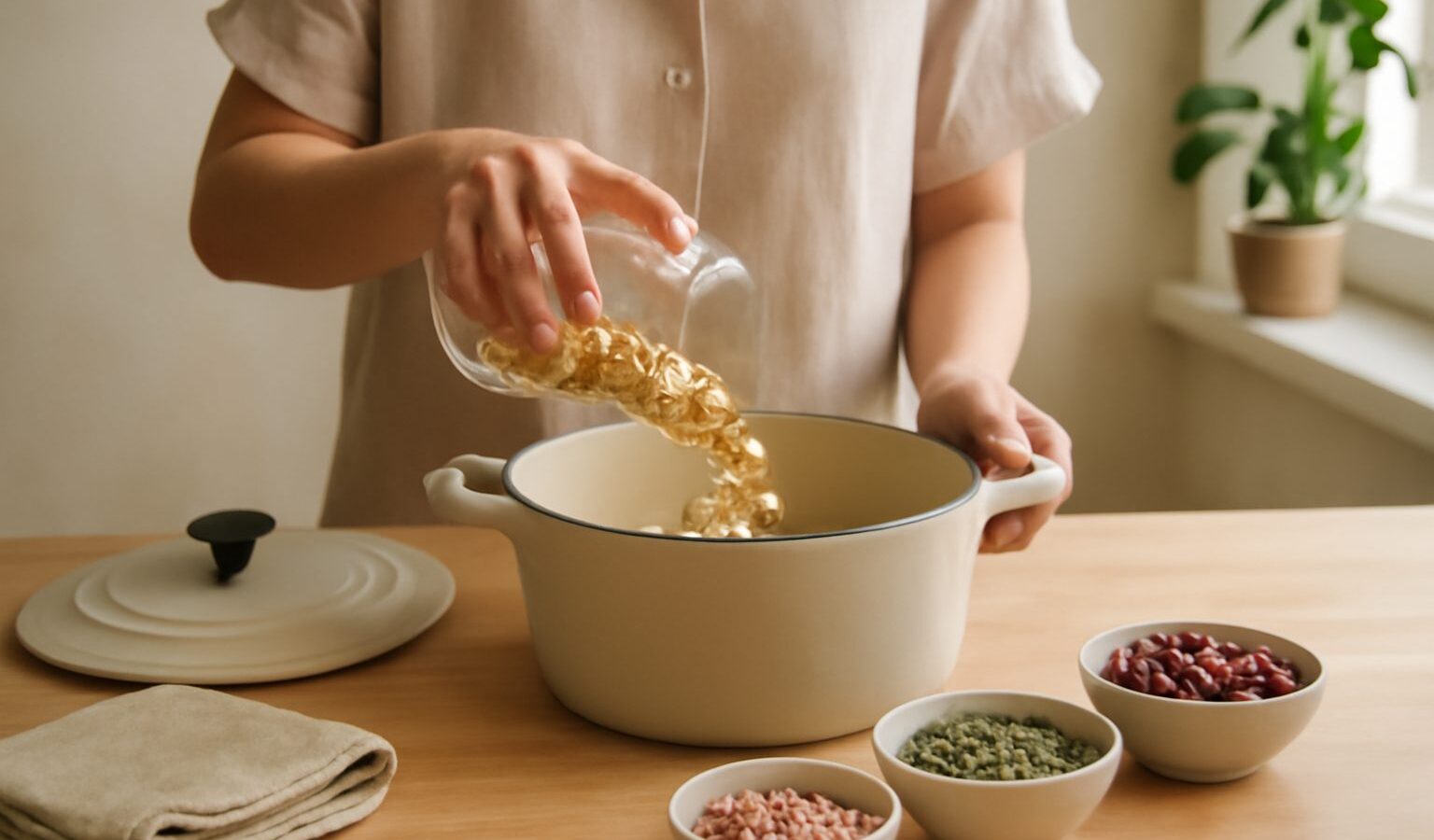
There is a quiet satisfaction in cooking dried beans from scratch. A bag of dried chickpeas or kidney beans costs a fraction of the tinned version, keeps for ages in the pantry, and rewards you with a creaminess and depth that tins rarely match. If you have only ever opened a can, learning the simple craft of cooking dried beans opens up a world of soups, curries, salads and stews, all built on humble, inexpensive ingredients. This guide takes you through soaking, safe cooking, seasoning and storage so your beans turn out tender and delicious rather than tough or bland.
Dried beans and legumes are among the most useful staples a home cook can keep. Lentils, chickpeas, black beans, kidney beans, black eyed peas and split peas all bring protein, fibre and a lovely range of textures. The trick is understanding that a dried bean is essentially a seed in suspended animation, and your job is to rehydrate it gently and cook it thoroughly so it becomes soft, digestible and safe to eat.
To Soak or Not to Soak
Soaking dried beans rehydrates them, shortens the cooking time and helps them cook more evenly. For most larger beans, an overnight soak is the classic approach. Cover the beans generously with cold water, since they will swell to two or three times their size, and leave them on the counter for eight to twelve hours or in the fridge if your kitchen is very warm. In the morning, drain and rinse them and they are ready to cook.
If you forget to soak, a quick soak works well. Cover the beans with plenty of water, bring to the boil, let them bubble for a minute or two, then take them off the heat, cover, and leave them to sit for about an hour before draining. Either way, always tip out the soaking water and cook in fresh water, which many cooks find gentler on the stomach.
Small legumes are the easy exception. Lentils and split peas do not need soaking at all, and most cook in twenty to forty minutes straight from the packet. This makes them a brilliant weeknight starting point while you build confidence with the larger beans.
Cooking Beans Safely and Well
Here is the most important safety point in this guide. Some raw dried beans, most notably red kidney beans, contain a natural compound called lectin, or phytohaemagglutinin, that can cause serious stomach upset if the beans are undercooked. Kidney beans, and their close relatives such as cannellini and white kidney beans, must be soaked and then boiled hard at a rolling boil for at least ten minutes before you lower the heat to simmer. Do not cook raw kidney beans on a low, gentle heat alone, and take particular care with slow cookers, which may not reach a high enough temperature to destroy the compound unless the beans have first been boiled hard on the stove. When in doubt, boil hard first, then continue cooking until fully soft.
For general cooking, place your soaked, drained beans in a large pot, cover them with fresh water by a good few centimetres, and bring to the boil. Skim off any foam that rises, then lower to a steady simmer. A gentle simmer rather than a violent boil keeps the skins intact and the beans creamy inside. Cooking times vary with the bean and its age, but expect roughly forty five minutes to an hour and a half for most soaked beans, and longer for older ones. Test several beans, because one soft bean is not proof the whole pot is done. A properly cooked bean should be completely tender and easy to squash, with no chalky or firm centre.
Season your beans late. Salt and acidic ingredients like tomatoes, vinegar or tamarind can slow the softening and toughen the skins if added at the start, so many cooks wait until the beans are almost tender before adding salt and any acid. Aromatics such as onion, garlic, bay, ginger or a piece of kombu, on the other hand, can go in from the beginning to build flavour into the cooking liquid, which becomes a lovely light stock in its own right.
Storing, Freezing and Everyday Use
Cooked beans keep beautifully. Once cooled, store them in the fridge in their cooking liquid, which stops them drying out, for up to three or four days. They also freeze extremely well, so it is worth cooking a big batch. Freeze them in portions with a little of their liquid, and they will keep for a few months, ready to drop straight into soups and curries. Always cool cooked beans reasonably quickly before refrigerating rather than leaving them at room temperature for hours.
Rinsing matters too. Give soaked beans a good rinse before cooking, and rinse tinned beans if you use them, to freshen the flavour. If you keep the cooking liquid from chickpeas, you may know it as aquafaba, a handy egg white substitute for whisking, though that is a topic for another day.
| Legume | Soak needed | Rough simmer time (soaked) | Key note |
|---|---|---|---|
| Red lentils | No | 15 to 20 minutes | Break down into a soft puree |
| Chickpeas | Yes | 60 to 90 minutes | Creamy when fully soft |
| Black beans | Yes | 60 to 90 minutes | Hold their shape well |
| Red kidney beans | Yes | 45 to 60 minutes | Must be boiled hard for 10 minutes first |
Cooking dried beans is one of those kitchen skills that quietly saves money and lifts your everyday cooking at the same time. Start with lentils to build confidence, move on to chickpeas and black beans, and treat kidney beans with the respect their hard boil demands. Season late, cook fully, cool safely, and you will always have a pot or a freezer bag of something wholesome and delicious to build a meal around.
Explore more
Basic Knife Skills for Home Cooks
How to Toast and Temper Spices
How to Make a Rempah Spice Paste
Mastering the Basics of Stir-Frying