

In a city that moves as fast as this one, contentment can feel almost radical. There is always a next milestone, a better home, a higher grade, a bigger role, and a quiet sense that we should be doing more. Cultivating contentment singapore style is not about giving up on your goals or pretending everything is perfect. It is about learning to feel a steady sense of enough in your life as it is now, even while you still hope and work for more. That inner peace is something you can grow, gently, over time.
What Contentment Really Means
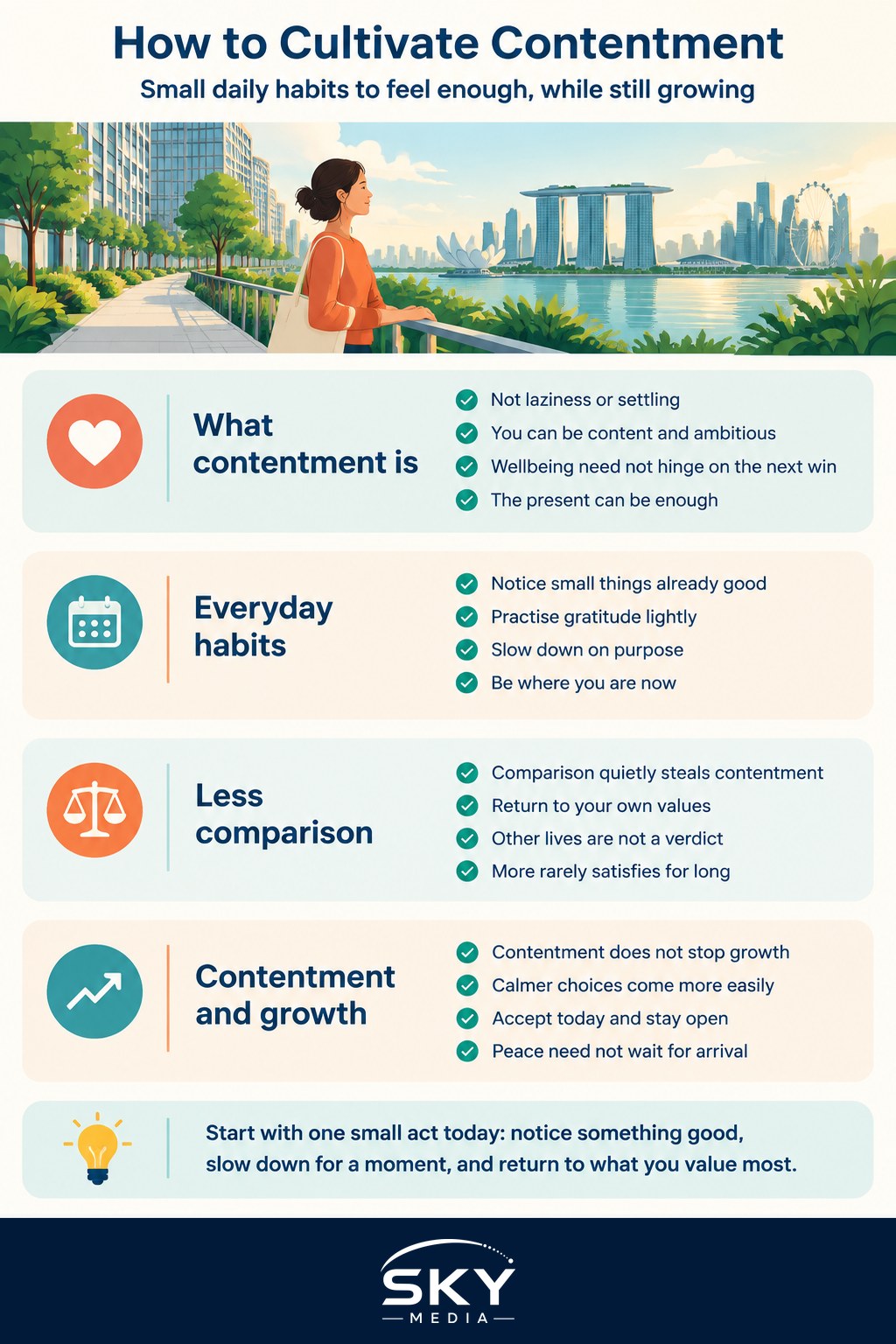
It helps to clear up what contentment is not. It is not laziness, complacency, or settling for less than you deserve. You can be deeply content and still ambitious, still growing, still reaching for things that matter. Contentment simply means your sense of wellbeing does not depend entirely on the next achievement or purchase.
The opposite is what many of us live in without noticing: a constant “I will be happy when”. I will be happy when I get the promotion, the flat, the number in the bank. The trouble is that when we arrive, the goalpost quietly shifts, and a new “when” appears. This is sometimes called the treadmill of always chasing, and it can leave you running hard yet never arriving.
Contentment steps off that treadmill, at least for moments at a time. It says the present is allowed to be enough, even as you keep moving. This does not dull your drive. If anything, it makes your goals healthier, because you pursue them from a place of fullness rather than lack.
Everyday Practices That Build Contentment
Contentment is less a destination and more a set of small habits that you return to. A few gentle practices help it grow.
- Notice what is already good. Most days hold small comforts we rush past: a decent meal, a kind word, a cool breeze after the heat. Naming them, even briefly, trains your attention towards enough.
- Practise gratitude, lightly. You do not need a grand ritual. A simple habit of noticing a few good things works well, and starting a gratitude practice is one of the most reliable ways to feel richer with what you already have.
- Slow down on purpose. Contentment struggles to grow when everything is rushed. Learning how to slow down in a busy city creates the quiet space in which enough becomes visible.
- Be where you are. Much of our discontent comes from living in the next moment rather than this one. Practising how to be more present brings you back to a life that is actually happening now.
None of these ask you to change your circumstances. They ask you to change where you place your attention, which is often the real source of restlessness.
Loosening The Grip Of Comparison
If there is one thing that quietly steals contentment here, it is comparison. Kiasu culture, visible status, and social feeds full of other people’s highlights keep us measuring ourselves against everyone else. It is hard to feel enough when a scoreboard is always in view.
The gentle work here is to keep coming back to your own values and your own definition of a good life, rather than the borrowed one that comparison hands you. When you know what genuinely matters to you, other people’s paths feel less like a verdict on yours. If comparison is a familiar struggle, how to stop comparing yourself to others offers kind, practical ways to quieten that habit.
It also helps to remember that more rarely satisfies for long. A bigger purchase brings a brief lift, then fades to the new normal. Recognising this pattern makes it easier to stop expecting the next thing to finally deliver lasting peace, and to look instead at what already sustains you.
Contentment Without Giving Up On Growth
Some people worry that contentment will make them soft or unmotivated. In practice, the opposite tends to be true. When you are not driven by a gnawing sense of lack, you make calmer, wiser choices. You chase goals you actually care about rather than ones meant to fill an inner gap.
The healthiest stance holds two things gently at once: deep acceptance of your life as it is, and openness to it growing. You can be content today and still hope for tomorrow. These are not in conflict. In fact, contentment often makes the journey towards your goals far more pleasant, because you are not postponing all your peace until you arrive.
A Gentle Close
Cultivating contentment is not a single decision but a quiet practice you return to, again and again, especially on the days when the city’s pace pulls you back into wanting more. Start small. Notice one good thing today. Slow down for a few minutes. Come back to what you actually value. Over time, these small acts build a steadier, warmer sense of enough, one that no achievement or purchase can give you and no setback can fully take away. You are allowed to feel that your life, as it is right now, is already enough.
Frequently Asked Questions
Can I be content and still ambitious? Yes. Contentment is feeling that your life is enough now, not giving up on goals. Ambition from a settled place is often calmer and more sustainable than ambition driven by fear of falling behind.
How do I feel content when everyone around me is buying property and getting promoted? Return to your own definition of a good life rather than a borrowed one. Limit time on feeds that fuel comparison and remind yourself you only see others’ highlights. Review your finances and goals to make choices that suit you.
Does contentment mean I should stop saving or planning for the future? No. Planning for the future is compatible with contentment and often reduces worry. The difference is that you do not postpone all peace until the plan is complete. Speak to a licensed financial adviser if you need help.
How can parents teach children contentment? Model it, by showing gratitude and not constantly upgrading. Talk about wants and needs, let children wait for things and praise effort over possessions. Limit exposure to advertising where you can.
What if I feel discontent even though I have everything I wanted? This is common, since the goalposts often move after we arrive. Pause to appreciate what you worked for and ask what is actually missing. If the feeling is heavy or lasts for weeks, consider talking to a GP or counsellor.
Further reading: How to Cultivate Awe and Wonder · How to Cultivate Hope · How to Cultivate Optimism Without Faking It · Understanding the Hedonic Treadmill