

Hope is easy to have when things are going well and much harder to hold onto when they are not. Yet hope is exactly what helps us keep going through difficult seasons, setbacks, and uncertainty. The good news is that hope is not just a feeling that comes and goes on its own. It is something you can actively nurture. Learning how to cultivate hope means building a grounded, realistic belief that things can get better and that your actions can help make them so.
This is not about forced positivity or pretending problems do not exist. Real hope looks honestly at the difficulty and still chooses to believe there is a path forward. In this guide we will look at what hope really is, why it matters, and simple ways to strengthen it in everyday life. We will also be honest about when hope needs the support of other people.
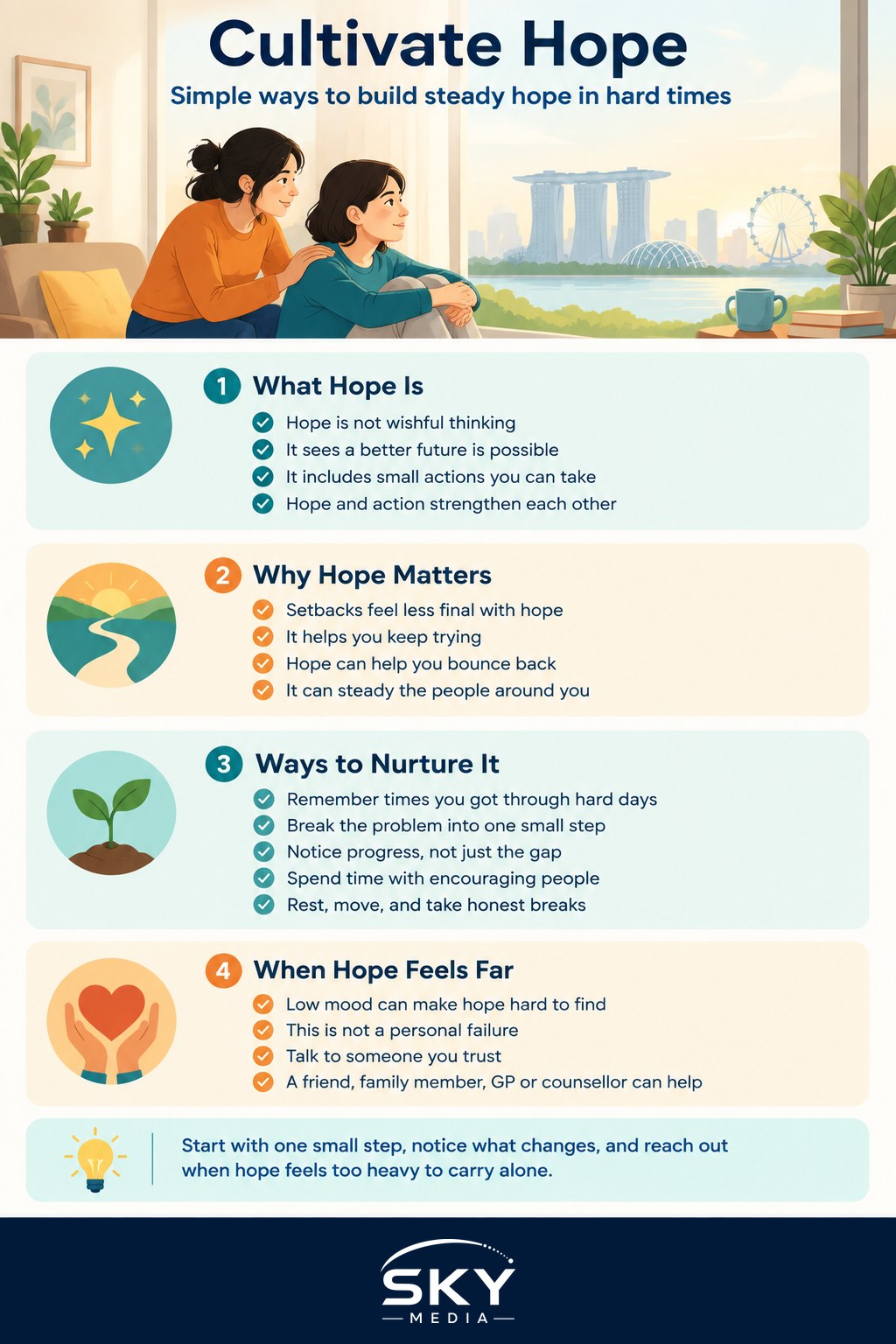
What Hope Really Is
It helps to separate hope from wishful thinking. Wishful thinking is passive. It hopes the situation magically improves while doing nothing. Real hope has two parts working together. First, a belief that a better future is possible. Second, a sense that you have some ability to move towards it, even in small ways.
That second part matters a lot. Hope grows stronger when you can see a path, however modest, and when you believe you can take at least the first step. This is why hope and action feed each other. Taking a small step creates evidence that things can move, which strengthens hope, which makes the next step easier.
Hope is also realistic. It does not deny that things are hard or that some outcomes are outside your control. It simply refuses to conclude that nothing can be done. In this sense, cultivating hope is close to how to cultivate optimism, but with an emphasis on getting through hard times rather than expecting only good ones.
Why Hope Is Worth Cultivating
Hope changes how we face challenges. When we have it, setbacks feel like obstacles to work through rather than final verdicts. We are more willing to try, more able to bounce back, and more likely to keep going long enough to see things improve. Without hope, even small difficulties can feel overwhelming, and we may give up before we have really tried.
Hope also affects the people around us. In a family, a workplace, or a friendship, a hopeful person helps others believe things can get better too. This is not about being relentlessly cheerful. It is about being the steady voice that says, this is hard, and we can still find a way through.
None of this makes hope a cure for every hardship. But as a way of meeting life, it gives us the energy and persistence to keep working towards better days.
Practical Ways to Nurture Hope
Hope can be cultivated with small, repeatable practices. Here are a few to try.
Look for evidence that things can change. Recall past difficulties you have come through. You have survived hard times before, and remembering that is genuine evidence, not empty cheerleading.
Focus on the next small step. When the whole problem feels too big, hope shrinks. Break it down and identify one tiny action you can take. Our guide on how to break big goals into steps can help. Each small step you complete quietly rebuilds hope.
Notice progress, not just the gap. It is easy to fixate on how far you still have to go. Deliberately noticing how far you have come keeps hope alive. Celebrating small wins, as covered in how to celebrate small wins, is a real hope-builder.
Surround yourself with hopeful influences. The people, stories, and content you spend time with shape your outlook. Time with encouraging friends, or examples of others who came through similar struggles, can renew your own hope.
Take care of the basics. Hope is much harder to hold when you are exhausted, over-caffeinated, and running on no sleep. Rest, movement, and honest breaks matter. Our piece on how to rest properly is more connected to hope than it might seem.
When Hope Feels Out of Reach
Some seasons are genuinely dark, and there are times when hope feels impossible to find on your own. This is not a personal failure. It is part of being human, and it is a sign to reach out rather than to push harder alone.
If you are dealing with persistent low mood, a heavy sense of hopelessness, or feelings that will not lift no matter what you try, please talk to someone you trust. A good friend, a family member, or a professional such as a GP or counsellor can help you carry what feels too heavy right now. Asking for support is not a loss of hope. It is one of the most hopeful things you can do, because it acts on the belief that things can get better with the right help.
Cultivating hope is a gentle, ongoing practice rather than a switch you flip once. Start small, take one step, notice what improves, and lean on others when you need to. Bit by bit, you build a steadier, more grounded hope that can carry you through whatever comes next.
Frequently Asked Questions
What is the difference between hope and optimism? Optimism is a general expectation that things will turn out well, while hope is believing a better outcome is possible and that your actions can help, even when the odds are uncertain. Hope can therefore survive in hard times when optimism feels forced.
How can I help someone else who has lost hope? Listen without rushing to fix or cheer them up, and stay present. Gently help them find one small next step, and keep checking in. If they talk about harming themselves, encourage professional help straight away and contact emergency services if there is immediate danger.
Can hope be harmful if the situation is unlikely to improve? Hope that denies reality can set you up for disappointment, but grounded hope adjusts. You can hope for different things as circumstances change, such as comfort, meaning or connection. Pairing hope with practical planning keeps it healthy.
How do I stay hopeful during unemployment or financial stress? Break the problem into small tasks, such as updating your CV or contacting one person a day, and note each completed step. Look up current support through MOM or SkillsFuture-related agencies, and talk to family or a counsellor about the strain.
What are signs that low hope may need professional help? Warning signs include feeling hopeless most days, losing interest in everything, changes in sleep or appetite, withdrawing from people, or thoughts of self-harm. See a GP or counsellor soon. If you are in crisis, reach out to emergency services or a helpline straight away.
Further reading: How to Cultivate Awe and Wonder