
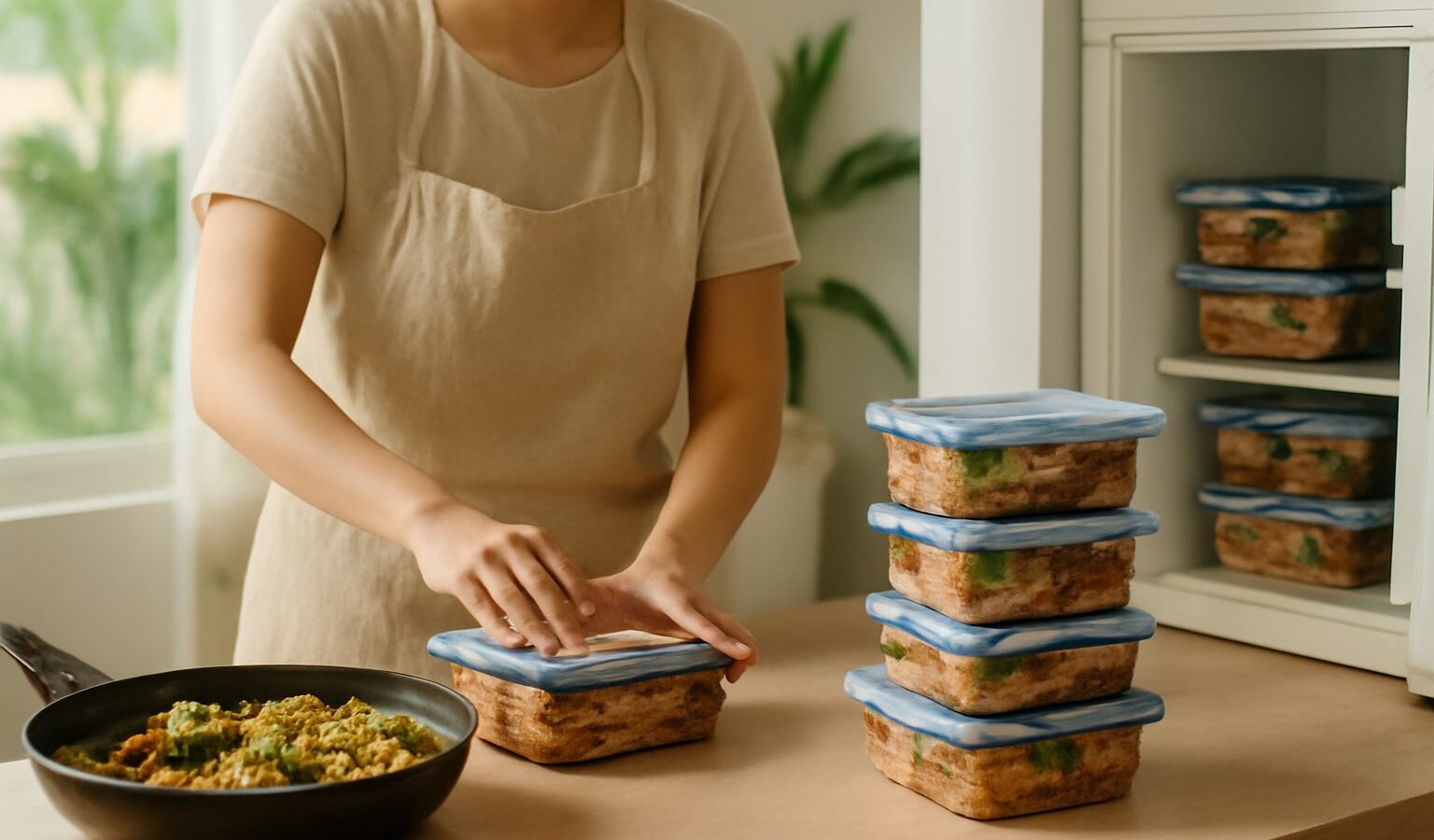
Batch cooking in Singapore is one of the highest-value habits a busy home cook can build. The idea is simple: cook a larger amount once, then eat from it across several days or bank portions in the freezer for the nights when you have neither the time nor the will to cook. Done well, it means home-cooked food on your busiest days, less money spent on last-minute takeaway, and far less waste. Done carelessly in our heat, it can be a food-safety risk, so this guide covers both the how and the safe handling.

What Batch Cooks Well, and What Does Not
Not every dish is a good candidate, and picking the right ones is half the battle. The best batch-cooking foods are saucy, sturdy, and forgiving. Think curries, rendang, braised dishes, bolognese and other meat sauces, soups, stews, dhal, chilli, and stocks. These often taste even better a day later once the flavours have settled, and they freeze and reheat without losing much.
Some things reheat poorly and are best cooked fresh. Crisp fried food goes soggy, delicate leafy greens turn dull and watery, and plain steamed rice is better cooked in a rice cooker each time, though cooked rice can be frozen if you cool and store it promptly. A smart middle path is to batch the components rather than whole plated meals: cook a big pot of curry to freeze, but stir-fry fresh greens and steam rice on the night. You get the time savings without the sad reheated vegetables.
Cook Once, Plan the Week Around It
The most efficient approach is to set aside one session, often a weekend morning before the kitchen gets hot, and cook two or three base dishes at once. While a curry simmers, you can brown a batch of meat sauce and get a soup going. Multitasking like this is where the real time savings come from, rather than cooking each dish on a separate evening.
Prep the shared building blocks in bulk too. Blend a big batch of rempah or aromatics, chop onions and garlic, and portion meat before you start. If you already do a loose weekly plan, batch cooking slots straight into it: pick which two nights eat fresh and which two lean on the freezer. Cook in a pot that suits your hob, and remember that induction and gas both handle a big simmer fine, though a heavier pot holds a gentle heat more evenly for long braises.
Cool and Freeze It Safely in Our Heat
This is the part that matters most in Singapore, and it is where general food-safety sense from the Singapore Food Agency should guide you. Our warmth is exactly the environment bacteria like, so the goal is to move cooked food out of the warm danger zone quickly rather than letting a big pot sit out cooling for hours.
Cool food down fast before it goes into the fridge or freezer. Splitting a large batch into shallow containers helps it lose heat quickly; a big deep pot left on the counter stays warm in the middle for a long time. Standing the pot in a sink of cool water speeds things along. Once it is no longer steaming hot, refrigerate or freeze it promptly rather than leaving it out. Portion into single-meal or family-sized containers so you only defrost what you need, and never refreeze something you have already thawed and reheated.
Freeze in a way that your future self will thank you for:
- Use airtight containers or bags and leave a little space, since liquids expand as they freeze.
- Lay filled bags flat to freeze, then stand them up like files to save room in a small freezer.
- Label everything with the dish and the date, because frozen curry and frozen bolognese look identical after a month.
- Freeze in usable portions so you are not chipping at one giant block.
- Rotate older items to the front so they get eaten first.
Use judgement on timing rather than trusting a number blindly. Frozen food stays safe for a good while but slowly loses quality, so aim to eat through the freezer over weeks, not to hoard it for a year. If something smells off or looks wrong when thawed, throw it out.
Reheat So It Tastes Freshly Made
Good reheating is what separates a satisfying meal from a disappointing one. Thaw frozen portions in the fridge overnight where you can, which is safer and gentler than leaving them on the counter in the heat. In a hurry, the microwave defrost setting or reheating gently straight from frozen in a pot both work.
Reheat until the food is piping hot all the way through, not just warm at the edges, stirring so there are no cold spots in the middle. Saucy dishes often thicken in the freezer, so loosen them with a splash of water or stock as they warm. Reheat only the portion you will eat; repeatedly cooling and reheating the same batch is both a quality and a safety problem. A quick lift at the end goes a long way: a squeeze of lime, fresh herbs, sliced chilli, or a scatter of fried shallots makes reheated food taste alive again.
Here is a quick guide to how common batch dishes handle the freezer.
| Dish type | Freezes well? | Note for best results |
|---|---|---|
| Curry, rendang, braises | Yes, very well | Flavour often improves; loosen when reheating |
| Soups and stocks | Yes | Freeze in flat bags to save freezer space |
| Meat sauce, dhal, chilli | Yes | Portion for single meals before freezing |
| Cooked rice | Okay | Cool and freeze promptly; reheat piping hot |
| Fried or crispy food | Poorly | Loses crunch; cook these fresh instead |
| Leafy greens | Poorly | Stir-fry fresh on the night |
Explore more
Batch cooking works best as part of a bigger routine. Pair it with a light weekly plan using our guide to planning a week of home-cooked meals, and start with produce that lasts by reading keeping produce fresher for longer. For the full picture on fridges, containers, and safe handling in our climate, see how to store food safely at home.
Frequently Asked Questions
Can I freeze curries made with coconut milk or potatoes? Yes, but expect some change. Coconut milk can separate and potatoes can turn grainy after freezing. Stir well while reheating to bring the sauce back together, and if potatoes matter, add them fresh on the day. Dishes like rendang and meat sauces freeze with fewer surprises.
How long can I keep batch-cooked meals in the freezer? Frozen food stays safe for a good while, but quality slowly drops, so aim to eat through your stock over a few weeks rather than hoarding it. Labelling every container with the date helps. If a thawed portion looks or smells wrong, throw it out.
Are glass or plastic containers better for freezing batch-cooked meals? Both work. Glass is sturdy and does not hold smells, but it is heavy and needs headroom for expansion. Freezer-safe plastic and flat bags save space. Whatever you use, make sure it is labelled freezer-safe and cool the food first.
How do I batch cook with a small fridge freezer in a flat? Freeze in flat bags and stand them upright like files so they use less room. Portion into single meals and keep a short list of what is inside. Cook smaller batches more often, and rotate older items to the front so nothing is forgotten.
Is it safe to reheat batch-cooked food more than once? It is best not to. Each cycle of cooling and reheating gives bacteria another chance to grow and lowers quality. Freeze in portions you will eat in one sitting, defrost only what you need, and reheat it once until piping hot all the way through.
Further reading: How to Plan Simple Sahur Meals for Busy Weekdays · Batch Cooking to Reduce Food Waste