

Our tropical heat and humidity are hard on food. Leave a plate of cooked rice on the counter for an afternoon and it can turn before dinner; a loose bag of flour becomes a home for weevils within weeks. Good food storage in Singapore is really about working with the climate rather than against it: chilling things quickly, sealing them well, and keeping raw and cooked foods apart. Get the basics right and you waste less, save money, and lower the risk of anyone getting sick.
This is general guidance to help you build safe habits. For detailed food-safety rules, the Singapore Food Agency (SFA) is the authority, and their advice should take precedence. When in doubt about whether something is still good, throw it out; it is not worth the gamble.
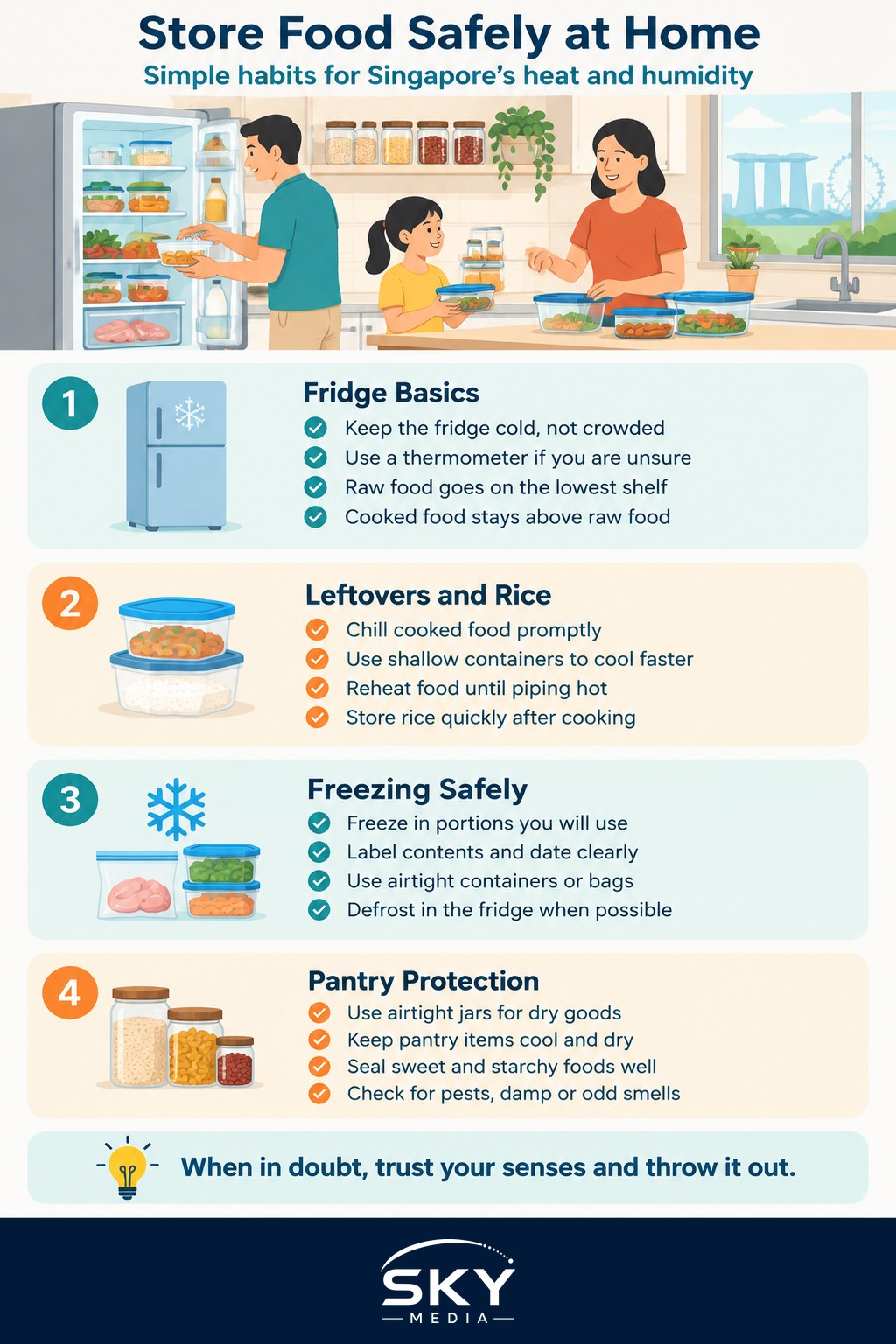
Organise Your Fridge So It Actually Keeps Food Safe
A fridge only protects food if it is cold enough and packed sensibly. Keep it running cold, well below room temperature, and use a small fridge thermometer if you are unsure, rather than guessing from the dial. Do not cram it so full that cold air cannot circulate, and try not to leave the door open while you decide what to cook.
Where things sit inside matters:
- Store raw meat, poultry and seafood on the lowest shelf, in a sealed container or on a plate, so their juices cannot drip onto anything below.
- Keep cooked food and ready-to-eat items like fruit, cheese and leftovers on the upper shelves, above the raw items.
- Use the crisper drawers for vegetables and fruit, ideally kept apart, as some fruit speeds up spoilage in nearby greens.
- Treat the door as the warmest zone, best for condiments and sauces rather than milk or eggs.
This simple top-to-bottom order, cooked above raw, is one of the easiest ways to prevent cross-contamination at home.
Cool and Store Leftovers Before the Heat Gets Them
Leftovers are where our climate bites hardest. Cooked food left standing in a warm kitchen is an open invitation for bacteria, so do not leave it out for long. Get cooked food you are saving into the fridge reasonably promptly rather than letting it sit out all evening.
To cool a big pot faster, divide it into smaller, shallow containers so the heat escapes quickly; a deep pot of curry can stay warm in the middle for hours. You do not need to wait for food to reach room temperature before refrigerating in our heat. When you reheat, heat it thoroughly and piping hot all the way through, and reheat only the portion you will eat rather than warming the whole batch again and again. Use up fridge leftovers within a short few days, and if anything smells off, looks slimy or you simply are not sure how long it has been there, discard it. Rice deserves special care: cool and refrigerate it quickly after cooking, and do not leave it sitting out, as improperly stored cooked rice is a known cause of food poisoning.
Freezing: Your Best Friend in a Hot Climate
The freezer lets you buy in bulk, cook ahead and waste almost nothing. Portion food before freezing so you can defrost only what you need, and label each item with its contents and the date, because everything looks alike once frozen. Press the air out of bags or use airtight containers to prevent freezer burn.
Defrost safely, which mostly means planning ahead: move food from the freezer to the fridge the night before rather than leaving it on the counter in the heat, where the outside warms into the danger zone while the middle stays frozen. If you are in a hurry, a sealed bag under cold running water works, or the microwave defrost setting if you will cook it straight away. Never refreeze raw meat or seafood that has fully thawed unless you have cooked it in between.
Keeping Dry Goods Safe from Pests and Humidity
Your pantry needs as much attention as your fridge here. Humidity makes biscuits go soft, salt clump and oils turn rancid faster, while ants and pantry weevils find any open packet. The fix is airtight containers. Decant rice, flour, sugar, noodles, cereals and dried spices into sealed jars or tubs rather than leaving them in their original packaging.
- Store dry goods in a cool, dry cupboard away from the hob and direct sun.
- Keep anything sweet or starchy tightly sealed so ants cannot smell a way in.
- Buy flour, nuts and grains in amounts you will use within a reasonable time, as they can harbour weevils or go rancid if kept too long.
- Wipe up spills and crumbs quickly, since they draw ants fast in our climate.
- Check older packets before using them, and discard anything with a musty smell, webbing or tiny moving specks.
Keeping the pantry tidy and sealed is half the battle against the pests every Singapore kitchen knows too well.
Storage at a Glance: Where Common Foods Belong
| Food | Best place | Handling note |
|---|---|---|
| Raw meat, poultry, seafood | Fridge, lowest shelf | Sealed, so juices cannot drip down |
| Cooked leftovers | Fridge, upper shelf | Cool fast, use within a few days |
| Leafy vegetables | Crisper drawer | Store dry; wash just before use |
| Rice and flour | Sealed pantry container | Airtight to block weevils and damp |
| Cooked rice to save | Fridge, promptly | Cool quickly; reheat piping hot |
| Bread | Counter, sealed, short term | Freeze extra to beat mould in humidity |
Use this as a rough map, and lean on your senses too: smell, sight and common sense catch most problems.
None of this needs to be complicated. A cold, orderly fridge, leftovers chilled quickly, a well-stocked freezer and a sealed pantry will carry you a long way. Build these habits and safe food storage becomes second nature, keeping your cooking both economical and safe in our warm, humid home.
Explore more
Safe storage pairs naturally with a well-run kitchen, so see our guide to essential kitchen tools for beginner cooks to get set up. Keeping raw and cooked food apart starts with your board and blade, covered in basic knife skills every home cook should know, and looking after your gear extends to learning how to season and care for a wok.
Frequently Asked Questions
How long can cooked food safely sit out in a Singapore kitchen? Not long at all. In our warm, humid climate bacteria multiply quickly, so cooked food should go into the fridge fairly soon rather than sit out all evening. For precise guidance on timing, refer to the Singapore Food Agency, and discard anything left out for an uncertain length of time.
Should eggs be kept in the fridge or on the counter here? In Singapore’s warmth the fridge is the safer choice. Keep them in their carton on a shelf rather than in the door, where temperature swings are greatest. Eggs bought chilled should stay chilled, and cracked or dirty ones are best avoided.
Is it safe to marinate raw meat on the counter or in the fridge? Marinate in the fridge, in a covered container on the lowest shelf. Leaving raw meat out in the heat lets bacteria grow. Do not reuse leftover raw marinade as a sauce unless you boil it thoroughly first, and wash boards and hands afterwards.
What should I do with my food if there is a power cut? Keep the fridge and freezer doors shut as much as possible so the cold lasts. Once power returns, throw out perishable items that you think warmed up, especially raw meat, cooked dishes and dairy. A thermometer helps, and if unsure, discard.
Who is at higher risk from badly stored food, and what extra care is needed? Young children, pregnant women, older adults and people with weak immunity are more vulnerable to food poisoning. Be stricter about chilling, thorough reheating and discarding doubtful food. For personal dietary or health advice, speak to your doctor, and see the SFA’s guidance.
Further reading: How to Open, Store and Freeze Durian at Home · Storing and Using Christmas Leftovers Safely in Singapore’s Heat · Pineapple Tart Storage Tips for Singapore’s Humidity