
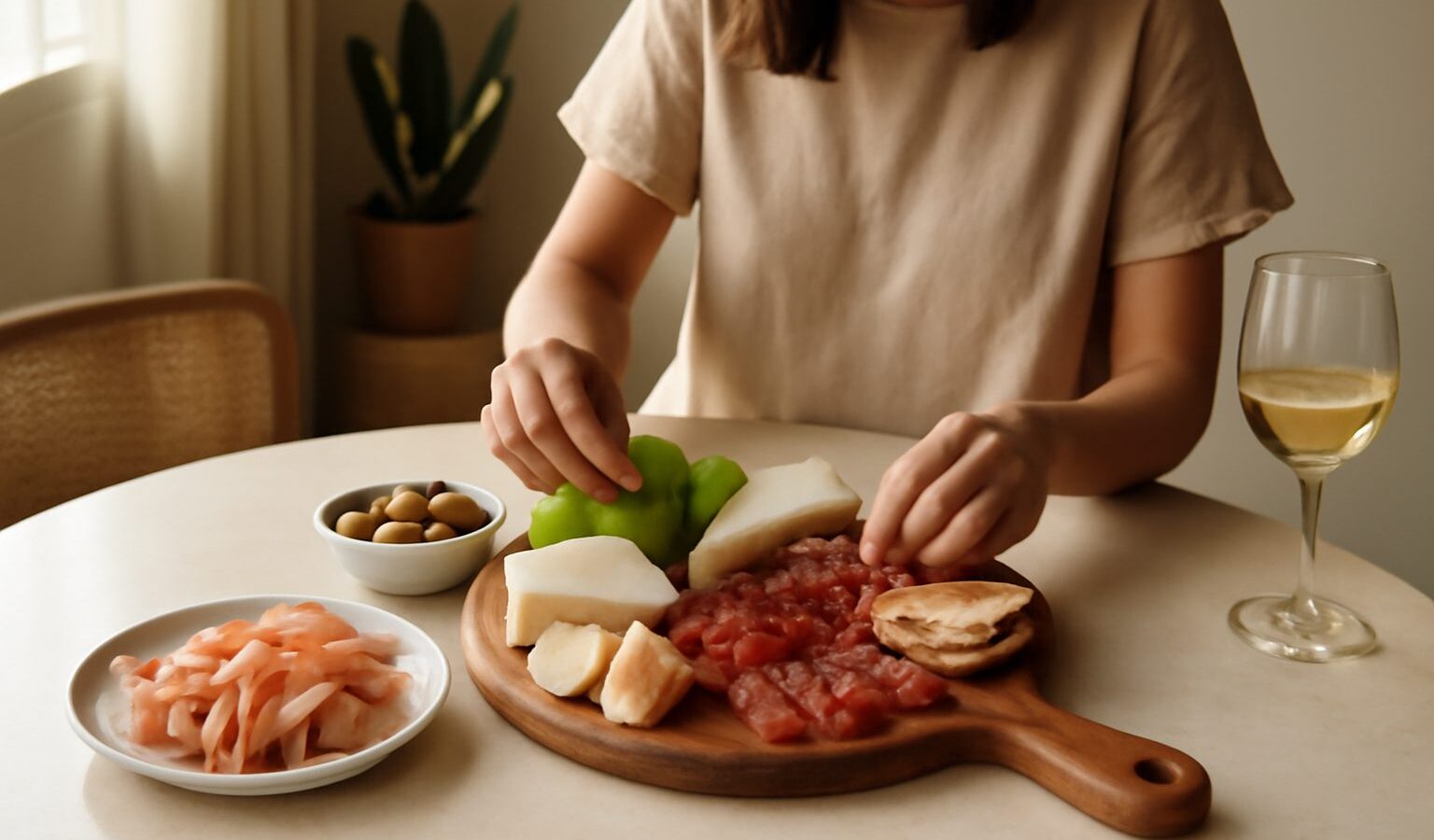
A well-made grazing board turns any gathering into an occasion. Whether it is a Friday night in, a birthday, or festive drinks, a cheese board in Singapore is easy to put together once you understand the basic building blocks. This guide walks you through selection, pairing, assembly, and the food-safety essentials that matter in our warm and humid climate.
Choosing Your Cheeses
A good board offers contrast in texture, flavour, and milk type. A simple approach is to pick three to five cheeses across different styles so there is something for everyone.
- A soft, creamy cheese such as brie or camembert for a mild, spreadable option.
- A hard, aged cheese such as cheddar, gouda, or parmesan for a firmer bite and deeper flavour.
- A blue cheese for those who enjoy something bold and pungent.
- A fresh cheese such as goat’s cheese or mozzarella for a light, tangy contrast.
Allow roughly 80 to 120 grams of cheese per person if it is the main event, and less if there is other food. Buy from a shop with good turnover so the cheese is fresh, and take it out of the fridge around 30 to 45 minutes before serving so the flavours open up. In Singapore’s heat, do not leave it out much longer than that.
A note on allergens. Cheese is dairy, so always let guests know, and offer a plant-based cheese or a bowl of nuts-free, dairy-free snacks for anyone who avoids it. Some cheeses are made with animal rennet, so if you are catering for vegetarians, look for those labelled vegetarian or made with microbial rennet.
Choosing Your Charcuterie, With Alternatives for Everyone
Charcuterie means cured and prepared meats, and it adds savoury, salty depth to a board. An important point for Singapore: many classic charcuterie items such as prosciutto, salami, chorizo, and pancetta are pork, which does not suit everyone.
Always offer alternatives so every guest can share the board. Good options include halal-certified beef or chicken cold cuts, smoked turkey, beef pastrami, and smoked or cured beef. For a fully halal board, choose only halal-certified items and keep them separate from any pork. For vegetarians and vegans, marinated mushrooms, olives, sundried tomatoes, roasted vegetables, falafel, and plant-based cold cuts make excellent savoury additions. It is thoughtful to label items clearly or to build two boards, one pork-free, so guests know what they are eating. Cured meats are salty, so a little goes a long way; around 50 to 80 grams per person is plenty.
If you enjoy pairing food with wine, our guide to wine pairing with local food in Singapore has ideas you can adapt to a grazing board.
The Supporting Cast
The extras are what make a board feel abundant. Aim for a mix of the following:
- Something crunchy, such as crackers, crostini, or sliced baguette. Offer a gluten-free cracker for anyone avoiding gluten.
- Something sweet, such as grapes, figs, sliced apple or pear, or a spoonful of honey or fruit jam.
- Something tangy, such as pickles, cornichons, or a homemade achar. Our guide on how to make achar and pickles in Singapore is a lovely local twist.
- Something nutty, such as almonds, walnuts, or cashews. Flag nuts clearly, as they are a common allergen, and keep a nut-free corner for guests who need it.
- A few dips or spreads, such as hummus or a soft cheese, to add moisture and variety.
Assembling the Board
Assembly is where a board comes to life, and it is simpler than it looks. Start with a large wooden board, slate, or platter. Place the cheeses first, spacing them around the board, and give each its own knife to avoid mixing flavours and to keep things hygienic. Next, add small bowls for olives, dips, honey, and pickles, since these anchor the layout. Then fold or fan the meats and plant-based alternatives into loose piles, which look more inviting than flat slices.
Fill the gaps with crackers, bread, fruit, and nuts, tucking them in generously so the board looks full. Add a few sprigs of fresh herbs or some edible flowers for colour if you like. Vary the heights and cluster similar colours apart so the eye moves across the board. Keep pork and non-pork items clearly separated, and consider small labels for allergens and dietary preferences.
Food Safety in Our Climate
This is where care matters most. Singapore is warm and humid, so cheese and charcuterie should be kept chilled until you serve them and returned to the fridge promptly. As a general rule, do not leave a board out at room temperature for more than about two hours, and less on a hot day or outdoors. Prepare the board close to serving time rather than hours ahead, keep it in the coolest part of the room and away from direct sun, and use clean utensils throughout. Refrigerate leftovers quickly and enjoy them within a day or two, discarding anything that has sat out too long or smells off.
Bringing It Together
A great board is about generosity and contrast, not expense. Pick a few cheeses across different styles, offer meats plus halal, beef, turkey, and vegetarian alternatives so nobody is left out, add sweet, tangy, and crunchy extras, and arrange it all with a little care. Keep everything chilled and served safely, flag the dairy, nuts, and gluten, and you will have a board that looks stunning and suits every guest at the table.