
Homemade pizza is one of the best value cooking projects you can take on. A bag of flour and a sachet of yeast stretch a long way, the toppings are entirely up to you, and the results beat most delivery once you get the hang of the dough. Making pizza at home in Singapore does mean working with a normal domestic oven rather than a blazing wood fired one, and coping with humidity that makes dough lively. Both are easy to manage with a few simple habits, and you do not need any special equipment to start.
The Dough and Your Ingredients
Pizza dough needs only four things, flour, water, yeast and salt. A reliable starting point is 300g of bread flour or plain flour, 190ml of warm water, half a teaspoon of instant yeast, and a teaspoon of salt, which makes two medium bases. Bread flour gives a chewier, stronger crust because of its higher protein, while plain flour makes a softer base. A spoonful of olive oil is optional and gives a slightly richer dough.
Mix the flour, yeast and salt in a bowl, add the water, and bring it together into a rough, sticky ball. Knead on a lightly floured surface for about eight minutes until smooth and elastic, or use the stretch and fold method in the bowl if you prefer less mess. Cover the bowl and let the dough rise until roughly doubled. This is where our climate helps you, since a warm Singapore kitchen speeds fermentation, so your dough may be ready in an hour rather than two. Do not let it over prove, as a dough that has collapsed and smells sharply sour has gone too far. For a slower, tastier ferment, rest the covered dough overnight in the fridge.
Note the main allergen straight away, as this dough contains gluten. Common toppings bring dairy from cheese, and cured meats and some sauces can contain other allergens, so check labels if you are cooking for guests. Keep your knife kit sharp and ready, and if you are still setting up, our guide to essential kitchen tools for beginner cooks will point you to the useful basics.
Shaping, Baking and Avoiding Common Mistakes
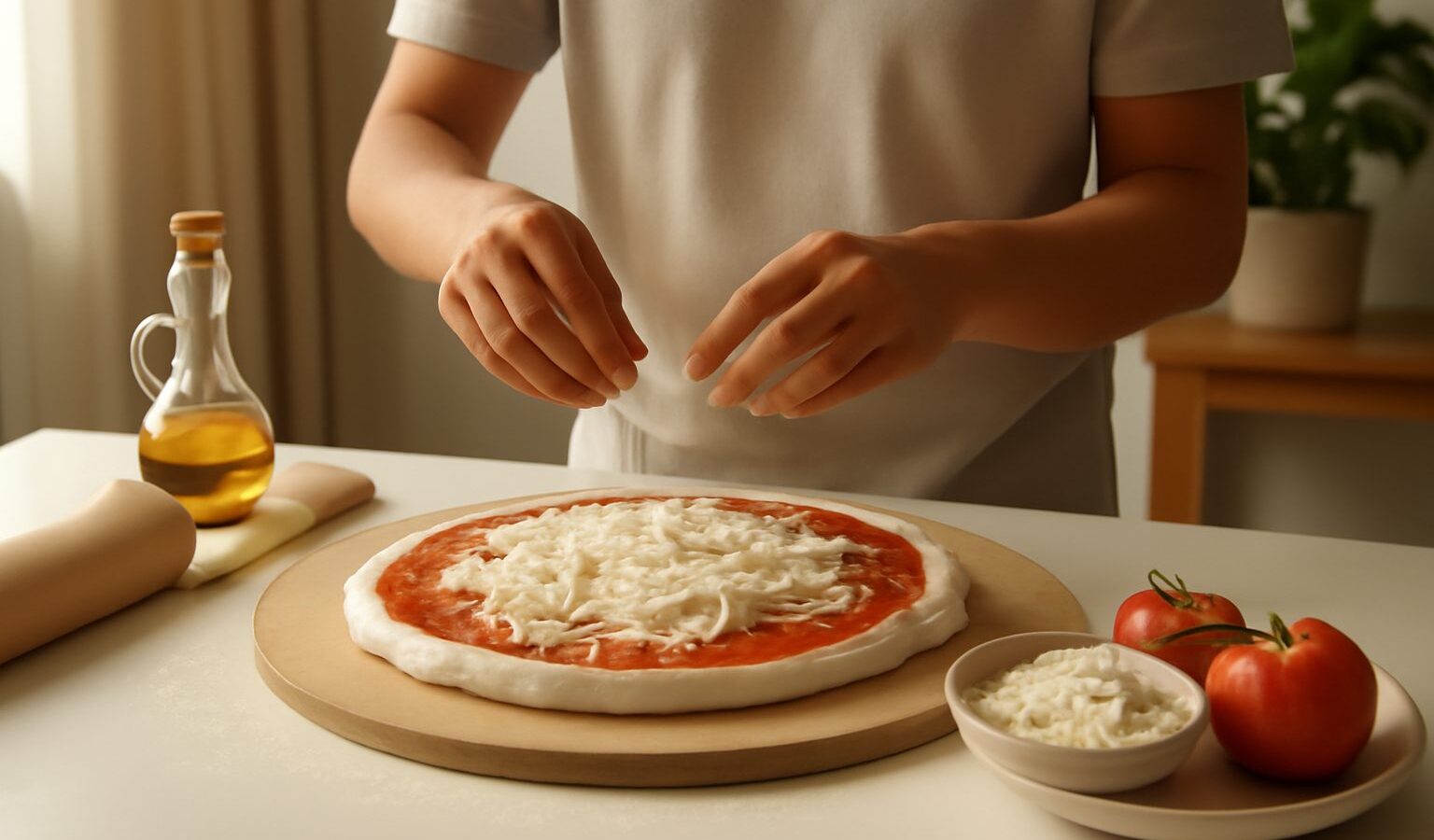
When the dough has risen, tip it out gently so you keep some of the air inside. Divide it, then shape each piece by pressing from the centre outward with your fingertips, leaving a slightly thicker rim. Stretch it over your knuckles or on the surface, but do not use a rolling pin, which crushes the air you worked to build. In humid weather the dough can feel wet and slack, so keep your hands and surface lightly floured and work fairly quickly.
The biggest lever for a good crust at home is heat. Set your oven to its highest temperature, often around 250C, and preheat it fully for at least twenty to thirty minutes. If you have a baking steel or a heavy oven tray, heat that inside too, then slide your topped pizza onto the hot surface for a crisp base. A grill or top heat element switched on for the final minute helps char the top the way a proper pizza oven would.
Keep toppings light, which is the mistake most beginners make. A thin layer of sauce, a modest scatter of cheese, and a few well chosen toppings will cook evenly and stay crisp. Overloading the base makes it soggy and stops it cooking through. Add delicate items like fresh basil or rocket after baking rather than before. Bake until the crust is golden and blistered and the cheese is bubbling, usually eight to twelve minutes depending on your oven.
If you use meat toppings, make sure any raw sausage or chicken is cooked through fully, with no pink meat, before you consider the pizza done, and keep raw meat separate from ready to eat toppings on your board to avoid cross contamination. A quick check with a thermometer for thicker raw toppings gives peace of mind, aiming for 74C for chicken. Let the finished pizza rest for a minute or two before slicing so the cheese sets slightly and does not slide off.
A few final troubleshooting notes. If your base is pale and soft, your oven was probably not hot enough or the pizza came off the hot surface too soon. If the dough shrinks back as you stretch it, let it rest for ten minutes to relax, then try again. Leftover dough freezes well, so portion it, oil it lightly and bag it. Once you are confident with a classic base, experiment with different flours and toppings to find your house style. For inspiration on flavours and regional styles, browse our roundup of the best pizza in Singapore and our wider look at Italian food in Singapore.