

Onboarding a new team member is one of the highest-leverage things a manager or team lead can do. Get it right and the person feels welcome, understands the work, and starts contributing within weeks. Get it wrong and they spend their first month confused, guessing at priorities, and quietly wondering if they made the right choice. In a tight Singapore labour market where good hires are hard to find and easy to lose, a thoughtful start protects the effort you already put into recruiting. The good news is that a strong onboarding does not need a big budget or a fancy system. It needs a plan, a bit of preparation, and someone who genuinely cares that the new person succeeds.
Prepare Before Day One
Most onboarding problems start before the new hire even arrives. If you wait until their first morning to think about logistics, you will spend that morning scrambling instead of welcoming.
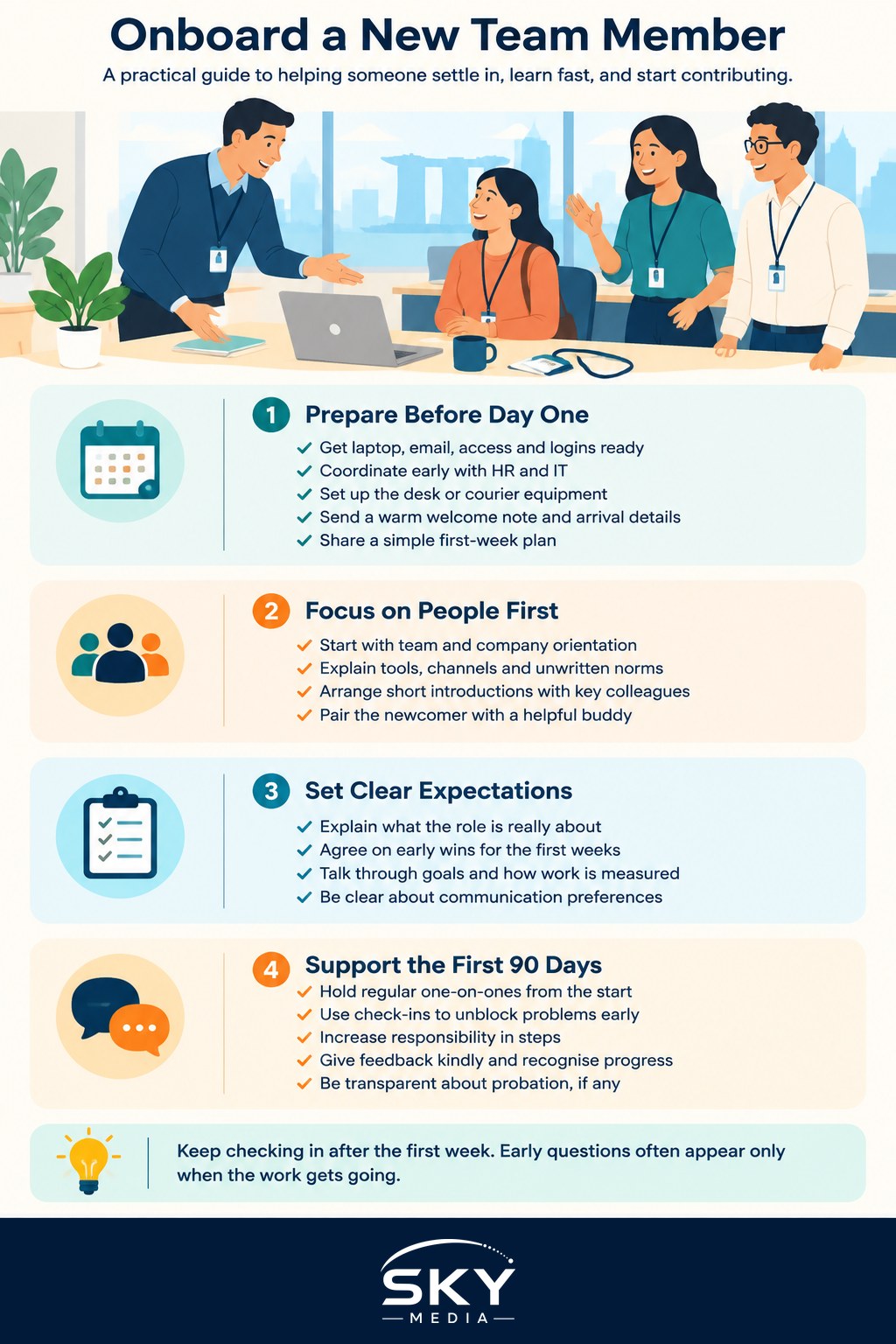
A week or so ahead, sort out the practical basics. Make sure their laptop, email account, building or lift access, and any software logins are ready. Coordinate with HR and IT early, because access approvals often take longer than you expect. Prepare their desk or, for a remote or hybrid role, courier equipment in good time and confirm it arrived.
Just as important is the human side. Send a short, warm welcome note before they start. Let them know what time to arrive, where to go, who to ask for, and what the dress code is like. Tell the rest of the team who is joining, what they will be doing, and when. A new person walking into a room where nobody knew they were coming is an awkward, avoidable start.
Draft a simple first-week plan. It does not need to be minute by minute, but a rough outline of who they will meet, what they will read, and what small task they might attempt gives structure to days that can otherwise feel aimless.
Make the First Week About People and Context
The first week is not the time to judge productivity. It is the time to build understanding and relationships. Resist the urge to load the new hire with deliverables straight away.
Start with orientation to the team and the wider organisation. Explain what your team is responsible for, how it fits into the company, and who the key people are in other departments. Walk them through the tools, the shared drives, the chat channels, and the unwritten norms, such as how meetings are run or when people usually reply to messages. These small things are invisible to you and completely opaque to someone new.
Arrange a few short introductions with the people they will work with most. A fifteen-minute chat with a future collaborator is worth more than a long org chart. If your workplace is multicultural, which most Singapore teams are, a friendly round of introductions also helps a newcomer read the social rhythm of the group.
Consider pairing the new hire with a buddy, someone approachable who is not their manager and who can answer the small questions people feel shy asking the boss. Where can I get a good lunch nearby, how do I claim expenses, is it normal to message on weekends. A buddy shortens the awkward phase enormously. If you want to go further, learning about being a good mentor at work can help you or the buddy support the new person well.
Set Clear Expectations Early
Clarity is a gift. New team members often feel anxious precisely because they do not know what good looks like yet. You can remove a lot of that anxiety by being explicit.
Within the first week or two, sit down and talk through what the role is really about, what success in the first three months looks like, and what your priorities are. Agree on a few small, concrete early wins, tasks that are achievable and useful, so they can feel momentum rather than float. If your team uses goals or objectives, walk through how setting goals with your manager works here so the new person understands how their work will be measured.
Be honest about how you like to communicate. Do you prefer quick messages or scheduled check-ins, do you want to be looped in on drafts or only on finished work. Telling people your working style upfront saves months of quiet mismatched guessing.
Support the First 90 Days
Onboarding is not a single day, it is a gradual ramp. The first ninety days are where the new hire moves from watching to doing.
Hold regular one-on-ones from the start. Weekly is a sensible rhythm early on. Use these to check how they are settling in, unblock problems, and give small course corrections before they grow. If you are new to this, our guide to running great one-on-ones is a good place to begin. Give feedback early and kindly, both what is going well and what to adjust, so nothing festers.
Increase responsibility in steps. Start with defined tasks, then move to broader projects as confidence grows. Notice and acknowledge progress, because early recognition builds loyalty. If your workplace has a probation period, be transparent about how it works and what you are looking for, so the new person is never left guessing about their standing.
Finally, keep the door open for questions well past the first week. People often only discover what they do not know once they are deep in the work.
A Warm Start Pays Off
Onboarding a new team member well is mostly about care and preparation, not clever tools. When you plan ahead, put people and context first, set honest expectations, and support the early months with steady attention, you give a newcomer the best possible chance to thrive. That effort comes back to you as a colleague who contributes sooner, stays longer, and remembers that their first days here were good ones.
Further reading: How to Build a High-Performing Team