
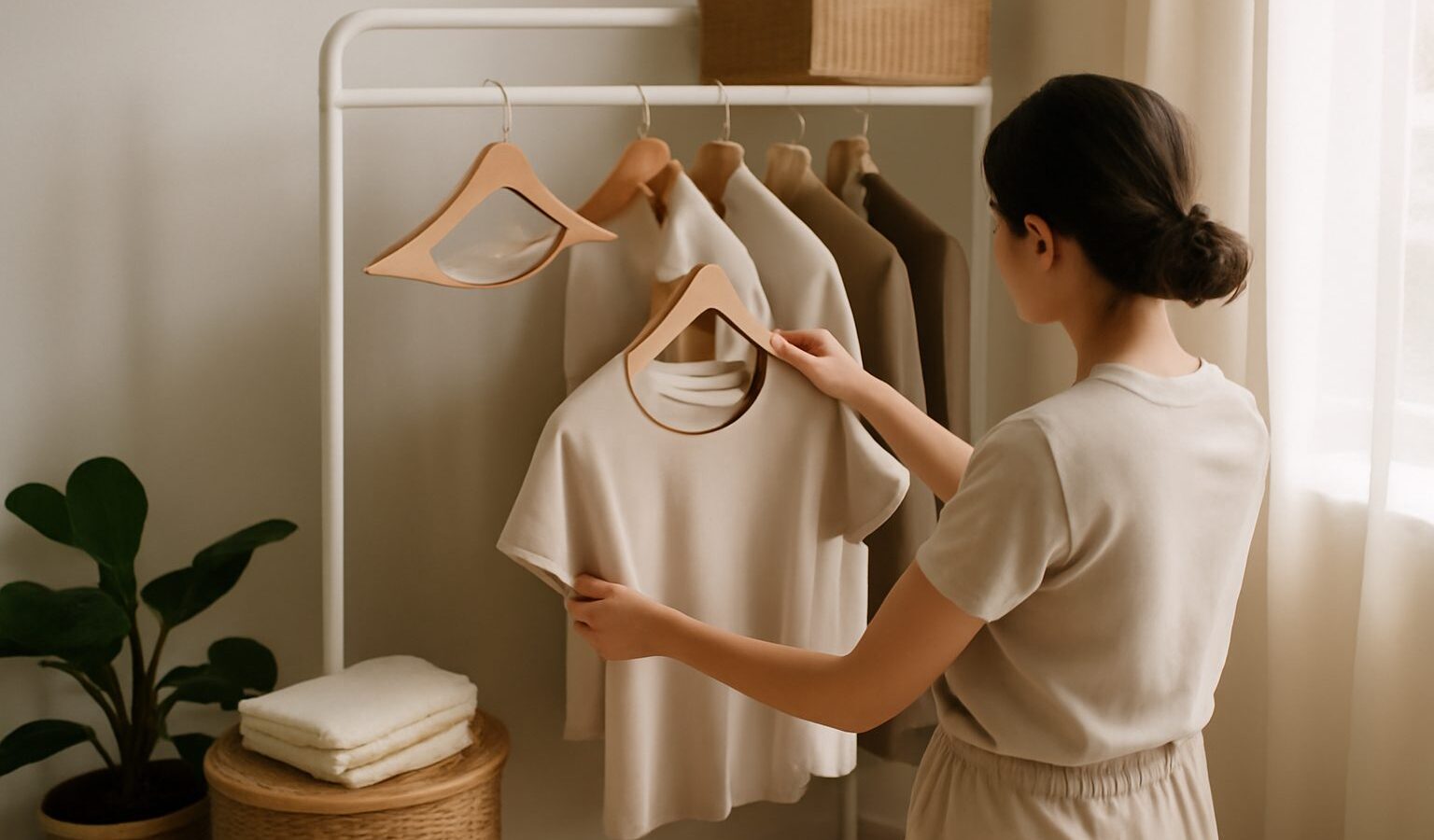
Learning to organise a small wardrobe is a genuine skill in Singapore, where HDB and condo cupboards are compact and the humid climate works against your clothes. This guide is about systems, layout, and storage rather than throwing things out. The aim is to make a limited space hold what you own comfortably, keep everything visible, and protect it all from our sticky weather.
Layout First: Zone Your Wardrobe by Use
Before you buy a single organiser, decide how the space should be divided. A small wardrobe fails when everything competes for the same shelf. Instead, assign zones so each type of item has a home and you never have to dig.
A practical zoning approach:
- Eye level and front for everyday items you reach for most, since this is your most valuable real estate.
- Hanging section for shirts, blouses, dresses, trousers, and anything that creases.
- Upper shelves for occasional and seasonal items you rarely touch.
- Lower drawers or boxes for folded knits, loungewear, and underclothes.
- Door and side walls for hooks, holding bags, belts, and tomorrow’s outfit.
Zoning turns a chaotic box into a small shop where you know exactly where to look. It also stops the slow creep where folded piles topple into the hanging clothes and everything becomes one crumpled mass.
Choose Storage That Multiplies Your Space
In a tight cupboard, the right hardware genuinely adds capacity. The single biggest win is switching to slim, non-slip hangers, which can nearly double how many garments fit on a rail while keeping shoulders in shape. Beyond that, think vertically and use the dead space most small wardrobes waste.
| Storage tool | Best for | Space it unlocks |
|---|---|---|
| Slim velvet hangers | Shirts, blouses, light layers | More items per rail, less slipping |
| Shelf dividers | Stacked knits and jeans | Stops piles from toppling and merging |
| Drawer organisers | Underclothes, socks, small items | Turns one messy drawer into sections |
| Hanging shelf tower | Folded tees, bags | Uses vertical rail height |
| Under-bed boxes | Off-season clothing | Storage entirely outside the wardrobe |
| Over-door hooks | Bags, belts, next outfit | Otherwise unused door surface |
You do not need all of these at once. Start with slim hangers and shelf dividers, since they give the fastest return, then add the rest as your specific pinch points reveal themselves.
Fold Smart and File, Do Not Stack
How you fold matters as much as where you store things. Traditional stacking hides everything except the top item, so you pull the whole pile apart to reach the bottom, then never refold it. The fix is file folding: fold items into neat rectangles and stand them upright in a drawer or box so every one is visible at a glance, like files in a cabinet.
File folding suits tees, loungewear, and lighter knits especially well. Heavier jumpers can stay flat-stacked in small numbers. The rule of thumb is simple: if you cannot see it without disturbing something else, reorganise it so you can.
It helps to standardise the fold width to the drawer or box you are using, so every item is the same size and the row stays tidy as things come and go. Once you set that width, refolding takes seconds, and the drawer keeps its shape for weeks rather than collapsing after the first busy morning. This is the small detail that makes file folding stick rather than fade after a fortnight.
Beat the Humidity Before It Beats Your Clothes
Organisation in Singapore is incomplete without humidity control, because a beautifully arranged wardrobe means nothing if the contents grow mould or musty smells. Trapped moisture in a closed cupboard is the enemy, and small spaces with poor airflow are especially vulnerable.
Protect a small wardrobe with a few steady habits:
- Never put anything away damp. Clothes must be fully dry, since even slight moisture invites mildew in a closed space.
- Use dehumidifying products such as moisture absorbers or silica boxes, and replace them when they fill.
- Leave a little air gap. Cramming the rail tight blocks airflow, so resist filling every centimetre.
- Open the doors periodically to let the cupboard breathe, particularly after wet weeks.
- Keep leather and delicates where air circulates, as these show mould first.
Our full guide to storing clothes in humid Singapore covers absorbers, garment bags, and long-term storage in more depth, and it pairs naturally with a small-space setup.
Keep the System Running
A small wardrobe stays organised only if the system is easy to maintain. The more effort it takes to put something back correctly, the faster it collapses. Build in low-effort resets rather than relying on the occasional big tidy.
- Reset weekly for five minutes. Rehang, refold, and clear the chair that always collects clothes.
- Rotate by season. Move off-season items to under-bed boxes so the main space only holds what you wear now.
- One in, one out for space, not judgement. When the rail is genuinely full, something has to move before something new arrives, purely so the layout keeps working.
- Keep a giveaway bag going. A spot for items on their way out stops them clogging the active wardrobe.
If your small space feels full because it is holding things you no longer wear, that is a separate job, and our guide on how to declutter your wardrobe handles it directly. Organisation and decluttering work best as two distinct tasks rather than one overwhelming afternoon.
A Small Space That Works Hard
Organising a small wardrobe well is not about owning less for its own sake. It is about designing a space where everything you keep is visible, reachable, and protected from the climate. Zone the space, upgrade to slim hangers and dividers, file rather than stack, defend against humidity, and build a five-minute weekly reset. Do that, and a compact HDB cupboard can feel calm, generous, and easy to use every single morning. The space was never really the problem. The system was.
Explore more: Storing Clothes in Humid Singapore · How to Declutter Your Wardrobe in Singapore · Building a Capsule Wardrobe in Singapore