
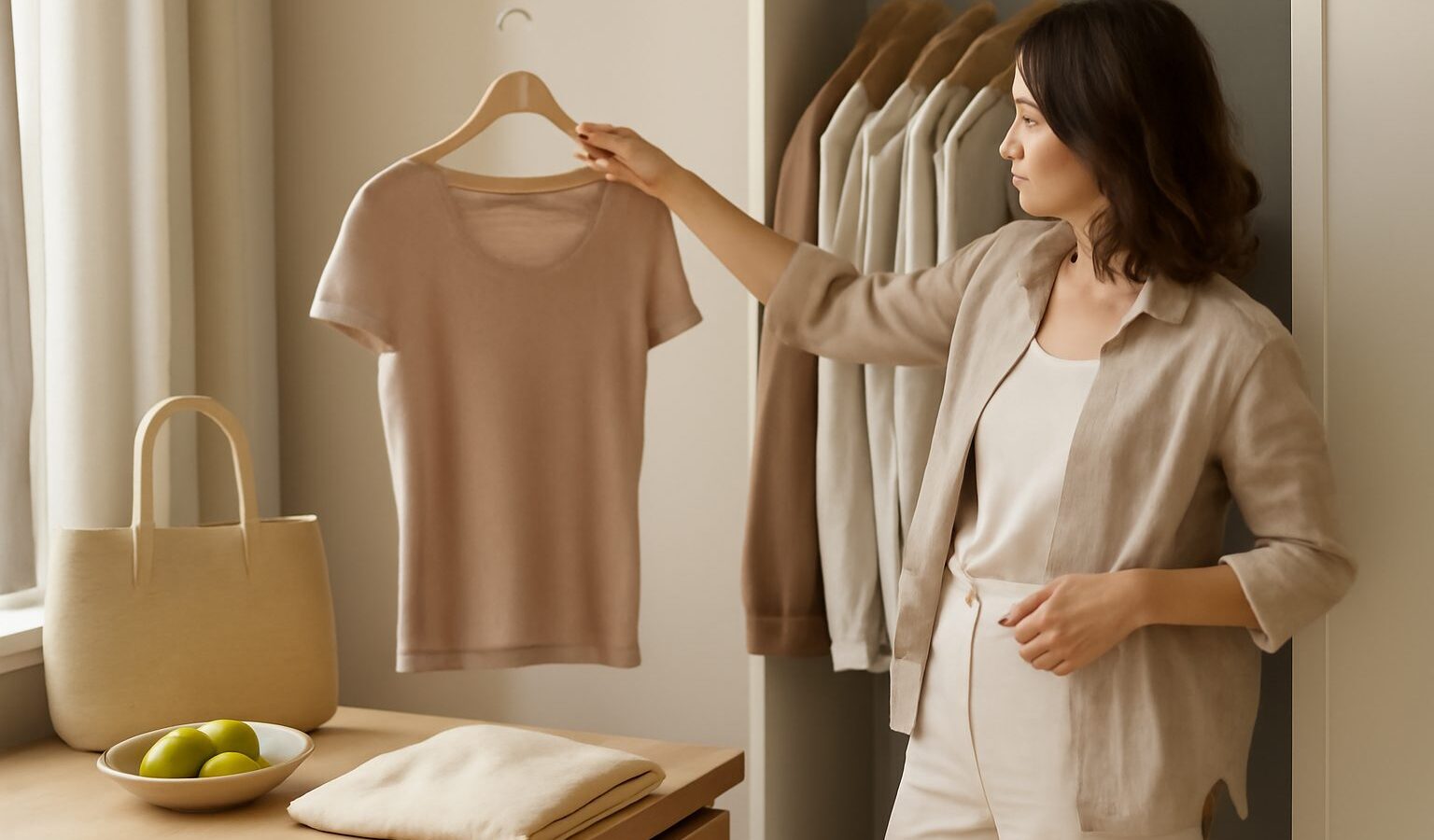
The fastest way to feel newly dressed without spending a cent is to shop your own wardrobe. Most of us wear a small fraction of what we own, defaulting to the same eight or nine items while everything else hangs untouched. This guide shows you how to treat your own cupboard like a well-stocked shop, pull out the forgotten pieces, and rebuild outfits you had stopped seeing.
Why You Only Wear a Fraction of What You Own
The problem is rarely a shortage of clothes. It is visibility and habit. When items sit crushed together on a rail or folded at the bottom of a drawer, your eye skips over them every morning. You reach for what is in front, what is clean, and what feels safe. Over months, a quiet rotation of favourites forms, and the rest becomes invisible.
Decision fatigue makes this worse. Getting dressed in a hurry, your brain wants the path of least resistance, so it repeats what worked yesterday. Shopping your own wardrobe is really about lowering the effort of choosing something different, so the interesting pieces stop losing to the obvious ones.
Step One: Pull Everything Into the Light
You cannot restyle what you cannot see. Set aside a free morning and take everything out of its usual spot. Lay tops on the bed, hang trousers and skirts where you can view them side by side, and line up your shoes and bags. The goal is not decluttering here. You are simply moving from a cramped, half-hidden rail to a full, visible spread.
As you go, sort loosely into three groups:
- Regulars you already wear most weeks.
- Strangers you own but have not worn in six months or more.
- Fixables that you like but which have a small issue: a loose button, a fallen hem, a stain, or a fit that is nearly right.
The strangers pile is where the value hides. These are clothes you once chose deliberately, so there is usually a good reason they came home with you. Your job is to find the styling that brings them back.
Step Two: Build New Pairings, Not New Purchases
Now play stylist. Take one stranger at a time and ask what it could sit next to. A patterned shirt you never wear might have only ever been paired with one pair of trousers. Try it half-tucked over a plain tee, layered under a knit, or with the sleeves rolled and a different shoe. One garment can anchor several outfits once you stop pairing it the same way every time.
A few reliable moves that unlock forgotten pieces:
- Change the third layer. A plain top and trousers become a new outfit with a shirt worn open over them, a blazer, or a cardigan.
- Shift the proportion. Tuck what you usually leave loose, or leave loose what you usually tuck. Cuff a sleeve or roll a hem.
- Rework the colour pairing. Put an unworn colour next to your safest neutral so it feels wearable, then get braver.
- Borrow across categories. A dressier top with your most casual jeans, or a sporty piece with tailored trousers, reads as considered rather than accidental.
Photograph the combinations that work. A quick phone shot saved to an album becomes your personal lookbook, and it removes the morning guesswork that pushes you back to old habits. If you want more structured ideas for stretching plain staples, our guide to elevating basic outfits pairs neatly with this exercise.
A Simple Framework for Assessing Each Piece
When you are unsure whether a stranger deserves a place back in rotation, run it through a short check rather than a vague feeling.
| Question | Keep and restyle | Fix first | Let it go |
|---|---|---|---|
| Does it fit you now? | Yes, comfortably | Nearly, with a small alteration | No, and never will |
| Do you have two ways to wear it? | Yes, you found them today | You can see one, need a second | None come to mind |
| Is it in good condition? | Clean and sound | One easy repair away | Worn out or stained through |
| Does it suit your real life? | Fits how you actually dress | Occasionally useful | For a life you do not lead |
Anything landing mostly in the first column goes back into visible rotation. The fixables go on a short repair list. Only the genuine third-column pieces are candidates for moving on, and that is a decluttering job for another day rather than the point of this one.
Make the Rediscovered Pieces Easy to Choose
Rediscovery fades fast if everything goes back exactly as it was. The final step is to reorganise so the newly interesting items stay in your eyeline. Hang the strangers you have just restyled at the front of the rail for a couple of weeks. Fold favourites so their colour or pattern shows, rather than stacking them face down. Keep the outfit photos somewhere you will glance at them while dressing.
It also helps to retire your true regulars briefly. If you deliberately skip your three most-worn items for a week, you force the rest of the wardrobe to earn its keep, and you quickly learn which strangers deserve to become regulars.
The Honest Payoff
Shopping your own wardrobe will not replace buying entirely, and it is not meant to. What it does is sharpen your sense of what you already have, so that any future purchase fills a real gap rather than duplicating something buried at the back. Many people find they were one styling idea away from loving a piece they had written off.
Do this seasonally, ideally when the weather or your routine shifts, and the habit compounds. You waste less, you dress with more range, and you stop the slow drift toward wearing the same nine things forever. Before you next reach for your phone to browse a sale, spend twenty minutes with what is already hanging in front of you. The best new outfit this month might cost you nothing.
Explore more: How to Elevate Basic Outfits · Building a Capsule Wardrobe in Singapore · Understanding Cost Per Wear