
Aquariums and zoos are some of the most rewarding places to shoot in Singapore, but they are also some of the trickiest. You are working through glass or mesh, in dim or mixed light, with subjects that never hold still. The good news is that a few simple habits will lift your results fast, whether you are on a phone or a camera. This guide to aquarium photography singapore covers the technique, the light, and the respectful approach that keeps both the animals and the venue happy.
Before anything else, remember the golden rule for these spaces: no flash. Flash bounces straight back off glass and ruins the frame, and more importantly it can startle and stress fish, reptiles, and mammals. Many venues ban it outright. So turn it off before you walk in, and plan to work with the light that is already there.
Beating Glass Glare and Reflections
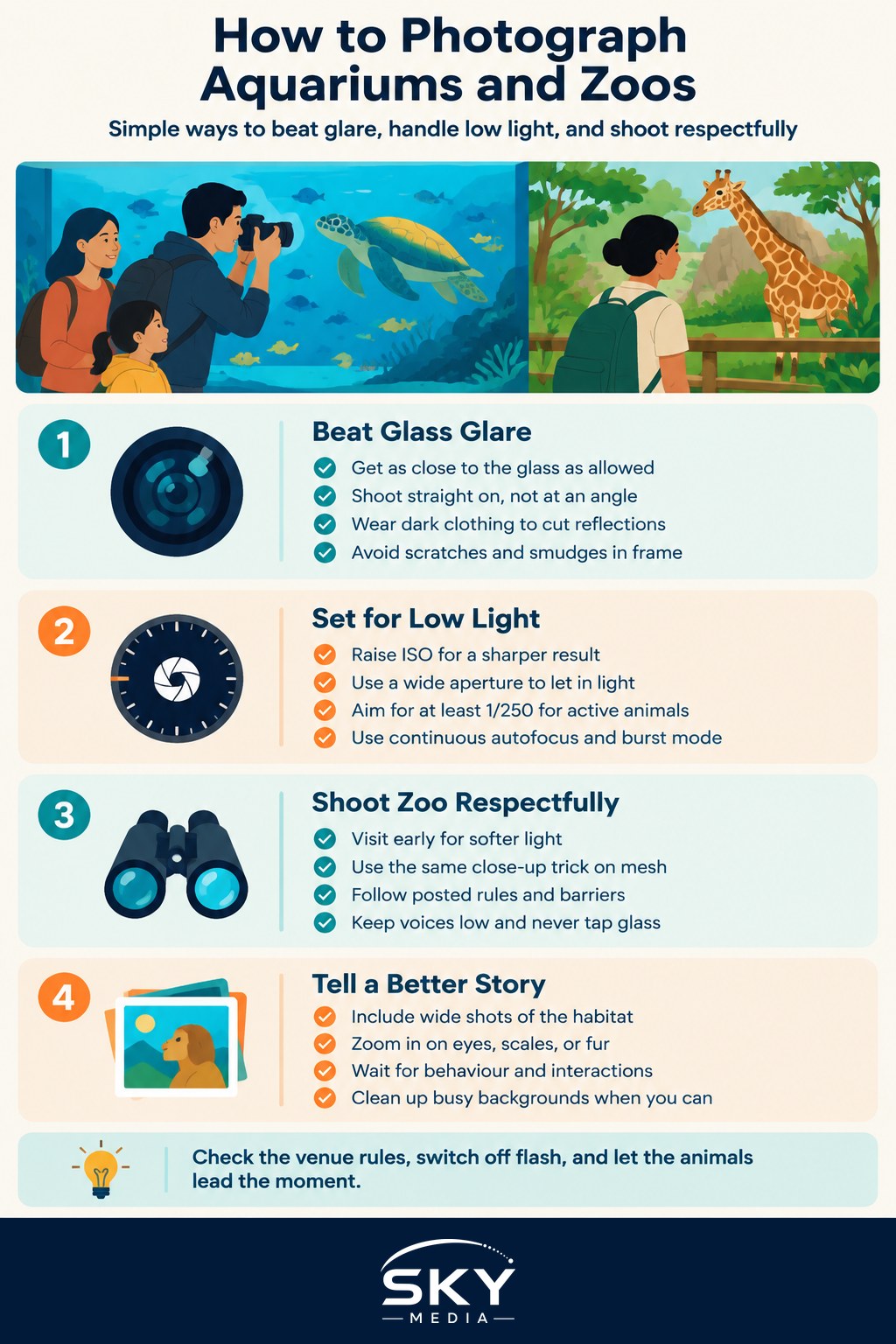
The single biggest enemy in an aquarium is the glass between you and your subject. Reflections and glare will wreck an otherwise lovely shot, so your job is to cut them out.
- Press your lens or phone right up against the glass, or as close as the venue allows. The closer you are, the fewer reflections sneak in.
- Shoot straight on, at ninety degrees to the glass, rather than at an angle. Angled shots pick up more glare and can distort the water.
- Wear dark clothing. A bright shirt reflects back at you like a mirror. Some photographers even cup a hand around the lens to block stray light.
- Look for the cleanest part of the glass and avoid scratches and smudges, which the camera will happily focus on.
If your camera takes filters, a polariser can help tame reflections, though in the dim interiors of an aquarium you will lose some light, so use it thoughtfully. In the low light typical of these tanks, the ideas in shooting in low light without flash carry over neatly.
Settings for Moving Animals in Dim Light
Fish dart, otters zoom, and primates fidget, so you need a shutter speed fast enough to freeze them while coping with dim light. This is a balancing act.
- Raise your ISO without fear. Modern cameras and phones handle higher ISO well, and a slightly noisy sharp shot beats a clean blurry one. You can clean up grain later.
- Open your aperture wide, a low f-number, to let in more light and lift your shutter speed.
- Aim for a shutter speed of at least 1/250 for active animals, faster for quick swimmers. For a slow, resting reptile you can drop lower.
- Use continuous autofocus and burst mode so you catch the split second an animal turns toward you. Our notes on burst mode for action are useful for the fast movers.
On a phone, tap to focus and lock exposure on your subject, then wait for a still moment. Portrait or night modes can help, but they sometimes struggle through glass, so test both.
Shooting Kindly at Zoos and Outdoor Enclosures
Outdoors at a zoo you get more light, which is a gift, but Singapore’s harsh midday sun brings hard shadows and squinty highlights. Early morning visits give softer light and more active animals, since many creatures rest through the heat of the day.
For enclosures with mesh or wire, use the same trick as glass: get close and shoot with a longer lens at a wide aperture, and the mesh will blur into invisibility. A telephoto reach helps you fill the frame without crowding the animal, and if you are weighing up glass, our guide on choosing a telephoto lens is a good starting point.
Respect is not optional here. Follow every posted rule, stay behind barriers, keep your voice down, and never tap the glass or call out to get an animal to look. Do not use laser pointers or props. If a shot needs you to lean over a rail or reach into a space, skip it. The welfare of the animal and the rules of the venue always come first, and a calm animal simply photographs better anyway.
Telling a Story, Not Just Taking Snaps
Once your technique is solid, think about variety. Shoot wide to show the habitat, then zoom in tight on an eye, a texture, or a tiny detail like scales or fur. Watch behaviour and wait for a moment: a yawn, a stretch, two animals interacting. Reflections in the water, bubbles, and shafts of light through a tank can all become creative elements rather than problems.
Keep an eye on your background too. A busy crowd or a bright exit sign behind your subject will pull attention away. Move a step left or right to clean it up.
Bringing It Home
Aquariums and zoos reward patience more than expensive gear. Turn off your flash, get close to the glass, lift your ISO, and wait for the animal to give you a moment. Be kind, follow the venue rules, and let the creatures set the pace. Do that and you will walk out with frames you are proud of, from a jellyfish glowing in the dark to an otter mid-splash. Go easy, shoot respectfully, and enjoy the wildlife on their terms.
Frequently Asked Questions
Can I bring a tripod or a big lens into an aquarium or zoo? Rules differ by venue, and tripods are often restricted because of crowds and walkways. Large lenses may be fine but can be awkward in tight, dark halls. Check the venue’s photography policy before you go, and ask staff on arrival if you are unsure.
How do I photograph glowing jellyfish or tanks with coloured lighting? Raise your ISO, open the aperture and get close to the glass. Coloured tank lighting can confuse automatic white balance, so shoot in RAW if you can and adjust colour later. Wait for the jellyfish to drift into a darker part of the tank for a cleaner background.
How can I photograph shy animals that hide or stay still? Be patient and watch the animal’s habits instead of chasing it. Pick a spot with a clear view, keep still and wait for it to move toward you. Zoo animals are often more active in the cooler morning, so time your visit accordingly.
Why does my lens fog up when I walk out of the aircon at the zoo? Cold glass meets warm, humid outdoor air, so moisture condenses on the lens. Let your camera adjust gradually, keep it in its bag for a few minutes and wipe gently with a clean microfibre cloth. A resealable bag can help when moving between cold and hot areas.
Can I sell or publish the animal photos I take at a zoo or aquarium? Personal sharing is generally fine, but selling or publishing for commercial purposes may be restricted by the venue’s terms. Check their photography policy or contact them directly. Also respect other visitors’ privacy by keeping identifiable people, especially children, out of frame.