

Museums and galleries are treasure troves for photographers, full of beautiful light, striking architecture, and thoughtfully arranged spaces. But they are also places with rules, delicate artworks, and other visitors who deserve a quiet experience. Photographing museums singapore style well means respecting all of that while still coming home with lovely images. This guide covers how to check the rules first, shoot in tricky low light without a flash, handle reflections off glass, and compose inside these calm, considered spaces.
Always Check the Rules First
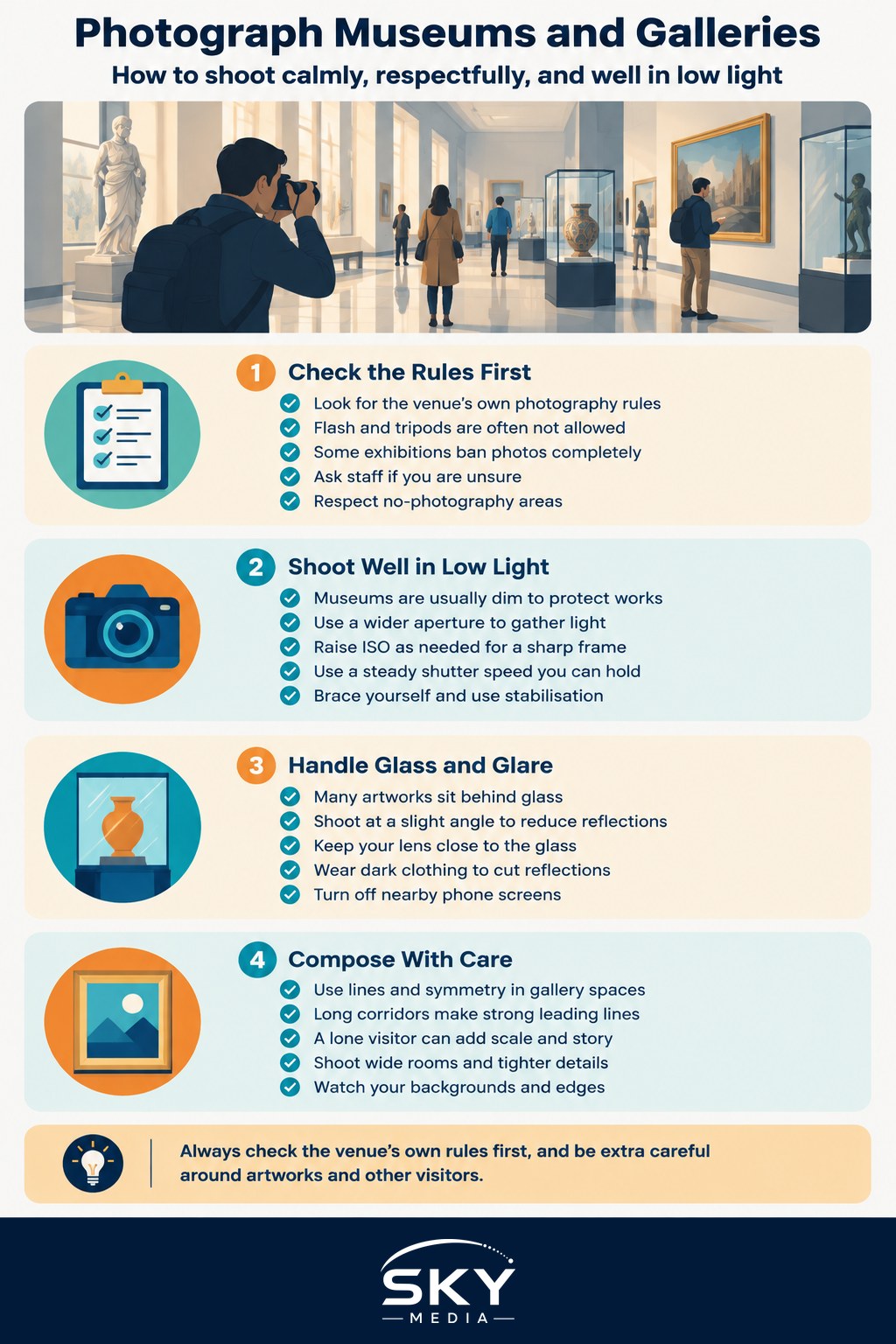
Before you lift your camera, find out what is allowed. Many museums and galleries restrict or ban photography entirely, and even where photos are permitted, flash and tripods are very often not. Some spaces allow personal photography but forbid commercial use, and specific exhibitions, especially loaned or contemporary works, may prohibit photos completely to respect the artists and lenders.
So the first rule is simple. Check the venue’s own rules, look for posted signs at each gallery, and ask a staff member if you are unsure. Respect any no photography areas without argument. Being a courteous guest keeps these spaces welcoming for photographers in future.
Also be considerate of the artworks and other visitors. Do not touch or lean over pieces, keep your distance, stay quiet, and never block a doorway or a view to get your shot. Photograph respectfully and you will always be welcome.
Shooting in Low Light Without Flash
Museums are usually dim to protect the works, and since flash is commonly banned and harsh anyway, you will be working in low light. The trick is to gather light without introducing camera shake.
A few reliable settings help:
- Open your aperture wider to let in more light.
- Raise your ISO as needed, accepting a little noise in exchange for a sharp frame.
- Use a steady shutter speed you can hand hold, and brace yourself against a wall or pillar.
- Lean into any image stabilisation your camera or lens offers.
Holding the camera steadily makes a real difference, so brace yourself, breathe out as you shoot, and squeeze the shutter gently. For a deeper dive into dim conditions, our tips on how to shoot in low light without flash are made for exactly this situation.
Dealing With Glass and Reflections
Many pieces sit behind glass, which loves to throw reflections back at your lens. To cut them down, shoot at a slight angle rather than straight on, and get your lens close to the glass so it blocks stray light. Wearing dark clothing helps, since bright shirts reflect back at you. Turning off nearby phone screens and shielding the lens with your hand can also tame glare.
Reflections are not always the enemy, though. A thoughtful reflection of a gallery window or a visitor can add depth and story. Our ideas on how to photograph reflections can help you decide when to fight a reflection and when to use it.
Composition Inside Galleries
Galleries are designed spaces, so use their lines and symmetry. Long corridors, repeating frames, and clean walls give you strong leading lines and balance. Look for a lone visitor pausing before a work, which adds scale and a human story. Wait for a gap in the crowd for a clean architectural frame, or embrace the crowd for energy.
Watch your backgrounds and edges just as you would outdoors. Simple composition rules travel well indoors, and revisiting the rule of thirds and composition basics will sharpen how you place subjects within these tidy spaces. Shoot both wide frames that show the room and tighter frames that isolate a detail, a shadow, or a texture.
Making the Most of the Architecture
Many of our museums and galleries are architectural gems in their own right, from grand old halls to sleek modern wings. The buildings themselves are fair game where photography is allowed, and they often photograph well in the softer light near entrances and atriums. Staircases, arches, and light wells make wonderful subjects.
Since these spaces overlap so much with building photography, our guide to how to photograph architecture and buildings helps you handle converging lines, symmetry, and scale inside and out. Just keep checking that photography is permitted in each specific area as you move through.
A Respectful, Rewarding Habit
Photographing museums and galleries is a quiet, rewarding kind of photography that trains your eye for light, line, and moment. The golden rule runs through everything, which is to respect the rules, the artworks, and the people around you. Check what is allowed, leave the flash and tripod off unless clearly permitted, work gently in the low light, and compose with care. Do that, and you will come away with calm, elegant images and a clear conscience. Pick a nearby museum, go quietly, and enjoy seeing it through your lens.
Frequently Asked Questions
Is it better to use a phone or a camera in a museum? Either can work, so check the venue’s rules and choose what is least disruptive. A phone is discreet and quiet, while a camera with a fast lens handles dim light better. Make sure the shutter sound and screen brightness will not bother other visitors.
What lens works best in a dim gallery? A fast prime with a wide maximum aperture is a good choice, because it lets in more light without a flash. A modest wide-angle also suits architecture and room views. A heavy zoom can be awkward in tight crowds, so travel light.
Can I post or sell photos of artworks that I take in a museum? Be careful. Personal photos for sharing are often fine where photography is allowed, but many artworks are protected by copyright, and some venues forbid commercial use. If you want to sell or publish images, check the venue’s terms and the copyright position first.
Is it okay to photograph other visitors in a gallery? Be considerate. A figure seen from behind or a small silhouette adds scale, but people expect privacy, so avoid close shots of identifiable faces and especially children. If someone objects, stop and delete the frame. Ask first when in doubt.
When is the best time to visit a museum to avoid crowds? Weekday mornings and quieter periods are usually easier than weekends or school holidays, though it varies by venue. Check the museum’s website or call ahead for opening hours and any special events. Fewer people also means cleaner frames and a calmer experience.