
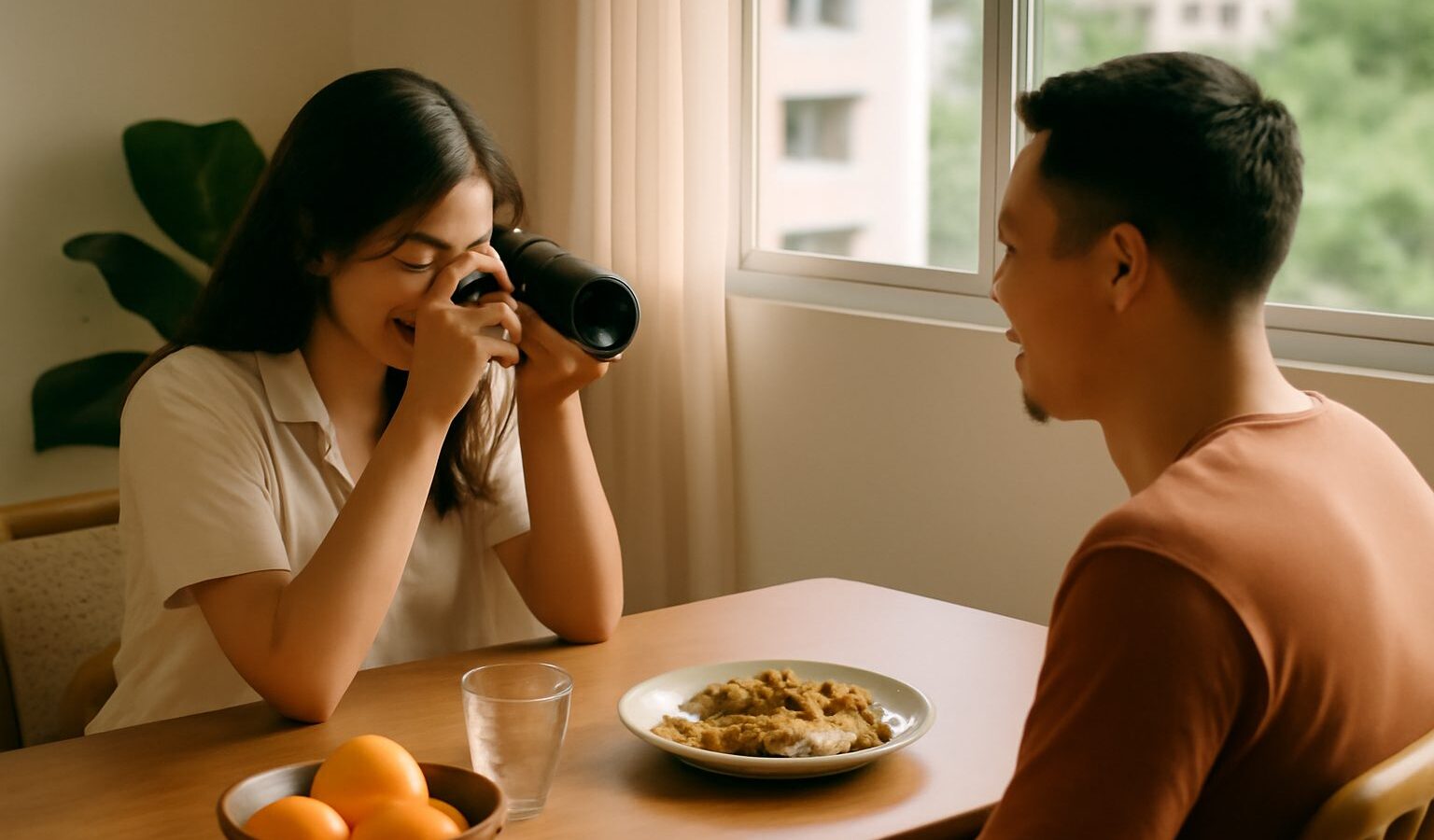
The best photos of people rarely come from someone frozen in a stiff pose, saying “cheese”. They come from a real moment: a grandmother laughing at the wet market, a child chasing pigeons at the void deck, friends leaning in over kopi. That is the heart of candid photography, capturing people as they genuinely are rather than as they think they should look. The good news is that you do not need fancy gear to do it well. A phone or an entry-level camera, a little patience and a respectful attitude will take you a long way.
This guide walks through how to shoot natural, honest photos of people, from settings and timing to the manners that keep everyone comfortable. It is written for keen beginners in Singapore, where our crowded, colourful public spaces offer endless everyday moments if you learn to see them.
What Makes A Photo Feel Candid
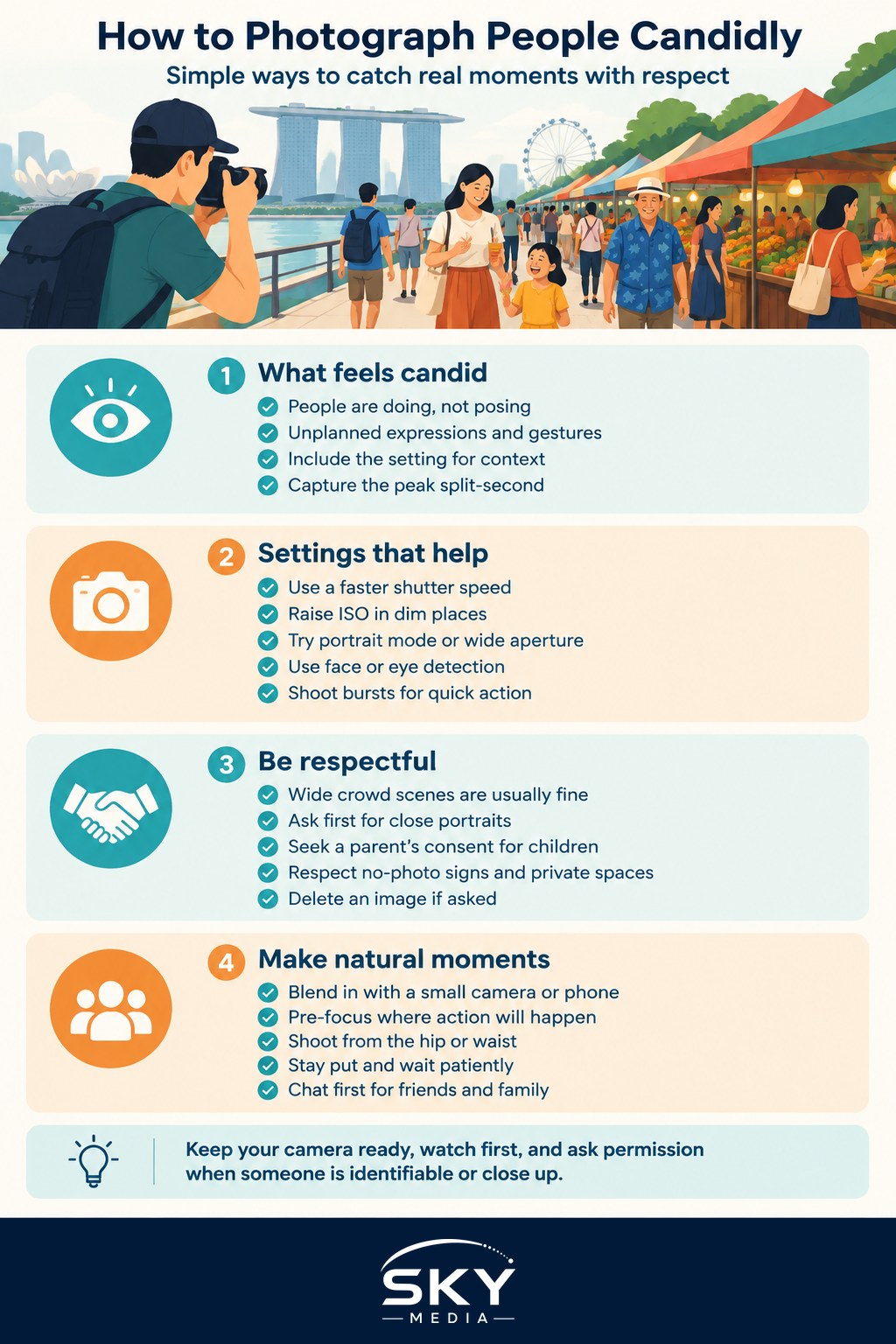
A candid image feels unplanned. The subject is doing something, not performing for the lens. Their expression is unguarded, their hands are busy, their eyes are on the world rather than on you. Three things usually create that feeling.
- Genuine activity. People absorbed in a task, a conversation or a bit of food forget the camera. Look for hands in motion, mid-laugh faces and natural gestures.
- Context. A candid shot often includes the setting, so we understand where and why. The hawker stall behind an uncle, the reflections of Marina Bay behind a couple, the clutter of a home kitchen all add story.
- Timing. The difference between a flat photo and a memorable one is often a fraction of a second: the peak of a smile, the moment a ball is caught, the glance between two people.
Your job is less about directing and more about noticing. Slow down, watch how a scene unfolds, and be ready before the moment peaks rather than after.
Camera And Phone Settings That Keep You Ready
Candid moments do not wait, so set up so you can shoot instantly. You do not need to memorise every technical term, but a basic grasp of the exposure triangle (aperture, shutter speed and ISO) helps.
- Use a faster shutter speed. People move, so aim for a shutter speed of around 1/250 of a second or quicker to freeze gestures without blur. In dim hawker centres or indoors, raise your ISO to keep that speed.
- Widen your aperture for separation. A lower f-number (say f/1.8 to f/2.8 on a prime lens, often called a nifty-fifty) blurs the background and makes your subject stand out. On a phone, portrait mode imitates this, though it can struggle with messy edges.
- Let autofocus track eyes. Most modern cameras and phones have face or eye detection. Turn it on so focus lands where it matters while you concentrate on the moment.
- Shoot bursts for action. Holding the shutter for a short burst gives you several frames to pick the peak expression from, which is invaluable with kids and fast scenes.
- Favour natural light. Window light, open shade and the soft glow of golden hour flatter people far more than a harsh on-camera flash, which also announces your presence and kills the mood.
Keep your camera on and settings roughly dialled in as you walk, so you are not fumbling when a moment appears.
Ask Permission And Be Respectful
Candid does not mean sneaky or intrusive. Being considerate is not only the decent thing to do, it also produces better, more relaxed photos and keeps you welcome in a place.
For wide street scenes where people are small and part of the crowd, most reasonable shooting is fine. But the closer and more identifiable the person, the more you owe them courtesy. For a close portrait of a stranger, ask first. A friendly “That’s a lovely stall, may I take a photo of you at work?” usually earns a warm yes, and often a better, more engaged expression than a stolen frame. If someone declines, smile, thank them and move on without argument.
Be especially mindful of children (seek a parent’s consent), of people who are vulnerable or in distress, and of religious and heritage sites where photography may be limited or discouraged. Respect posted no-photography signs and private property. If someone asks you to delete an image, do it graciously. Building this reputation for respect means people relax around you, which is exactly what candid photography needs.
Techniques For Natural, Unposed Moments
Once your settings and manners are sorted, these habits will lift your hit rate.
- Blend in. A smaller camera or a phone is less intimidating than a large rig. Move calmly, dress unremarkably and avoid pointing your lens like a weapon.
- Pre-focus on a spot. Anticipate where the action will happen, focus there, and wait for someone to enter the frame. This works beautifully at busy crossings or a hawker queue.
- Shoot from the hip or waist. Lowering the camera changes the angle and feels less confrontational, giving you fresh perspectives, especially of children at their eye level.
- Give it time. Linger in one good spot rather than rushing around. The best moments often arrive after a few minutes, once people stop noticing you.
- Include the environment. Step back sometimes. A person framed by shophouse doors in Kampong Glam or steam rising from a wok tells more than a tight face alone.
- Watch the light and background. Position yourself so your subject is lit nicely and the background is not cluttered with poles or bright patches that pull the eye.
- Chat, then shoot. For friends and family, a short conversation relaxes people. Keep talking, keep shooting, and the posed stiffness melts away.
Candid Versus Posed: When To Use Each
Both approaches have their place. Knowing when to switch helps you come home with keepers.
| Situation | Candid approach | Posed approach |
|---|---|---|
| Street and market scenes | Wait and capture natural activity | Rarely needed; ask for a quick portrait if drawn to someone |
| Family gatherings | Shoot the laughter and small moments | A few group shots for the album |
| Kids at play | Burst mode, low angle, keep back | Only if you need a calm, tidy portrait |
| Events and celebrations | Document reactions and details | Formal shots of key people |
| A shy subject | Ease in with chat first | Gentle direction can help them relax |
As a rule, lead with candid for emotion and story, and add a few posed frames when you need a clean, deliberate record.
Editing And Choosing Your Best Frames
Good candid work is finished at the editing stage, mostly through selection. Be ruthless: from a burst, keep the one frame where the expression, focus and framing align, and let the rest go. Light edits help, such as gentle exposure and contrast tweaks, a subtle crop to strengthen composition, and toning down a distracting background. Resist heavy skin smoothing or filters that erase the honesty that made the shot worth taking. Remember that in Singapore’s bright, contrasty daylight you may need to lift shadows a touch to reveal faces under caps or awnings.
Above all, keep shooting. Candid photography is a numbers game married to patience. The more you observe, anticipate and press the shutter with respect, the more often you will catch those small, true moments that make people say, “That is exactly how it was.”
Explore more
Ready to build your eye further? Sharpen your framing with the rule of thirds and composition basics, and learn to shape faces beautifully with using natural light in photography. For more people-focused practice, try street photography composition tips and how to photograph pets and kids.