
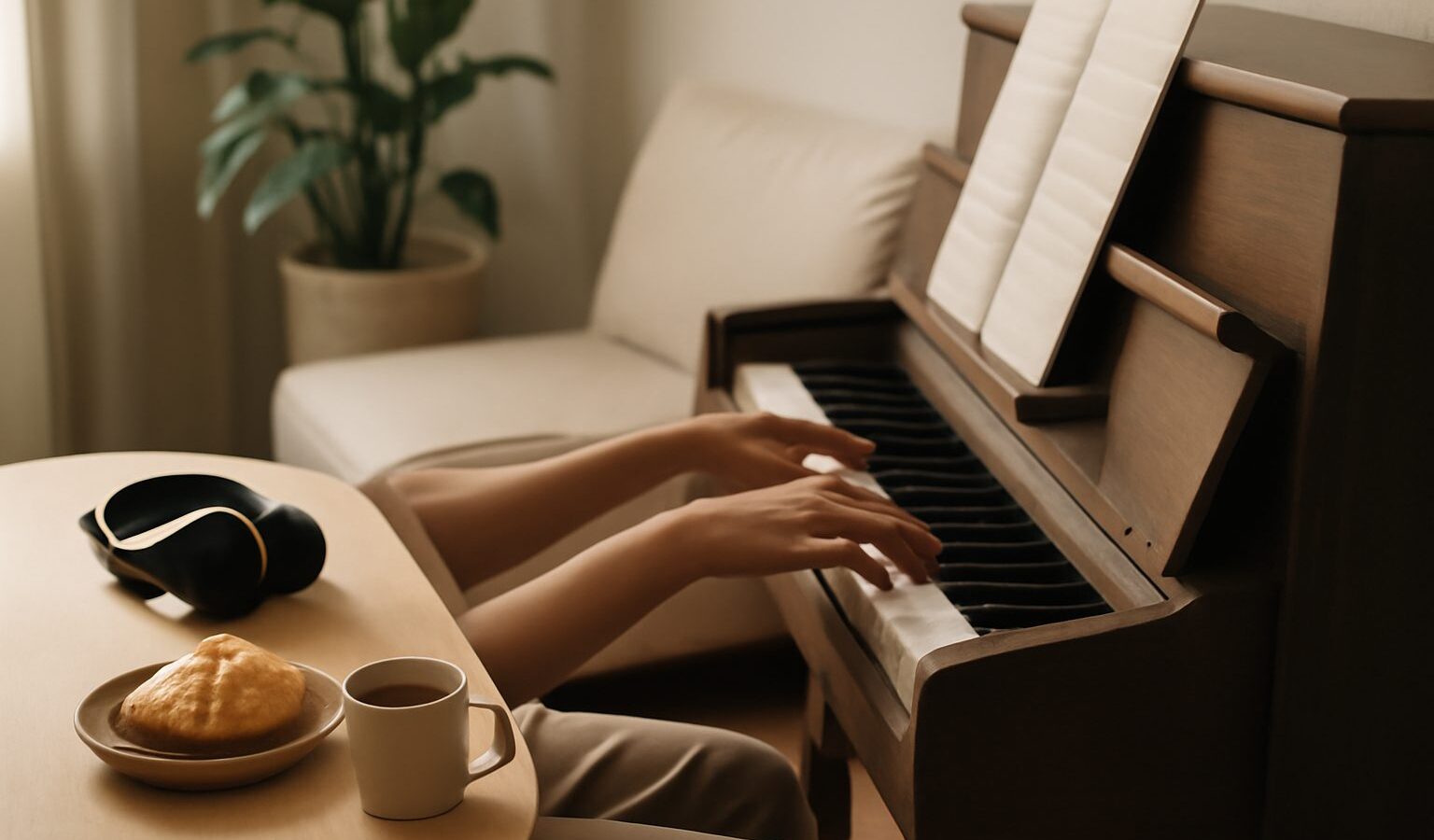
Everyone tells beginners to practise, but few explain how. Sit down without a plan and you can spend an hour at your instrument yet barely improve, playing the easy bits over and over while the hard bits stay hard. Learning to practise music effectively is a skill in its own right, and it is the single biggest difference between people who progress and people who stall. The good news is that better practice is not about grinding for longer. It is about being focused, honest and a little bit clever with your time. This guide shows you how, with routines that fit a busy Singapore schedule and an HDB flat.
Why Focused Practice Beats Long Practice
Your brain and muscles learn through repetition of the correct movement, not just through time spent holding an instrument. Twenty minutes of careful, attentive work will teach you more than an hour of distracted noodling in front of the television. This idea is often called deliberate practice: you work with full attention on something that is currently just beyond your comfort, rather than replaying what you can already do.
The mistake most beginners make is playing a piece from the top again and again. It feels productive because it sounds like music, but you spend most of the time on the parts you already know and only a few seconds each time on the tricky bar that actually needs work. Effective practice flips this. You spend the bulk of your time on the small, difficult sections and only occasionally run the whole thing to join them up. Quality of attention matters more than the number of minutes on the clock.
Building a Practice Routine That Sticks
A routine works when it is small enough to do on a tired weekday. It is far better to practise fifteen focused minutes every day than to attempt two hours only on Sunday, because a physical skill fades between sessions and daily contact keeps it fresh.
A simple, repeatable session might look like this:
- Warm up (a few minutes). Gentle scales, long notes or easy exercises to loosen your hands and tune your ears.
- Technique (a short block). One specific skill, such as a scale, a chord change or a rhythm pattern.
- The hard part (the main event). The one or two tricky sections of your current piece, worked slowly and carefully.
- Play for joy (to finish). Run something you love, or the whole piece, to remind yourself why you started.
Keep a small notebook or a note on your phone. Write down what you worked on and what to tackle next time, so you begin each session with a plan instead of wondering where to start. Attaching practice to an existing habit, such as right after dinner or before your evening shower, makes it far more likely to happen.
Smart Techniques That Speed Up Learning
A handful of proven techniques do most of the heavy lifting. Learn these and your practice time will pay off much faster.
- Slow practice. Play difficult passages slowly enough to get every note right, then speed up in tiny steps. A metronome, the steady clicking device (or app) that keeps time, is your best friend here. Nudge the tempo up a few beats only once the slower speed is clean.
- Chunking. Break a piece into small chunks of a bar or two. Master each chunk, then link them together like beads on a string.
- Isolate, do not repeat blindly. If you keep stumbling on the same spot, stop and drill only that spot ten times correctly, rather than restarting the whole piece.
- Hands or parts separately. Pianists can practise each hand alone; singers can speak the rhythm before adding pitch; guitarists can shape a chord silently before strumming.
- Practise slowly under tempo, then push past. Once a passage is comfortable at the target speed, briefly play it a touch faster so the real tempo feels easy.
- Record yourself. A quick phone recording reveals rushed beats and uneven notes you cannot hear while concentrating on playing.
The table below sorts the common habits into what helps and what quietly wastes your time.
| Habit | Effective approach | Common trap to avoid |
|---|---|---|
| Handling mistakes | Isolate and drill the tricky bar slowly | Restarting the whole piece each time |
| Speed | Build up gradually with a metronome | Rushing to full tempo before it is clean |
| Session length | Short, focused, daily sessions | One long, distracted weekend cram |
| Repertoire | Balance easy wins with real challenges | Only replaying pieces you already know |
Practising in an HDB Flat and Staying Motivated
Living close to neighbours does not have to limit your practice, it just calls for a little consideration. Keep to sociable hours and avoid loud practice late at night or very early, since sound carries through shared HDB walls and floors. Many instruments have quiet options: electronic drums and digital pianos with headphones, practice mutes for brass and strings, and unplugged or low-volume settings for electric guitars. If your instrument is genuinely loud, agree a rough schedule with the family and, where possible, practise when it least disturbs the people around you. A quick friendly word with a next-door neighbour goes a long way.
Motivation dips for everyone, so build habits that carry you through the flat patches:
- Set tiny, clear goals. “Play this bar cleanly at a slow tempo” beats the vague “get better”.
- Track your streak. Ticking off practice days is oddly satisfying and keeps momentum going.
- Learn music you actually like. A pop song, a film theme or a worship tune you love will pull you back to the instrument.
- Play with others. Jamming with friends, joining a community group or taking a lesson gives you a reason to stay prepared.
- Mind your gear in the humidity. Store wooden and metal instruments away from damp, wipe them down after playing, and keep them serviced so they are always ready and pleasant to use.
Progress in music is rarely a straight line. Some weeks feel magical and others feel stuck, and that is completely normal. If you show up for short, honest, focused sessions most days, work slowly on the parts that challenge you, and keep some pure enjoyment in every session, you will look back in a few months genuinely surprised at how far you have come.
Explore more
If you are just getting going, our guide to how to choose your first instrument will help you pick something you will want to practise, and learning an instrument as an adult is full of encouragement if you are starting later in life. When you are ready to set a goal for all that practice, read music exams and grades explained, or find support with finding a music teacher in Singapore.