
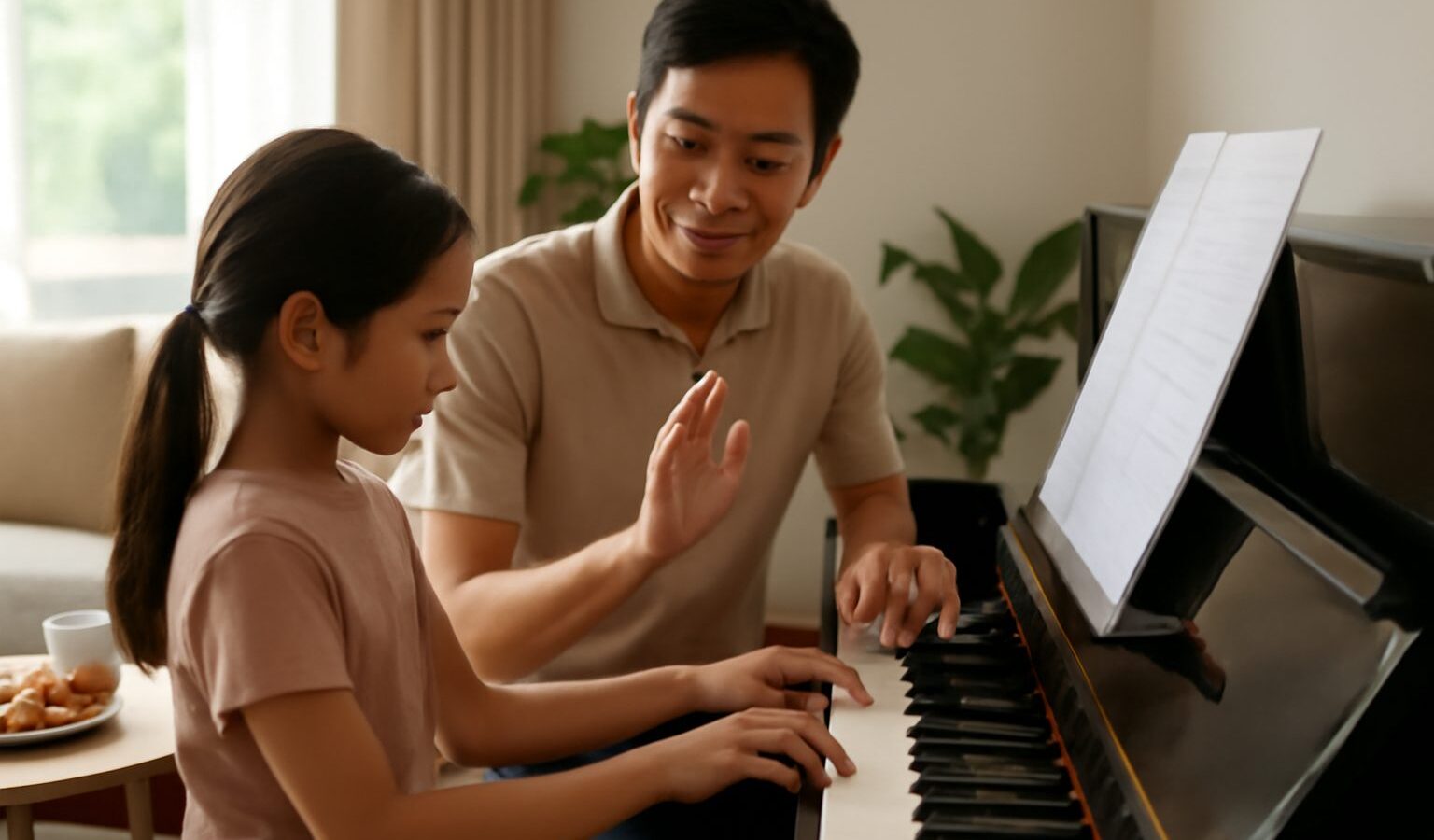
A good teacher is often the difference between quietly giving up after a month and still happily playing years later. Whether you are a curious adult picking up the guitar, a parent sorting out piano lessons for a child, or a returning player dusting off the violin, the search for the right music teacher Singapore has to offer can feel overwhelming. There are big schools, small studios, freelancers and online tutors, all with different prices and promises. This guide breaks the whole process down so you can choose with confidence.

School, Private Studio or Freelancer
Your first decision is what kind of teaching setup suits you. Each has clear strengths and trade-offs.
- Established music schools. These are the well-known chains and centres, often near MRT stations or in malls, offering a structured curriculum, a roster of teachers and exam preparation. They are convenient and reliable, though usually pricier, and you may not always keep the same teacher.
- Small private studios. Run by one experienced teacher or a small team, these often feel more personal and flexible while still being professional. Progress and rapport can be excellent.
- Independent freelance teachers. A private teacher who comes to your home or teaches at their own place. This is often the most affordable and flexible option, and many are superb, but quality varies more, so you will want to check them carefully.
- Online lessons. A teacher over video call, which widens your choice beyond your neighbourhood and suits busy schedules. It works well for many instruments, though hands-on instruments and young children sometimes do better in person.
There is no single best answer. A shy beginner might thrive with a patient freelancer at home, while a child aiming at graded exams might do well in a structured school.
Comparing Your Options at a Glance
Here is a simple way to weigh the common routes before you commit.
| Option | Typical cost | Flexibility | Best for |
|---|---|---|---|
| Large music school | Higher | Fixed terms and slots | Structure, exams, convenience |
| Private studio | Moderate | Fairly flexible | Personal attention, steady progress |
| Freelance teacher | Often lower | Very flexible | Budget, home lessons, adults |
| Online tutor | Varies | Most flexible | Busy people, wider choice |
Costs move around a lot depending on the teacher’s experience, the instrument, lesson length and location, so treat the ranking above as relative rather than exact. Always ask each teacher for their current rates directly, and check what is included, such as materials or exam guidance.
How to Check a Teacher Is the Right Fit
Qualifications matter, but they are not the whole story. Plenty of warm, effective teachers are working musicians rather than diploma holders, and some highly qualified people are not great with nervous beginners. Look at the full picture.
- Ask about experience with your situation. A teacher who often works with adult beginners, or with young children, or with your specific instrument, will suit you better than a generalist.
- Check credentials sensibly. Diplomas, exam-board affiliations and performance experience are all useful signals. For teaching children, ask about their approach to keeping young learners engaged.
- Watch how they explain things. In a first lesson or trial, do they make ideas clear and encouraging, or do they make you feel small? Good teachers never gatekeep.
- Read reviews and ask for referrals. Word of mouth from other parents or fellow learners is gold. Community groups and school noticeboards often surface trusted names.
- Confirm the practical details. Location, timing, lesson length, what happens if you miss a session, and whether there is a term commitment or a rolling arrangement.
Most reputable teachers and schools offer a trial lesson. Take it. One session tells you more about the fit than any brochure.
Making the First Lesson Count
Once you have shortlisted a teacher, a little preparation makes the trial far more useful for both of you. Turn up ready to talk about what you actually want.
- Be clear about your goal, whether that is playing songs for fun, passing a graded exam, or joining a band one day. A teacher shapes lessons around your aim.
- Mention your schedule honestly, including how much time you can practise each week, so the pace is realistic.
- If you are a total beginner, say so plainly. There is no shame in it, and it welcomes all ages and budgets.
- For a child, share their temperament and interests so the teacher can tailor the approach.
- Have your instrument ready, or ask beforehand whether one is provided during lessons.
Pay attention to how you feel afterwards. Did the lesson leave you motivated and clear about the next step? That feeling is the single best sign you have found the right teacher.
Practical Notes for Singapore Learners
A few local considerations help the search go smoothly. Location is a big one, since a lesson near home, work or an MRT line is far easier to keep up week after week than one across the island. For home lessons, remember that some instruments carry noise, so be mindful of neighbours and quiet hours in an HDB flat and pick sensible practice times. Humidity is real here too, so if lessons involve wooden instruments, a good teacher will remind you about proper storage and care.
Budget honestly and think in terms of months, not single lessons. Progress on any instrument comes from consistent weekly guidance plus daily home practice, so choose a rate and schedule you can sustain rather than the flashiest option you can barely afford. Many families and adults start with a shorter or fortnightly arrangement and step up once the habit sticks.
Finding a music teacher in Singapore is really about matching three things: your goal, your budget and a person you genuinely enjoy learning from. Take a couple of trial lessons, ask plenty of questions, and trust how the sessions feel. The right teacher turns practice from a chore into the best part of your week.
Explore more
Not sure what to play yet? Read how to choose your first instrument and, for grown-ups, learning an instrument as an adult. Ready for a specific one? See learning the piano and keyboard, learning the guitar for beginners, learning the ukulele or learning the violin. Then plan ahead with music exams and grades explained.
Frequently Asked Questions
How do I tell if a freelance music teacher is genuine and reliable? Ask about their experience with your situation, check credentials sensibly, and look for referrals from other parents or learners. Book a trial lesson to see how they explain things. Confirm practical details such as location, timing, lesson length and what happens if you miss a session.
Are online music lessons as good as face-to-face lessons? They work well for many instruments and widen your choice beyond your neighbourhood, with the most flexible schedules. Hands-on instruments and young children sometimes do better in person. A trial lesson online will show whether the format suits you.
How often should a beginner have lessons? Weekly guidance plus short daily home practice is the pattern the article describes. If your budget or schedule is tight, a fortnightly arrangement is a sensible start, and you can step up once the habit sticks. Choose a rate and schedule you can sustain.
Should I pick a teacher with exam qualifications for my child? It depends on your aim. If graded exams are the goal, a teacher or school with exam preparation experience helps. Qualifications are only part of the picture, though; a warm teacher who keeps a young learner engaged matters just as much. Ask about their approach.
What should I say to a teacher in my first trial lesson? Be clear about your goal, whether that is songs for fun, an exam or joining a band. Be honest about your weekly practice time and say plainly if you are a total beginner. For a child, share their temperament and interests. Check afterwards whether you felt motivated.
Further reading: How to Know if Your Child Is Ready for Piano Lessons