
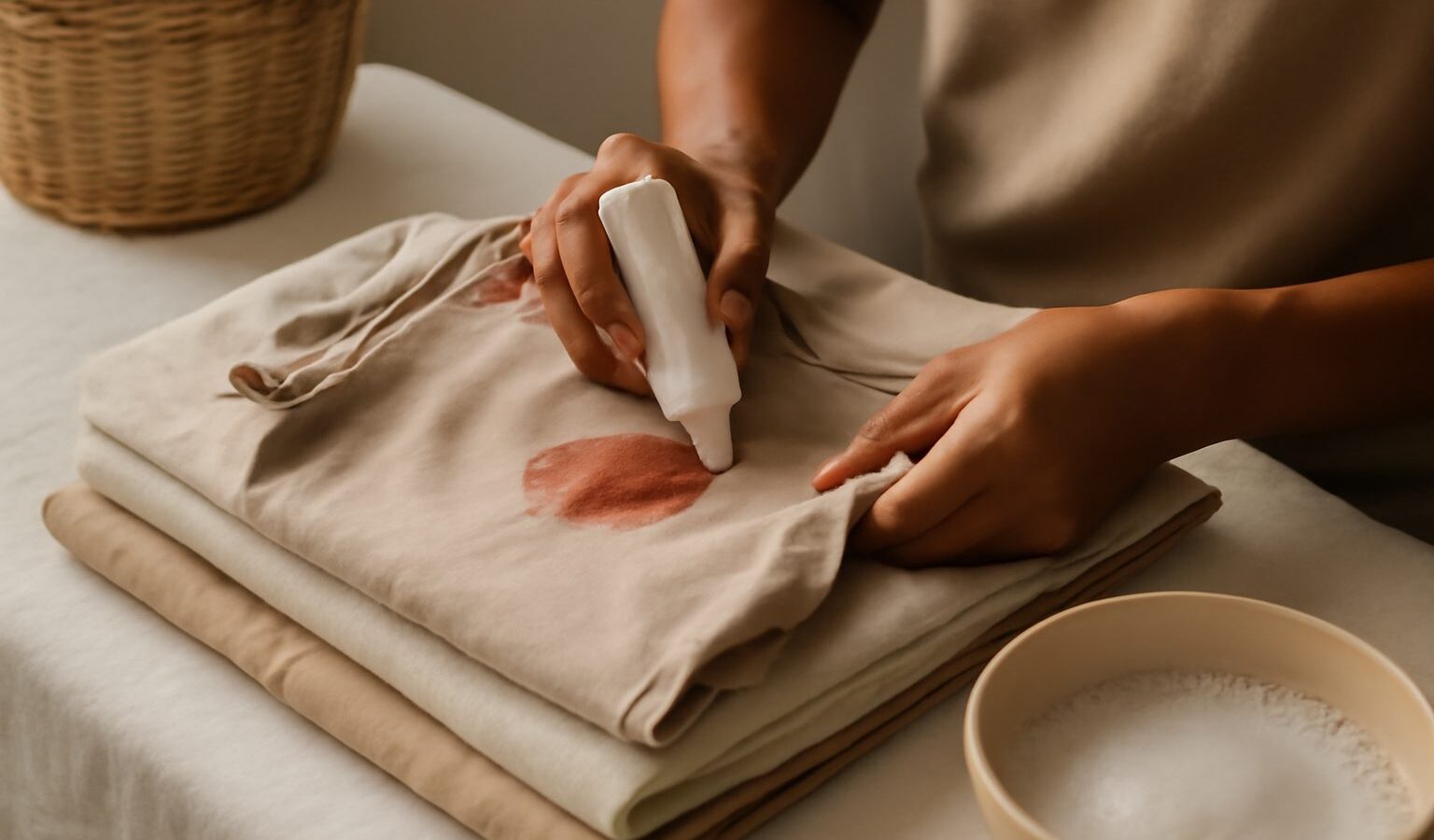
A splash of kopi on a work shirt, a drop of curry gravy at the hawker centre, a smear of sweat on a collar after a hot commute. Stains are part of daily life here, and they do not have to mean the end of a favourite piece. Removing stains from clothes in Singapore comes down to two things: acting quickly, and matching the right method to the right kind of mark. Reach for the wrong approach, such as hot water on a protein stain, and you can set the mark permanently. This guide gives you a calm, practical playbook for the stains we meet most often.
Before anything else, one rule sits above all others. Never mix cleaning products. Combining bleach with ammonia, vinegar, or other acids releases toxic fumes. Work in a ventilated spot, wear gloves for anything stronger than soap, and always patch-test a hidden seam first, because some fabrics and dyes react badly.
The First Sixty Seconds Decide Everything
How you react the moment a spill happens matters more than any product. Fresh stains lift out far more easily than dried ones, so speed is your best tool.
- Blot, do not rub. Rubbing pushes the stain deeper into the weave and spreads it wider. Press gently with a clean cloth or tissue to lift what you can.
- Scrape off any solids, such as food or mud, with the edge of a spoon before you add liquid.
- Rinse from the back of the fabric under cool running water, pushing the stain out the way it came rather than through the cloth.
- Resist heat at this stage. Hot water and a hot dryer can bake many stains in for good, so keep everything cool until the mark is gone.
- Check the care label before you soak, especially for anything delicate or dry-clean only.
If you are out and a stain strikes, a little cool water and gentle blotting to contain it will do until you get home. Try not to let it dry in.
Match the Stain to the Treatment
Different stains need different chemistry. Greasy marks need something to break down oil, while protein stains like blood and sweat hate heat and prefer cool soaking. Use this table as your quick reference, always testing a hidden area first.
| Stain type | What to reach for | Key move | Avoid |
|---|---|---|---|
| Coffee or tea (kopi, teh) | Cool water, mild detergent | Rinse from behind, then soak | Hot water, which sets it |
| Oil or grease | Washing-up liquid, dab of detergent | Work in, leave briefly, rinse warm | Rubbing, which spreads it |
| Curry or turmeric | Detergent, then sunlight to fade | Treat fast, air-dry in the sun | Bleach on colours |
| Blood or sweat | Cool water, mild soap | Soak in cool water only | Warm or hot water |
| Ink or pen | Dab with a little detergent | Blot onto a cloth underneath | Heavy scrubbing |
| Red wine or sauce | Blot, cool water, detergent | Lift as much as possible first | Letting it dry |
For most marks, treat the spot, gently work in a little detergent, leave it a short while, then wash as normal on a cool cycle. Check that the stain is fully gone before drying, because a dryer or our strong afternoon sun can lock in any faint trace you missed.
Everyday Stains We See Most Here
Some marks turn up again and again in our climate and cuisine, so they are worth knowing by heart.
Sweat and deodorant marks build up around collars and underarms, made worse by our heat. Treat them early with a cool soak and a gentle detergent before they yellow and stiffen the fabric. Oily hawker food, from char kway teow to a dropped curry puff, responds well to a dab of washing-up liquid worked into the mark to cut the grease before washing. Turmeric and curry stains are stubborn and bright, but sunlight is a genuine ally; after washing, drying the damp item in direct sun helps fade the yellow naturally. Mud from a sudden downpour should be left to dry, then brushed off, before you rinse and wash, since wet mud only smears.
For musty, mildew-like spots on clothes left damp too long, wash promptly and dry fully in good airflow. Prevention here is really about your drying habits, which our guide on how to do your laundry properly covers in detail.
When a Stain Will Not Budge
Not every stain surrenders, and that is fine. If a mark survives one full treat-and-wash cycle, repeat it before giving up, but do not tumble dry in between, as heat sets whatever remains. Persistent old stains that were already dried in are the hardest, so manage your own expectations kindly.
Know when to step back. Delicate fabrics such as silk and wool, structured items like blazers, and anything labelled dry-clean only are best handed to a professional cleaner, and it helps to tell them exactly what the stain is and how old it is. Do not attack a precious or expensive garment with strong products at home, since one harsh treatment can ruin the fabric or colour permanently. A reputable laundry or dry cleaner has methods a home wash simply cannot match.
Build a Small Home Stain Kit
You do not need a cupboard of specialist products. A simple, safe kit handles the vast majority of everyday spills and lives easily in a small flat.
- A mild everyday detergent, your main workhorse for most stains.
- Washing-up liquid for cutting grease and oil.
- Clean white cloths or plain kitchen roll for blotting, so no dye transfers.
- An old soft toothbrush for gently coaxing detergent into a mark.
- A basin for cool soaking, handy in an HDB kitchen or service yard.
Keep any stronger cleaning agents clearly labelled, stored apart, and never decanted into unmarked bottles. Store everything out of reach of children and pets. With a fast reaction, the right match of method to mark, and a healthy respect for chemical safety, most of the stains daily life throws at your clothes come out without drama.
Explore more
Good stain habits work hand in hand with a solid wash routine, so start with how to do your laundry properly and decode the wash symbols on your clothes with understanding laundry labels and settings. For your most fragile pieces, treat marks with extra care using how to care for delicate fabrics at home.