
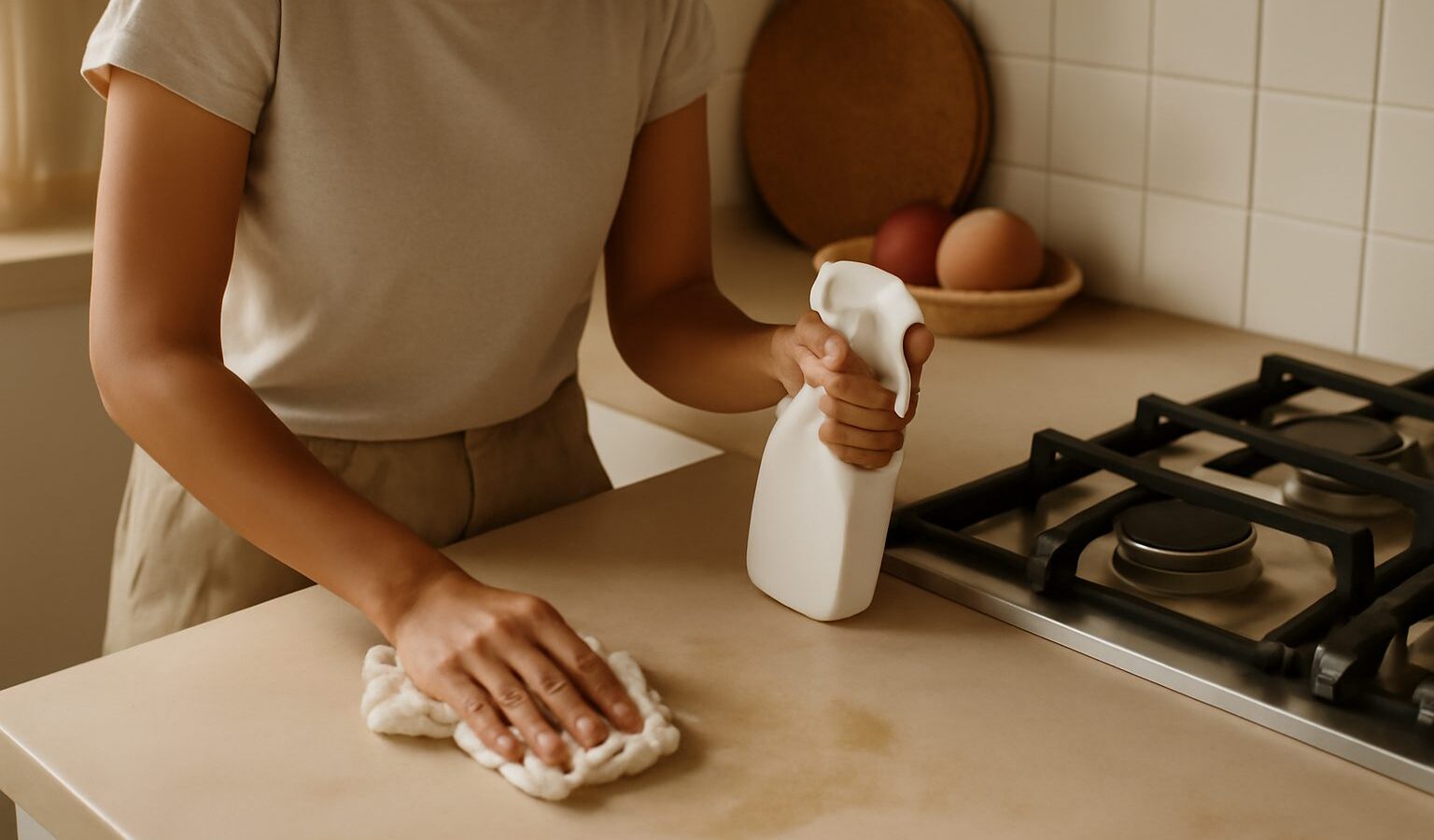
If you cook often at home, greasy film on your tiles, cabinet doors and range hood is almost unavoidable. In Singapore’s hot and humid climate, that grease does not just sit there. Warm air keeps it soft and sticky, and dust settles into it to form a grimy layer that feels tacky to the touch. The good news is that removing kitchen grease in Singapore homes rarely needs harsh or expensive products. With a bit of technique and a few common items, most surfaces come clean.
This guide walks through practical, safe steps for the surfaces that build up grease fastest in a typical HDB flat or condo kitchen, plus how to keep the mess from coming back.
Why grease builds up so fast in local kitchens
Stir frying, deep frying and cooking with oil all send fine droplets of fat into the air. Those droplets travel further than you might think, coating the wall behind the stove, the underside of the range hood, nearby cabinet fronts and even the ceiling above the cooker. Our warm indoor temperatures keep this residue slightly liquid, so it spreads and traps dust.
The key rule is simple. Fresh grease is far easier to remove than old grease. If you wipe down after cooking while the surface is still warm, a damp cloth often does the job. Once grease has baked on over weeks, you need to loosen it first before wiping, or you will just smear it around.
Warm water is your best friend here. Heat softens fat, so a cloth wrung out in hot tap water lifts more than a cold one. For anything oily, always dry the surface afterwards, because leftover moisture in a humid kitchen invites mould along grout lines and cabinet edges.
Step by step for common surfaces
Start with the least aggressive method and only move up if needed. Test any cleaner on a hidden corner first, especially on laminate, painted surfaces and natural stone.
Tiled walls and splashbacks. Mix a few drops of dishwashing liquid into a basin of hot water. Wipe the tiles with a soft cloth or sponge, working top to bottom. For stubborn spots, make a light paste of baking soda and water, spread it on, wait a few minutes, then scrub gently and rinse. Dry with a clean cloth so grout does not stay damp.
Range hood and filters. The metal mesh filters trap a lot of grease and are usually removable. Soak them in hot water with dishwashing liquid, or add a spoon of baking soda to cut the oil, then rinse and dry fully before refitting. Wipe the hood body with the same soapy cloth. For a deeper routine, see how to clean a range hood and filters below.
Stovetop and knobs. Let the surface cool, then apply warm soapy water and let it sit on greasy patches for a minute or two. A soft brush or old toothbrush helps around burners and knobs. Avoid abrasive pads on glass ceramic tops.
Cabinet fronts and handles. Laminate and painted doors respond well to warm soapy water. For sticky handles, a cloth dampened with a little diluted white vinegar and hot water helps, but keep vinegar off natural stone and untreated wood. Dry immediately.
Wooden or timber-finish surfaces. Wood and humidity are a tricky pair. Use a barely damp cloth, avoid soaking, and dry at once. For ongoing care of timber pieces, our guide on protecting wood in a humid climate is a useful companion.
A few safety reminders. Never mix cleaning products together, as some combinations release harmful fumes. Keep the kitchen ventilated while you clean. Wear gloves if you have sensitive skin, and store all cleaners away from food and out of reach of children and pets.
Prevention keeps the job small
The easiest grease to clean is the grease that never settles. Run your range hood or exhaust fan every time you cook with oil, and leave it on for a few minutes afterwards to clear the air. Keep a dry cloth near the stove and wipe warm surfaces after each session. A quick weekly wipe of tiles and cabinet fronts stops buildup from turning into a hardened crust.
Deal with spills and oil splatters straight away rather than letting them dry. If you fry often, consider a splatter guard over the pan to contain droplets at the source.
When to bring in help
Most grease is a do it yourself job, but there are limits. If baked on grease has yellowed or hardened across large areas, or if you are moving into a resale flat with years of buildup, a professional cleaning service can strip it faster and protect finishes. Persistent greasy film that keeps returning despite good ventilation may point to a hood or ducting problem worth having checked.
For a wider reset of the whole space, pair this with our full kitchen deep clean routine, and tackle the oven and stovetop as a set so everything matches.
Related reading: How to Clean a Range Hood and Filters, How to Clean Your Oven and Stovetop, How to Deep Clean Your Kitchen, and Caring for Wood Furniture in a Humid Climate.