
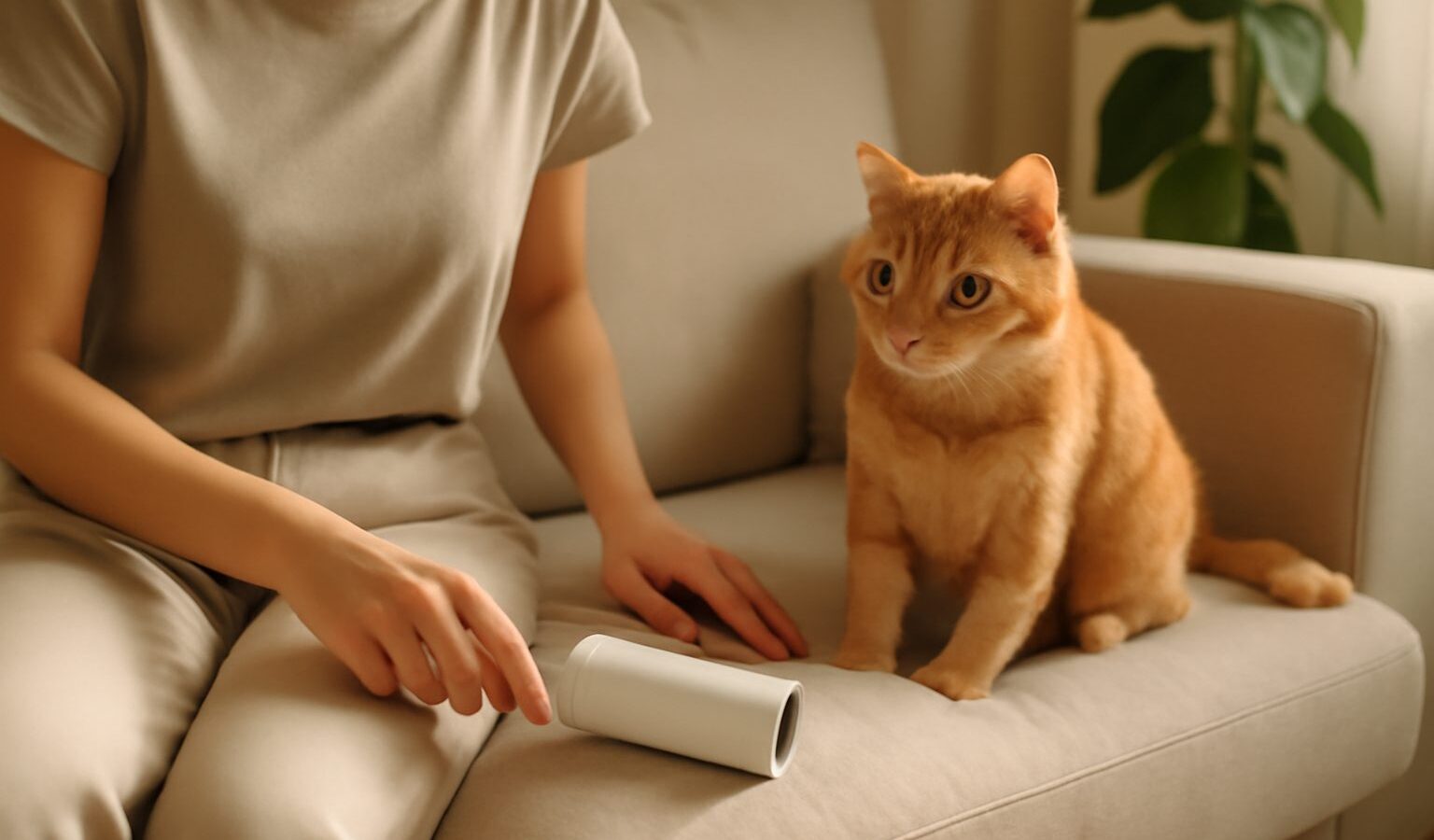
Sharing your home with a dog or cat means sharing it with their fur too. Removing pet hair at home can feel like a losing battle, especially in our warm climate where pets shed all year round. The trick is not one magic tool but the right method for each surface, backed by a few habits that stop the hair spreading in the first place.
Why Pets Shed So Much Here
Many animals shed seasonally in cooler countries, but in Singapore the steady warmth and humidity mean coats never get the strong seasonal cues to slow down. Most pets shed lightly and continuously through the year. Loose hair drifts onto sofas, works into rug fibres, clings to clothing with static, and settles in corners with the dust. Because it never fully stops, the goal is steady management rather than a single big clean. Little and often keeps it under control.
Safety and Common Sense First
- Unplug your vacuum before clearing a tangled brush roll or emptying it, and never poke inside a running machine.
- Keep cleaning sprays and disinfectants away from pets and their food and water bowls. Store them in a closed cupboard.
- Never mix bleach with other cleaners such as ammonia or vinegar. The fumes harm you and your pets. Warm soapy water handles most pet-hair cleaning.
- Ventilate the room while you clean so both you and your animals stay comfortable.
- Let any washed covers, rugs, or bedding dry fully in our humidity before use, as damp fabric traps odour and mould.
The Best Tools for Each Surface
Different surfaces release hair differently. Match the tool to the job.
Sofas and upholstery
- A damp rubber glove is the cheapest miracle worker. Put it on, dampen it slightly, and run your hand over the fabric. The hair balls up so you can lift it off.
- A rubber-edged pet squeegee or a window squeegee drags hair out of woven fabric.
- Follow up with the upholstery nozzle of your vacuum to collect what has gathered.
Floors
- On hard floors, a microfibre flat mop or an electrostatic dry cloth traps hair without scattering it, which a broom tends to do.
- On rugs and carpets, vacuum slowly in overlapping passes. A rubber broom or squeegee first pulls embedded hair to the surface.
Clothing and small items
- A lint roller is fastest for a few clothes on the way out the door.
- For a full wash, toss hairy items in the dryer on a no-heat air cycle for ten minutes first, if you have a dryer, so loose hair drops into the lint trap. Otherwise shake garments outdoors before washing.
The car
- A slightly damp rubber glove or a rubber brush lifts hair from seats. Finish with a handheld vacuum.
A Simple Weekly Routine
- Brush your pet first, ideally outdoors or over a hard floor, so loose hair comes off the animal before it lands on the furniture.
- Squeegee or glove the sofa and any fabric chairs to gather the surface hair.
- Vacuum floors, rugs, and upholstery, moving slowly over high-traffic and favourite napping spots.
- Damp-mop hard floors to catch the fine hair the vacuum stirred up.
- Wash pet bedding weekly on a warm cycle and dry it fully.
Comparing the Main Methods
| Method | Best for | Cost | Effort |
|---|---|---|---|
| Damp rubber glove | Sofas, car seats, cushions | Very low | Low |
| Rubber squeegee or broom | Carpets, rugs, upholstery | Low | Medium |
| Lint roller | Clothes, quick touch-ups | Low | Low |
| Vacuum with pet nozzle | Floors, stairs, large areas | Higher | Low |
| Microfibre or electrostatic mop | Hard floors | Low | Low |
You do not need every tool. A rubber glove, a lint roller, and a decent vacuum cover almost everything.
Reduce Shedding at the Source
The less hair your pet drops, the less you have to chase.
- Brush your pet regularly. A few minutes daily for long coats, or a few times a week for short coats, removes loose fur before it reaches your home. Use a brush suited to their coat type.
- Keep your pet well fed and hydrated. A balanced diet supports a healthier coat that sheds less. Ask your vet if shedding suddenly increases, as it can signal a skin issue.
- Bathe your pet as your vet advises, not too often, and dry them thoroughly.
- Give pets their own washable bedding and blankets so most hair collects in one easy-to-clean spot.
Managing Static and Fine Hair
Hair clings because of static, which builds up on synthetic fabrics. A lightly damp cloth or glove beats a dry one every time, because the moisture kills the static and helps hair clump together. For clothes, an anti-static approach in the wash and airing garments before wearing both help keep fur from clinging.
Protecting Your Furniture
A little prevention saves a lot of cleaning. Drape a washable throw or blanket over your pet’s favourite spot on the sofa, and simply shake it out and launder it each week rather than degreasing the whole couch. Slipcovers on dining chairs and armchairs work the same way. Choose fabrics in a colour close to your pet’s coat so stray hairs show less between cleans, and lean towards tightly woven materials such as leather or microfibre, which release hair far more easily than loose weaves and boucle.
Keeping the Air Clear
Fine pet hair and dander also float in the air and settle as a light film on shelves and electronics. Wiping surfaces with a slightly damp microfibre cloth traps this better than a dry duster, which just launches it back up. Washing your hands and giving fabric surfaces a quick going-over before guests arrive keeps the home fresh, which matters most for visitors who are sensitive to pet allergens.
Living Comfortably With Your Pet
You will never make a shared home completely fur free, and that is fine. With the right tool for each surface, a short weekly routine, and regular brushing to catch hair at the source, pet fur becomes a minor chore rather than a daily frustration. Your home stays clean, your pet stays happy, and you spend less time fighting the fluff.
Explore more: Make your home more pet friendly · Build a home cleaning routine · Cleaning hacks for a tropical home