
Singapore’s warmth and humidity are wonderful for many things, but fresh-smelling laundry is not one of them. Between daily sweat, sudden rain, and clothes that take forever to dry, odours have plenty of chances to take hold. Removing odours from clothes and shoes is a common struggle here, whether it is a musty towel, a gym shirt that never quite loses its smell, or trainers that announce themselves the moment you take them off. The reassuring part is that most odours can be dealt with using simple, safe methods and a few good habits, no harsh chemicals required.
This guide covers why smells linger in our climate, how to freshen clothes and shoes, and how to stop odours coming back in the first place.
Why Smells Cling in a Humid Climate
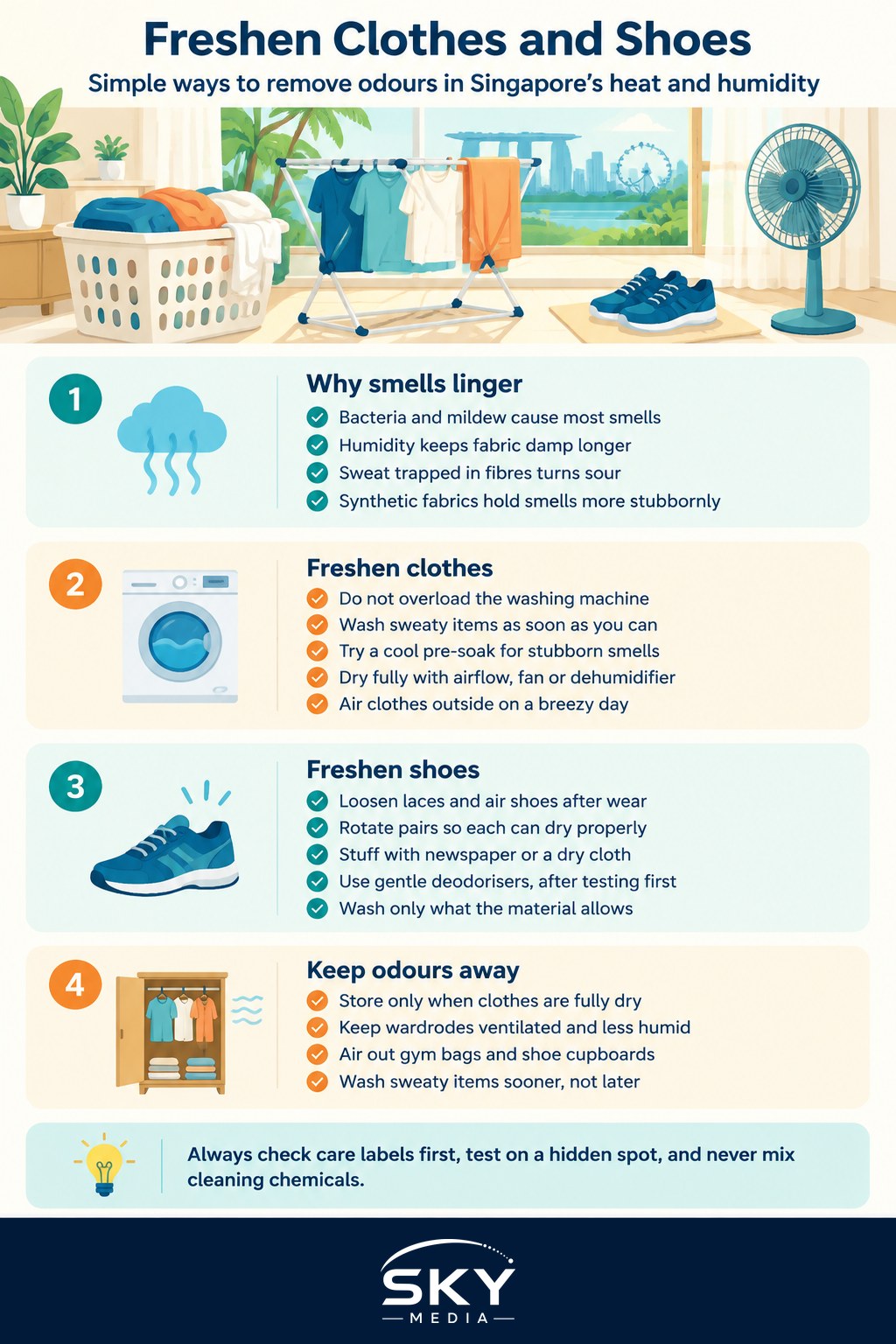
Most persistent clothing and shoe odours come from bacteria and, in damp conditions, mildew. Sweat itself is nearly odourless, but when it mixes with the bacteria that thrive in warm, moist fabric, the result is that familiar sour smell. Humidity makes everything worse, because clothes and shoes stay damp longer, giving bacteria and mould more time to grow.
That is why the two biggest causes of lingering odours are damp that never fully dries and sweat trapped in fibres. Synthetic and performance fabrics are especially prone, as they hold onto oils and smells more stubbornly than natural fibres. Understanding this points straight to the solution: get things properly clean, get them fully dry, and stop moisture lingering.
Before treating any item, a couple of ground rules keep you safe:
- Always check the care label first and follow the maker’s instructions, especially for delicates, leather and anything structured.
- Test any deodorising method on a hidden area first, such as an inside seam, to make sure it does not mark the fabric.
- Never mix cleaning chemicals together, as combining products can create dangerous fumes. Stick to one gentle method at a time.
Freshening Clothes
For everyday smelly laundry, start with a proper wash and build up only if needed.
- Do not overload the machine. Clothes need room to move so detergent and water can flush out sweat and bacteria. A packed drum cleans poorly.
- Wash promptly. Do not leave sweaty gym clothes balled up in a bag for hours, as odours set in fast in the heat. Rinse or air them if you cannot wash right away.
- Try a pre-soak. For stubborn smells, soaking clothes before washing helps loosen trapped sweat and oils. A soak in cool water with your normal detergent, or a laundry product designed for odour, works well within the care label’s limits.
- Wash inside out. Turning activewear and shirts inside out puts the sweatiest surface in direct contact with the water.
- Dry fully and fast. This is the step people skip. A garment that dries slowly will smell musty no matter how well you washed it, so use good airflow, a fan or a dehumidifier. Our guide on how to dry clothes in humid weather explains how to speed this up.
Sunlight and fresh air are natural deodorisers, so airing clothes outside on a breezy day helps enormously. Just check that strong sun will not fade darker or delicate fabrics. For sweat-prone gym gear specifically, our guide on how to care for activewear and gym clothes has more targeted advice on stopping the problem at the source.
Freshening Shoes
Shoes are trickier because you cannot usually toss them in the wash, and they spend all day trapping warm, damp air. The key is drying them out fully between wears.
- Air them out. After wearing, loosen the laces, pull out the tongue and let shoes air in a well-ventilated spot rather than a closed cupboard. Never store shoes damp.
- Rotate your pairs. Wearing the same shoes every day never gives them time to dry. Alternating between two or more pairs makes a huge difference.
- Dry the insides. Stuffing shoes with newspaper or a dry cloth after a rainy day or a sweaty workout draws out moisture. Remove and dry removable insoles separately.
- Use gentle deodorisers. Placing a small pouch of a natural absorber inside overnight can help draw out damp and smell. Test first on any coloured lining, and follow the care guidance for the shoe material.
- Wash what you safely can. Some fabric shoes and insoles can be washed, but always check first, as many cannot. Delicate materials like leather and suede should not be soaked and may need specialist care.
For leather shoes especially, keeping them clean, dry and conditioned protects both the smell and the material. Our guide on caring for shoes, bags and leather covers this in detail.
Keeping Odours From Coming Back
Prevention is far easier than treating a set-in smell. A few simple habits go a long way in our climate.
- Make sure clothes and shoes are completely dry before storing them, since even slightly damp items in a closed wardrobe breed odour and mould.
- Keep your wardrobe ventilated and use moisture absorbers to fight humidity. Our guide to storing clothes in humid Singapore has more on this.
- Air out gym bags and shoe cupboards regularly rather than leaving them sealed.
- Wash sweaty items sooner rather than later, and never leave wet washing sitting in the machine.
If an odour truly will not budge from a valued item, especially a delicate or structured piece, professional cleaning is a sensible next step rather than repeated harsh home treatments.
Final Thoughts
Removing odours from clothes and shoes comes down to three things: clean thoroughly, dry completely, and never let damp linger. Wash promptly with room in the machine, air items in fresh moving air, rotate your shoes so they can dry between wears, and store everything bone dry. Stick to gentle methods, always check the care label, test on a hidden spot first, and never mix chemicals. With these habits, you can keep your wardrobe and your shoes smelling fresh even in Singapore’s demanding heat and humidity.
Further reading: How to Stop White Clothes Turning Yellow · How to Remove Common Clothing Stains