

In Singapore’s heat, gym clothes work hard. You sweat through them at the gym, on a run around the estate, or just walking to the MRT, and then they sit damp in a bag until you get home. Caring for activewear properly is what keeps those leggings, sports bras and moisture-wicking tees stretchy, fresh and lasting for years instead of turning stiff, smelly or see-through after a few months. The good news is that it is mostly about small habits, not expensive products.
Activewear is built from technical fabrics like polyester, nylon, elastane and spandex blends. These are designed to pull sweat away from your skin and dry fast, which is exactly why they need gentler handling than a cotton shirt. Treat them well and they reward you. Treat them like an afterthought and they break down quickly.
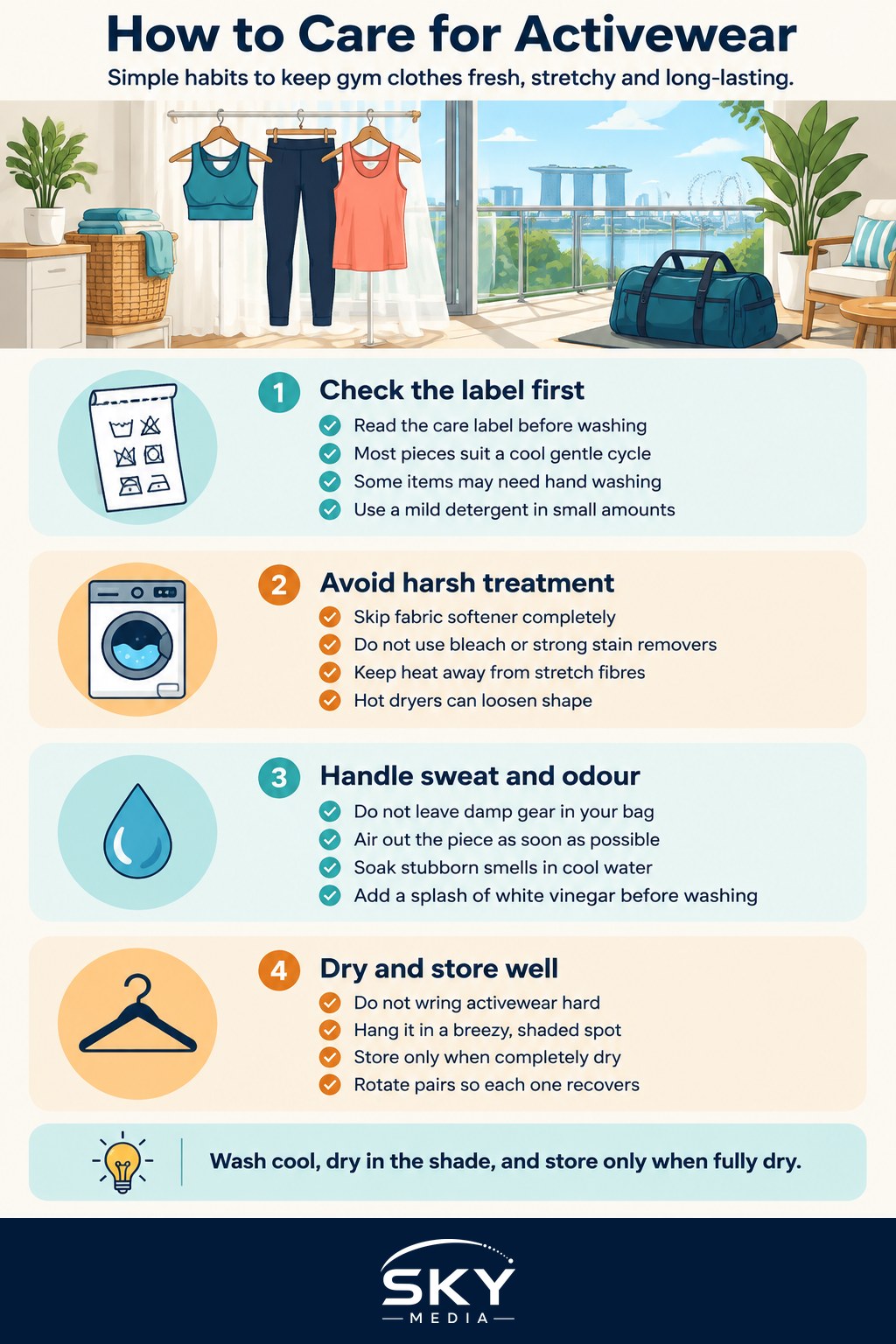
Check the Label First, Always
Before you do anything, read the care label. Different blends have different rules, and the maker knows the garment best. If you are unsure what the symbols mean, our guide on understanding clothing care labels breaks them down clearly. Most activewear is machine washable on a cool, gentle cycle, but some pieces with silicone grippers, printed logos or delicate mesh panels may ask for hand washing.
A few label-friendly habits that make a big difference:
- Wash in cold or cool water. Hot water breaks down elastane and sets in sweat odours.
- Turn garments inside out so the sweat-facing side gets cleaned properly and outer prints are protected.
- Fasten any zips and clasps so they do not snag other items.
- Use a mild detergent and a small amount. More is not better.
Skip the Harsh Stuff
The two biggest enemies of activewear are fabric softener and heat. Fabric softener leaves a coating that clogs the fabric’s wicking ability and actually traps odour, so leave it out entirely. Avoid bleach and strong stain removers too, as they weaken the fibres and fade colours. There is no need to mix cleaning products; a gentle detergent on its own does the job safely.
Heat is the other culprit. Very hot washes and hot tumble dryers relax the stretch fibres, which is how leggings lose their shape and waistbands go slack. In our climate you rarely need a dryer anyway.
Beat the Sweat and Odour
Singapore sweat is serious, and odour is the number one complaint with gym gear. The trick is to act fast. Do not leave damp kit balled up in your bag for hours, because that warm, wet environment is where bacteria and smells multiply. When you get home, hang the piece to air out, or rinse it right away if you cannot wash it soon.
For stubborn smells, soak the garment in cool water with a splash of white vinegar for about fifteen to thirty minutes before a normal wash. Vinegar is gentle, cheap and neutralises odour without harsh chemicals. If smells are a recurring battle across your wardrobe, our dedicated guide on how to remove odours from clothes and shoes has more tactics, and how to avoid sweat stains and stay fresh covers prevention.
Dry Smart in Our Humidity
Drying is where Singapore trips people up. Never wring activewear hard, as that stresses the elastic fibres. Instead, gently press out excess water and hang it up. The best spot is a breezy, shaded area. Direct, harsh sun for hours will fade colours and can make elastane brittle over time, so a shaded balcony or an airy corner near a fan is ideal.
Technical fabrics are quick-dry by design, so they usually dry fast even indoors. If your flat feels perpetually damp, our tips on how to dry clothes in humid weather will help you avoid that musty half-dry smell. Good airflow matters more than strong sun.
Store and Rotate Them Well
Only put activewear away when it is completely dry, because folding away anything slightly damp invites mould and mildew in our humidity. Fold rather than hang heavy items like sports bras with moulded cups, so the shape holds. Keep them somewhere ventilated rather than crammed into an airless drawer.
Rotating your gear also helps. If you wear the same two pairs of leggings on repeat, they wear out faster. Having a small rotation gives each piece time to fully recover its stretch and air out between sessions. This is part of the same lasting-wardrobe mindset of caring for your clothes so they go the distance.
The Payoff
Caring for activewear is not complicated. Wash cool and inside out, skip the softener and bleach, deal with sweat quickly, dry in the shade with good airflow, and store everything bone dry. Do these consistently and your gym clothes will keep their stretch, colour and freshness far longer, which saves you money and spares you the disappointment of reaching for a favourite pair of leggings only to find they have gone baggy or smelly. Look after your gear, and it will keep showing up for you, workout after workout.
Frequently Asked Questions
How often should I wash my gym clothes? Wash them after each workout in this heat, since sweat and bacteria build up quickly. If you cannot wash straight away, hang the piece to air out or rinse it, rather than leaving it balled up in your bag.
Why shouldn’t I use fabric softener on sports clothes? Softener leaves a coating that clogs the fabric’s wicking ability and can trap odour. Skip it entirely, along with bleach and strong stain removers, which weaken fibres and fade colours. A small amount of mild detergent is enough.
Can I use a tumble dryer for leggings and sports bras? It is best to avoid it. Heat relaxes the stretch fibres, which is how leggings lose their shape and waistbands go slack. Singapore’s climate means most activewear dries quickly when hung up with good airflow, so a dryer is rarely needed.
How do I get rid of the smell in my workout clothes? Soak the garment in cool water with a splash of white vinegar for about fifteen to thirty minutes, then wash as usual. Vinegar neutralises odour gently. Always check the care label first, and dry the item promptly.
How long does activewear last, and when should I replace it? There is no fixed lifespan, as it depends on use and care. Replace pieces that turn see-through, lose their stretch or hold smell despite proper washing. Rotating several sets gives each time to recover and tends to extend their life.