
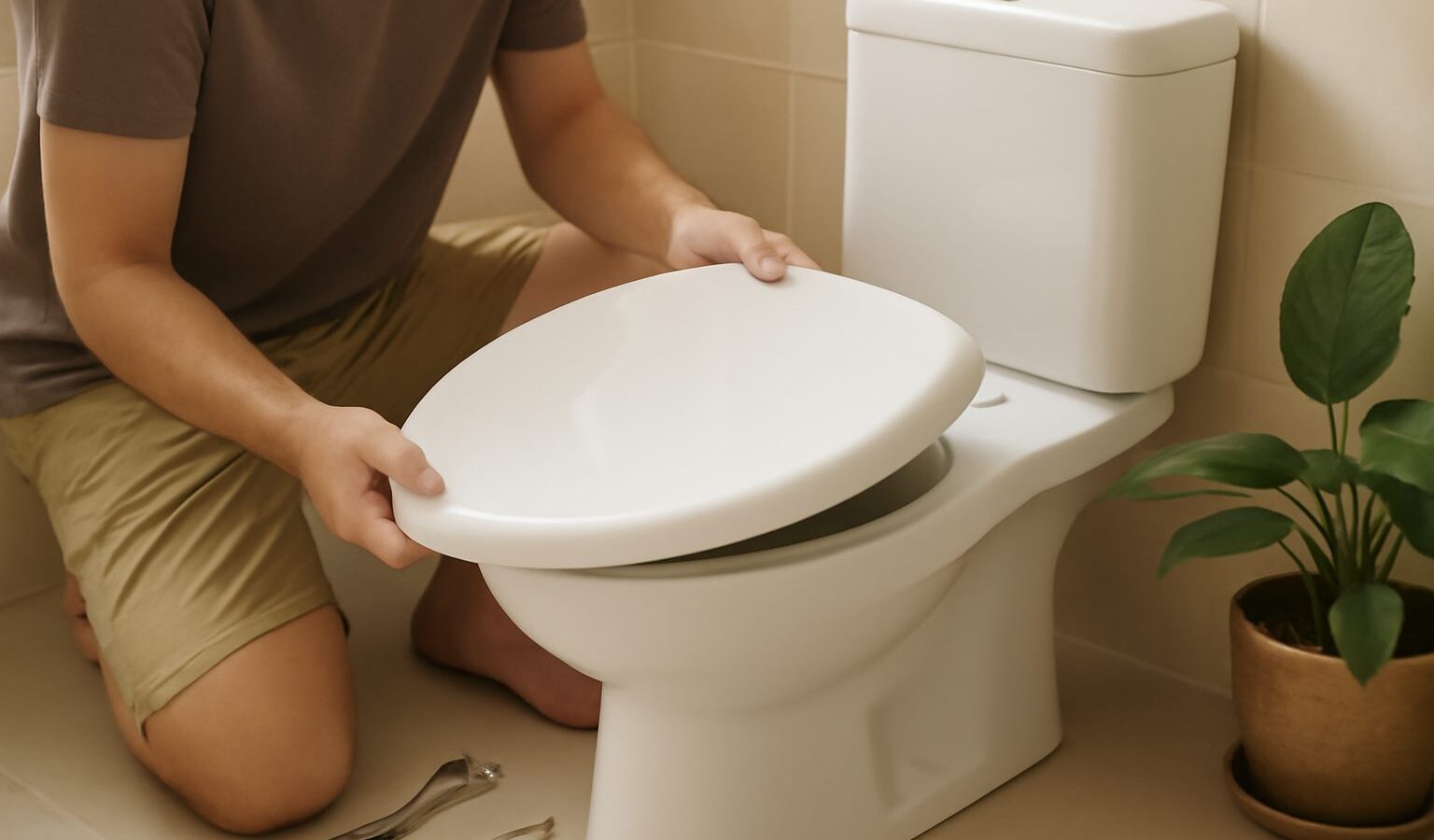
A cracked, wobbly, or stained toilet seat is one of those small annoyances that makes a whole bathroom feel tired. The good news is that this is one of the easiest home repairs you can do yourself, usually in under twenty minutes and without a single specialist tool. If you can turn a screwdriver, you can replace toilet seat singapore bathrooms are fitted with, whether you live in an HDB flat or a newer condo.
In our hot and humid climate, seats also take a beating. Plastic hinges go brittle, fixings corrode, and cleaning chemicals slowly discolour the surface. Swapping the seat is far cheaper than calling a contractor, and it instantly refreshes the room. Here is how to do it properly.

Tools And What To Buy First
You will need very little:
- A flathead screwdriver, and sometimes a small spanner or adjustable wrench
- A cloth and some general bathroom cleaner
- Possibly a hacksaw blade or a bit of penetrating oil, only if the old bolts are seized
- A tape measure
Before you buy a replacement, measure your existing seat. There is no single universal size, so getting the numbers right saves a wasted trip. Measure three things: the distance between the two fixing holes at the back of the pan, the width of the bowl at its widest point, and the length from the fixing holes to the front tip of the bowl. Most seats in Singapore fall into standard round or elongated shapes, but confirm yours rather than guessing.
If your bathroom is compact, as many HDB toilets are, also check that the new seat will not clash with a nearby wall or vanity when lifted. A soft close seat is a popular upgrade because it stops the lid slamming, which is a genuine blessing in a flat with thin walls and light sleepers.
Removing The Old Seat
Start by lifting the lid and locating the two fixings at the back of the pan. On most models there are plastic caps covering the bolt heads. Flip or slide these open with your fingernail or the flathead screwdriver.
Underneath you will find either a bolt with a wing nut below the pan, or a top fixing hinge that tightens from above. Hold the nut steady underneath with your fingers or the spanner, then turn the screw anticlockwise. Lift the old seat away once both sides are free.
If the bolts are corroded solid, which happens often in our humid air, do not force them until they snap awkwardly. Apply a little penetrating oil, wait a few minutes, and try again. As a last resort, cut through the bolt with a hacksaw blade, protecting the porcelain with a cloth so you do not scratch or crack it. Take your time here, because a cracked pan is a far bigger and more expensive problem than a stubborn bolt.
Give the whole area a good clean now while it is exposed. This is the one moment you can reach every corner easily.
Fitting The New Seat
Line up the new fixings with the holes in the pan and drop them in. Most modern seats use a quick release bracket, so you fit the base plates first, then click the seat on afterwards. Tighten the nuts firmly but do not overtighten, as plastic threads strip easily and porcelain can crack under too much pressure. Hand tight plus a small nudge is usually right.
Sit the seat down and check that it does not shift side to side. If it wobbles, nudge it square and retighten. Open and close the lid a few times to confirm it sits evenly and, on a soft close model, that it lowers smoothly.
That is genuinely it. The job is well within reach of any beginner, and it pairs nicely with other quick wins like learning how to fix a running toilet or how to fix a leaky tap while you are already in the bathroom.
When To Call A Professional
Replacing the seat itself almost never needs a plumber. However, call a professional if you discover cracks in the porcelain pan, a loose or rocking toilet that moves on the floor, or water seeping from the base. Those point to a failed seal or a structural issue that is beyond a simple seat swap. Likewise, if the fixing holes are damaged or the pan is an unusual shape you cannot match, a licensed plumber or your town council contractor can advise.
For a wider view of what is sensible to tackle yourself, see our guides on basic home repairs and DIY in Singapore and when to DIY and when to hire a professional. Knowing where the line sits keeps small jobs cheap and big jobs safe.
Frequently Asked Questions
How do I know which toilet seat size will fit my pan? Measure the distance between the two fixing holes, the width of the bowl at its widest point and the length from the holes to the front tip. Most seats are standard round or elongated shapes, but confirm yours by measuring instead of guessing.
Are soft-close toilet seats worth the upgrade? Often yes, especially in a flat with thin walls and light sleepers, since they stop the lid slamming. Check that the new seat will not clash with a nearby wall or vanity when lifted, and that its fixings suit your pan.
What if the toilet seat bolts are rusted and will not turn? Do not force them until they snap. Apply a little penetrating oil, wait a few minutes and try again. As a last resort, cut the bolt with a hacksaw blade, shielding the porcelain with a cloth so it does not scratch or crack.
How tight should the new toilet seat bolts be? Firm but not over-tightened, since plastic threads strip easily and porcelain can crack under too much pressure. Hand tight plus a small nudge is usually right. Check the seat does not shift sideways, and retighten if it wobbles.
Should I call a plumber if the toilet itself wobbles? Yes. A toilet that rocks on the floor, a cracked pan or water seeping from the base points to a failed seal or structural problem, which is more than a seat swap. A licensed plumber can assess it.
Further reading: How to Replace a Flexible Hose Under the Sink