
Good corporate headshots singapore businesses can actually use are simpler than they look. You do not need a huge studio or a wall of expensive lights. What you need is clean, flattering light, a calm subject, and a repeatable setup so every person in the company looks like they belong to the same set. This guide walks you through the whole process, from planning the session to delivering the final files, so you can turn up prepared and shoot with confidence.
Before we start, one important note: always get consent from the people you photograph, and use a simple model release for commercial work so everyone knows how the images will be used. For a fuller explanation of why this matters, see our guide on model release and consent in Singapore.
Planning the session and the look
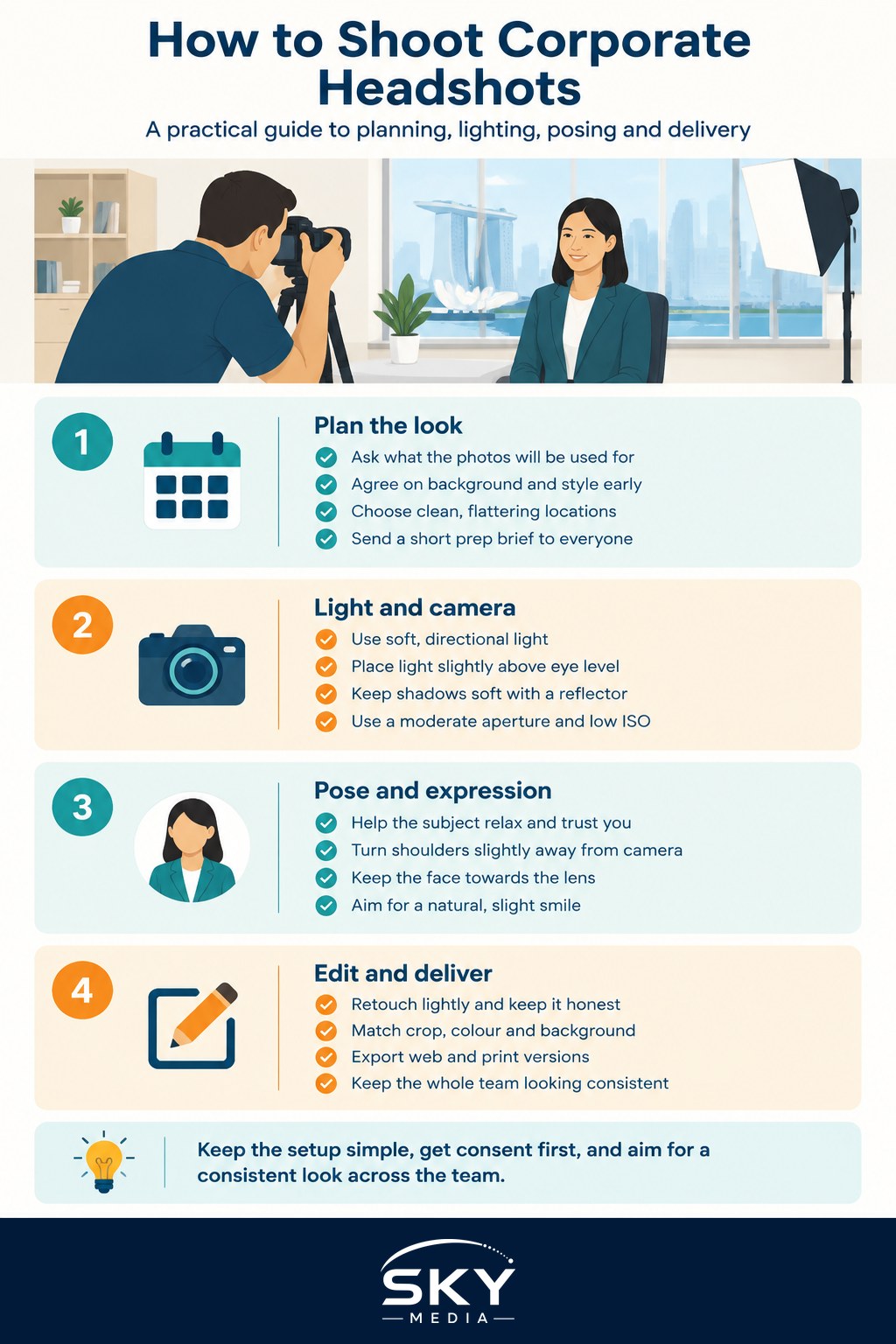
A headshot session lives or dies on preparation. Ask the client what the photos are for. LinkedIn profiles, a company website, and a press kit may all want slightly different crops and backgrounds. Once you know the purpose, you can lock in the style: bright and clean for a friendly startup, or darker and more formal for a law firm or bank.
Agree on a background early. A plain grey, white, or soft blue backdrop keeps the focus on the face and makes it easy to match everyone across the team. If you are shooting on location in an office, look for a clean wall or a window with soft, even light. In Singapore’s bright conditions, a north-facing window or a shaded spot gives you gentle light without harsh shadows. Avoid busy lobbies and mirrored surfaces that create distractions and reflections.
Send a short brief to everyone being photographed. Suggest solid colours over loud patterns, and ask them to bring a comb, a lint roller, and a spare top. Little things like a stray hair or a crooked collar are far easier to fix before the shot than in editing later. Building a simple checklist also helps, and you can borrow ideas from our piece on how to make a shot list for a shoot.
Lighting that flatters everyone
The classic headshot look uses soft, directional light. A large softbox or a window as your main light, placed slightly to one side and above eye level, sculpts the face gently. Add a reflector on the opposite side to fill the shadows so they look soft rather than heavy. If you only own one light, a reflector is the cheapest way to double your options, and our guide on how to use a reflector and diffuser covers this in detail.
Keep the light soft and close. The bigger and nearer the light source relative to the subject, the softer the shadows on the skin. Watch the catchlights, the small reflections in the eyes, because they bring a portrait to life. A single catchlight at the ten or two o’clock position usually looks natural.
For camera settings, aperture priority or manual both work well. A moderate aperture around f/4 to f/8 keeps the whole face sharp while softening the background. A short telephoto lens, roughly 85mm on a full frame or its equivalent, flatters facial features and avoids the stretched look you get standing too close with a wide lens. Set a comfortable shutter speed and a low ISO to keep the files clean.
Posing, expression and rapport
Most people freeze in front of a camera, so your job is to help them relax. Talk to them, explain what you are doing, and show them a good frame on the back of the camera early so they trust the process. A relaxed subject always beats a perfect setup with a stiff face.
For a strong, natural pose, ask the subject to turn their shoulders slightly away from the camera while keeping the face towards you. This slims the body and looks more dynamic than facing dead on. Get them to push the forehead gently forward and down a touch to define the jawline. Small adjustments make a big difference.
Expression is everything in a headshot. A genuine, slight smile with engaged eyes reads as approachable and confident. Try prompting a real reaction rather than asking for a smile on cue. Ask an easy question, share a light joke, or have them look away and then back to the lens. Shoot a burst as the expression shifts so you capture the honest moment in between.
Editing and delivering the files
Keep retouching light and honest. Even out the skin, tame stray hairs, and remove temporary blemishes, but keep the person recognisable. A natural finish always looks more professional than heavy smoothing.
Deliver a consistent set: same crop ratio, matched colours, and a tidy background across the whole team. Export web-friendly versions for online profiles and higher resolution files for print. Our guide on how to deliver photos to clients covers formats and handover.
Wrapping up
Corporate headshots reward preparation, soft light, and a friendly manner more than expensive gear. Set a repeatable routine, put people at ease, and keep your edits clean. Do that consistently and word of mouth will bring the next booking. Get the consent sorted, respect any venue rules if you shoot on site, and enjoy the work. The more sessions you run, the faster and calmer you become.
Frequently Asked Questions
Do I need a studio to shoot corporate headshots? No. A window with soft, even light or a shaded spot, plus a plain wall or backdrop and a reflector, is enough. Choose a clean area away from busy lobbies and mirrored surfaces. A repeatable setup matters more than a big space.
What should staff wear for a company headshot session? Solid colours usually work better than loud patterns, and each person should bring a spare top, a comb and a lint roller. Follow any dress code the client has set. Fixing a collar or stray hair beforehand is easier than editing it out.
How many shots should I take per person? Enough to catch a genuine expression, so shoot a burst as the person relaxes rather than a single frame. Review a few with them early on to build trust. You can then pick the best and deliver a consistent set.
How do I make nervous colleagues look natural on camera? Talk to them, explain what you are doing and show a good frame early on. Prompt a real reaction with an easy question or a light joke instead of asking for a smile on cue. Turning the shoulders slightly also looks more natural.
What file formats should I deliver headshots in? Supply web-friendly versions for online profiles and higher-resolution files for print, with the same crop, colour and background across the team. Agree the formats with the client beforehand. Keep retouching light so people remain recognisable.