
Your headshot often makes the first impression before you ever meet a recruiter, client or new colleague. Getting what to wear for a corporate headshot right is mostly about removing distractions, so the viewer looks at your face rather than your clothes. The good news is that you do not need an expensive new outfit. You need the right colours, a neckline that frames your face, a good fit and a little preparation.
This guide is for the person in front of the camera. If you are the photographer, our companion piece on how to shoot corporate headshots covers lighting, posing and equipment.
Start With Your Industry and Purpose
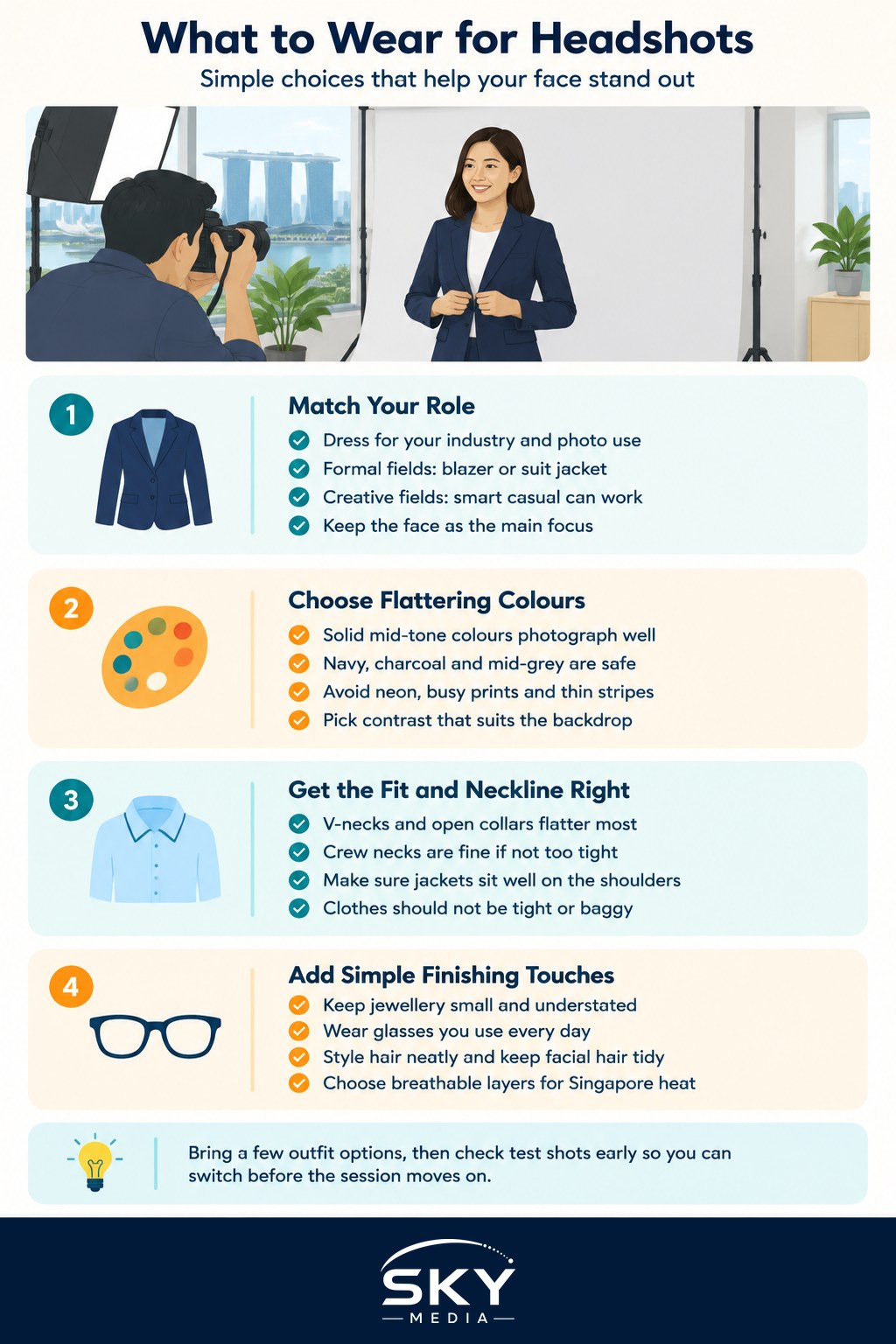
Before choosing clothes, think about where the photo will be used and what your field expects.
- Corporate, legal, banking and consulting: a suit jacket or blazer is the safe default. Neutral colours and simple lines work best.
- Tech, media, creative and startups: smart casual often looks more natural. A well-fitted knit, a collared shirt without a jacket, or a simple blouse can work.
- Healthcare, education and public service: approachable and tidy. A blazer over a plain top, or a crisp shirt, strikes a good balance.
- Personal brand or freelance: you can show more personality, but the face should still be the focus.
A good rule is to dress the way you would for an important meeting in your role, then go one step smarter. If you plan to use the same photo on LinkedIn, company websites and speaker profiles, choose the version that fits the most formal of those.
Colours That Photograph Well
Colour is the single biggest outfit decision for a headshot. Solid, mid-tone and rich colours usually work better than very bright or very pale ones.
| Choose | Why it works | Avoid | Why it struggles |
|---|---|---|---|
| Navy, charcoal, mid-grey | Classic, flattering on most skin tones | Pure white shirts on their own | Can glare and lose detail in bright light |
| Jewel tones: teal, burgundy, emerald | Adds warmth and colour without distraction | Neon or very bright colours | Reflect colour onto skin and pull attention |
| Soft blues and muted pastels | Fresh and approachable | Busy prints, small checks and thin stripes | Can create a shimmer pattern on camera |
| Contrast between top and jacket | Gives shape and depth | Same colour as the backdrop | You blend into the background |
Ask the photographer what background colour they plan to use. If it is white or light grey, a darker jacket gives contrast. If it is dark, a lighter or richer colour stands out better.
Pick a colour that suits your skin tone. If you are unsure, hold a few tops up to your face in daylight next to a window and take phone photos. The one that makes your skin look even and your eyes bright is usually the winner.
Necklines, Collars and Fit
Most headshots are cropped from the chest up, so everything below that line matters less than what frames your face.
- Necklines. V-necks and open collars lengthen the neck and suit most face shapes. Crew necks are fine if they are not too high or too tight. Avoid very low or strapless tops, which can look bare when cropped.
- Collars. Collars should be crisp and sit flat. Iron or steam them, and check for a collar that pops up on one side.
- Jackets. A blazer instantly adds structure. Make sure the shoulders fit; a jacket that is too big creates bulk at the top of the frame.
- Ties. If you wear one, choose a solid or subtle pattern and a neat knot sitting snugly at the collar.
- Fit. Clothes should be neither tight nor baggy. Tight buttons that pull and gape show clearly in close-ups.
Sleeve length matters if the photographer takes half-body shots. Long sleeves or three-quarter sleeves generally look more polished than short ones for corporate photos.
Accessories, Glasses and Grooming
Keep accessories simple so they support, rather than compete with, your face.
- Jewellery. Small earrings, a simple necklace or a watch are fine. Skip large, shiny or noisy pieces.
- Glasses. If you wear glasses daily, wear them in the photo so you look like yourself. Clean the lenses, and tell the photographer so they can angle lights to reduce glare.
- Hair. Get a haircut about a week before, not the day before, so it settles. Bring a comb, hair ties or a small amount of styling product.
- Facial hair. Shave or trim neatly on the morning of the shoot, or keep your beard tidy and shaped.
- Makeup. Aim for natural and matte. Light powder helps control shine under studio lights, which matters for everyone, not only those who wear makeup.
- Skin. Drink water and get a good night’s sleep. Avoid trying new skincare products right before the shoot.
Dressing for Singapore Weather
Arriving hot and flushed is a common local problem. A few tricks help:
- Carry your jacket. Travel in a light top and put the blazer on at the studio.
- Arrive early. Give yourself ten minutes in air conditioning to cool down and let any redness fade.
- Bring blotting paper or a small towel for forehead and nose shine.
- Choose breathable fabrics like cotton or linen blends for the base layer, and avoid fabrics that show sweat marks, such as light grey jersey.
What to Bring on the Day
Bring options, because what looks good in the mirror does not always look good on camera.
- Two or three tops in different colours.
- One or two jackets or blazers.
- A lint roller and a portable steamer or travel iron if possible.
- Comb, hair ties, blotting paper and any makeup you use.
- Spare glasses cloth.
Ask the photographer to show you a few test shots, so you can switch outfits early if something is not working.
After the Shoot: Using Your Photo
Once you have your final images, use them consistently across your professional profiles. Our guide to optimising your LinkedIn profile explains how the photo fits with your headline and summary, and newcomers can find more in networking and LinkedIn for newcomers in Singapore.
Ultimately, knowing what to wear for a corporate headshot comes down to one idea: choose simple, well-fitted clothes in flattering solid colours, so the photo shows a confident, approachable version of you.
Frequently Asked Questions
Can I wear a white shirt for a LinkedIn photo? A plain white shirt on its own can glare and lose detail under bright studio light. Layering a navy or charcoal blazer over it gives contrast and structure, and a soft blue or muted pastel is a safer single layer if you prefer a lighter look.
What if I wear glasses every day, should I take them off for my headshot? Keep them on if you wear them daily, so the photo looks like you. Clean the lenses and tell the photographer, who can angle the lights to reduce glare. A spare glasses cloth in your bag helps between shots.
How do I avoid looking sweaty in a headshot in Singapore? Travel in a light top and put the blazer on at the studio, then give yourself ten minutes in air conditioning to cool down. Bring blotting paper or a small towel, and pick breathable fabrics that do not show sweat marks, such as a light grey jersey.
Should my outfit match the studio backdrop? No, because matching the backdrop makes you blend into it. Ask the photographer about the background colour in advance. A darker jacket gives contrast against white or light grey, while a lighter or richer colour stands out on a dark backdrop.
How many outfits should I bring to a headshot session? Two or three tops in different colours and one or two blazers is enough, since what looks good in the mirror does not always work on camera. Ask to see a few test shots early so you can switch outfits if something is not working.
Further reading: What to Wear for a Passport or IC Photo in Singapore