
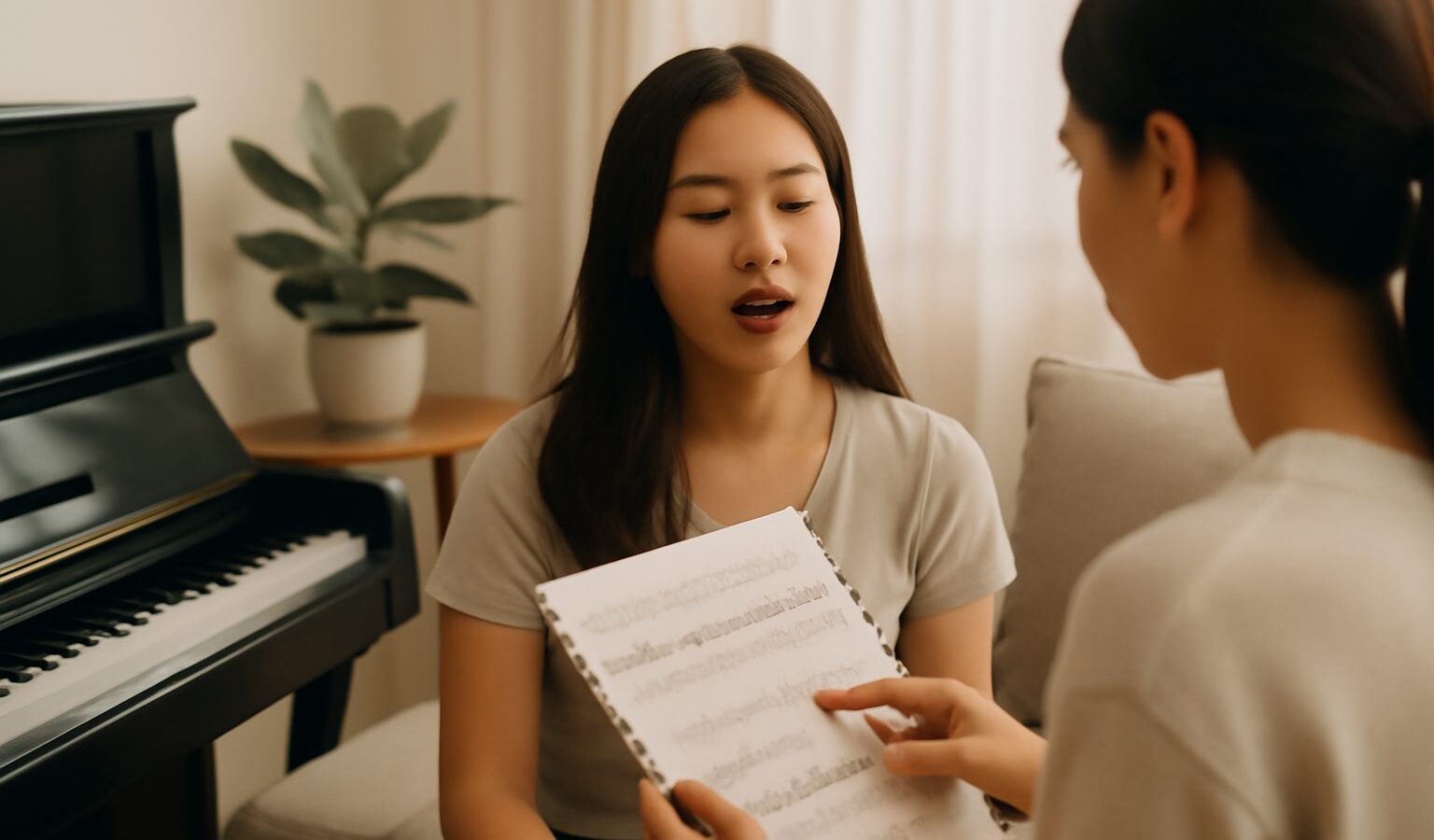
Almost everyone can sing better than they think. If you can talk, hum and match a tune roughly, you already have the raw material. Learning to sing is mostly about training your ear, your breath and your habits, then giving them time to settle. You do not need a golden voice, expensive gear or a music degree to start, and you certainly do not need to have grown up performing. This guide walks a complete beginner through the basics, with practical tips for practising at home in Singapore without driving your neighbours up the wall.
The good news is that the voice is an instrument you carry everywhere. That means you can practise in the shower, on the walk to the MRT, or quietly in your room. The trick is to practise a little and often, rather than belting for an hour once a fortnight and wondering why nothing improves.
Start With Breath and Posture
Singing runs on air, so breath is the foundation. Most beginners breathe shallowly into the chest, which leaves them straining and running out of puff mid-phrase. Instead, aim for low, relaxed breathing, where your belly gently expands as you breathe in and your shoulders stay still. Singers often call this breath support, which simply means using a steady, controlled stream of air rather than a rushed gasp.
Try this: place a hand on your stomach, breathe in slowly through the nose, and feel your hand move outward. Then hiss out on a long, even “sss” and try to make it last. Keep the air steady, not fast at the start and dying at the end. That evenness is what carries a note.
Posture matters just as much. Stand or sit tall, with your chest open, chin level and shoulders loose. Slouching over your phone or crunching your neck to read lyrics squeezes the very space your breath needs. A few pointers that help:
- Keep your feet about hip width apart if standing.
- Let your jaw hang loose rather than clenching it.
- Imagine a string gently lifting the crown of your head.
- Relax your tongue, which loves to tense up when you concentrate.
None of this needs to feel stiff or military. Comfortable and open is the goal, not rigid.
Warm Up Before You Sing
You would not sprint without stretching, and your voice is no different. A short warm-up wakes up the muscles, eases you into your range and lowers the risk of strain. Five to ten minutes is plenty when you are learning to sing, and it makes the rest of your practice sound and feel better.
A simple routine looks like this. Begin with gentle humming, sliding slowly up and down a comfortable range. Move on to lip trills, where you blow air through loosely closed lips to make a “brrr” sound while gliding through pitches. Then try singing an easy five-note scale on “ah” or “ee”, starting low and creeping higher only as far as feels easy. Never push into notes that hurt or make you squeak painfully.
Warm-ups double as ear training. As you slide between notes, listen for whether you are landing where you intended. Recording yourself on your phone and playing it back is one of the fastest ways to hear what is really happening, as opposed to what you think is happening inside your head.
Train Your Ear and Find Your Pitch
Singing in tune, or on pitch, is a skill you build, not a gift you are born with. Pitch simply means how high or low a note is, and matching pitch means singing the same note you hear. If you struggle here, you are not tone deaf, a label that applies to very few people. You most likely just need more practice connecting your ear to your voice.
A free tuner app or a keyboard app on your phone is a handy tool. Play a single note, hum it back, and check whether you match. Start in the middle of your range where control is easiest, then expand outward. Singing along with recordings helps too, but choose songs that sit comfortably in your range rather than pieces that force you to strain for every chorus.
Here is a comparison of habits that tend to help against ones that hold beginners back.
| Situation | Helpful habit | Habit to avoid |
|---|---|---|
| Matching a note | Hum softly first, then open to a vowel | Belting loudly and hoping |
| Choosing songs | Pick keys that fit your range | Forcing a favourite song too high |
| Checking progress | Record and listen back honestly | Only judging while you sing |
| Reaching high notes | Ease up and stay relaxed | Pushing harder and tensing up |
Over weeks, this ear-to-voice link strengthens. You start to hear when you are flat or sharp and correct it almost automatically.
Practise Kindly at Home in Singapore
Living in an HDB flat or a shared home means being mindful of noise, especially in the evenings. You can still make real progress. Practise breathing, humming and lip trills quietly at almost any time, since they are gentle on the ears. Save fuller singing for daytime hours when a bit of sound is less likely to bother anyone, and keep windows in mind if you live close to neighbours.
If you want feedback, Singapore has a healthy spread of options. Community centres, private studios and independent vocal coaches run beginner-friendly lessons, and some teach online, which suits shy starters. A good teacher speeds things up by catching bad habits early, though plenty of people make solid progress with careful self-study and free lessons online. Whatever route you choose, look for guidance that keeps your voice relaxed rather than pushing for big, dramatic sounds too soon.
A workable weekly plan for a beginner might be:
- Three or four short sessions of ten to twenty minutes each.
- A warm-up at the start of every session, without exception.
- One or two songs you genuinely enjoy, sung within a comfy range.
- A quick recording now and then to track your progress.
Consistency beats intensity every time. Little and often keeps your voice fresh and your motivation high.
Keep It Enjoyable and Give It Time
Progress in singing is rarely a straight line. Some days your voice feels free and easy, and other days it feels stubborn, often depending on sleep, hydration and stress. That is normal. The singers who improve are the ones who keep turning up, stay curious and treat mistakes as information rather than failure.
Sing songs you love, not just exercises. Join a friend for karaoke, hum along to the radio, or sing while you cook. The more singing feels like play, the more you will do it, and the faster you will grow. Learning to sing is a long, rewarding game, and the only wrong way to play it is to expect perfection overnight.