

Wellness is a lasting interest, not a passing fad, and that makes a health store in Singapore an appealing business to build. People want vitamins, protein, natural products, and honest guidance on what to take. But this is also one of the more regulated corners of retail, because you are selling things people put in their bodies. This guide covers the practical steps, the compliance you cannot skip, and the honest realities of margins and effort.
Decide What You Actually Sell
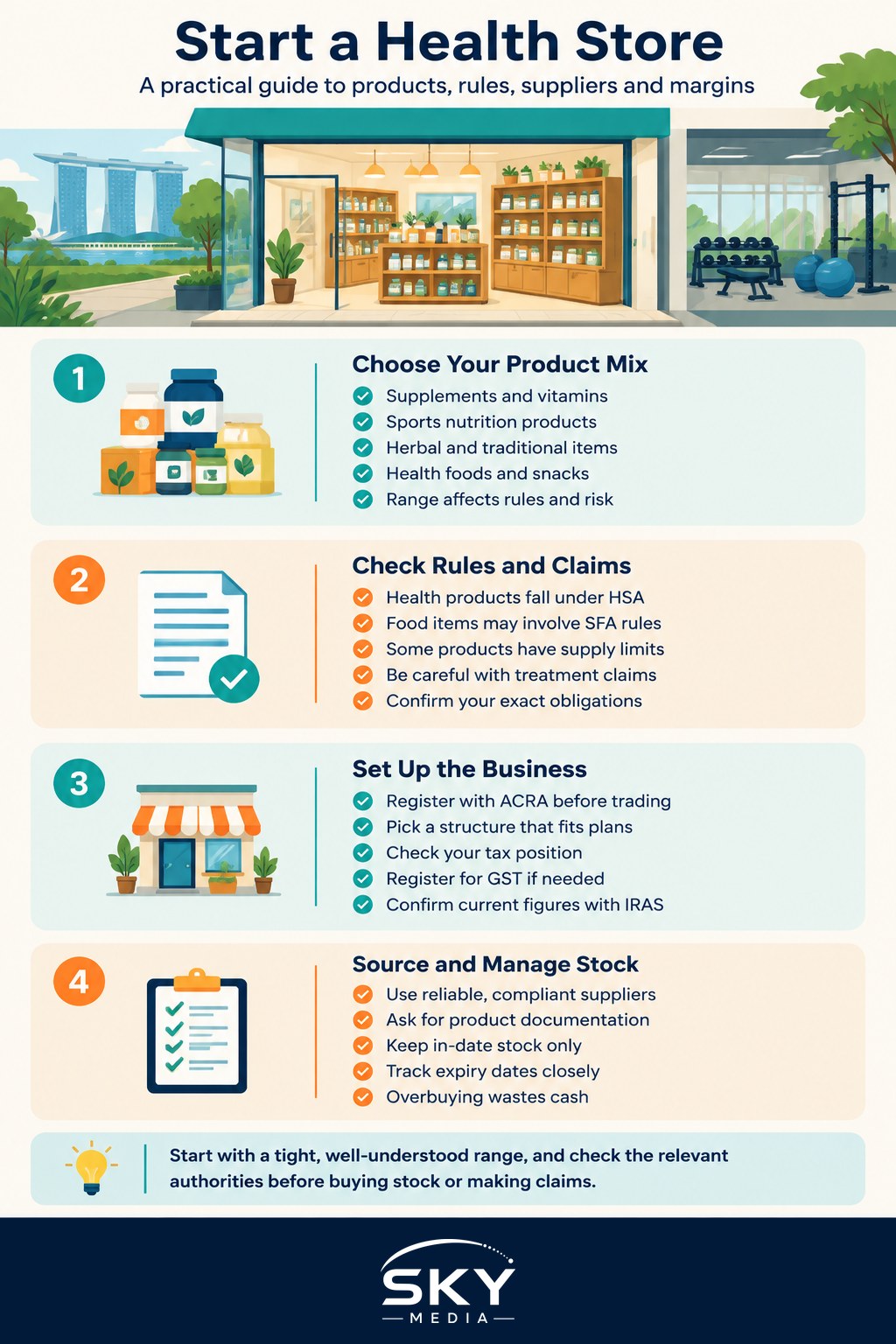
“Supplements and health store” covers a wide range, and the exact mix shapes your rules, your suppliers, and your risk. You might stock general supplements and vitamins, sports nutrition, traditional or herbal products, health foods and snacks, or a blend of these. Each category carries different regulatory expectations, so map your range before you commit to leases or bulk orders.
Two things matter most at this stage. First, the regulatory line: health products in Singapore fall under the Health Sciences Authority (HSA), and if you also sell food items such as health snacks, drinks, or certain functional foods, food-safety rules under the Singapore Food Agency (SFA) can apply too. Treat everything here as general information, not professional advice, and confirm exactly which rules apply to your specific products with the relevant authority before you buy stock or make any claim on a label. Requirements change and depend on the product.
Second, your positioning. A no-frills value shop competes on price and convenience. A curated, advice-led store competes on trust and knowledge. The second is harder to run but easier to defend, because it is not just a race to the cheapest tub of protein.
Product Rules, Licensing and Claims
This is the part that separates a real health store from a risky one. Supplements and other health products are regulated by HSA, and there are rules about what may be imported, sold, and how it can be described. Some products need to meet specific requirements before they can be supplied, and certain ingredients or claims are restricted. Do not assume a product is fine to sell just because you can buy it overseas. Check the specific requirements and any dealer or import obligations with HSA for your exact products, because this is not something to guess at.
Marketing claims deserve special care. Saying a product treats, cures, or prevents a disease can cross into regulated territory very quickly, and getting this wrong is both a legal and a trust problem. Keep claims accurate and grounded, and verify what you are allowed to say with the authority. Nothing in this article is legal advice, so for labelling, import, and advertising questions, go to HSA or a qualified adviser.
On top of product rules, the usual business basics apply. Register with ACRA before you trade and choose a structure that fits your plans. Understand your tax position and, if turnover crosses the threshold, register for GST, confirming current figures with IRAS. Our overview of business licences and permits helps you see the wider picture, but your specific licensing must be checked with the authority.
Sourcing, Suppliers and Stock
Reliable suppliers are the backbone of a health store. You want partners who can prove their products meet the relevant standards and who supply consistent, in-date stock. Ask for documentation, understand shelf lives, and never build your range around a supplier who cannot answer basic compliance questions. Good supplier relationships also protect your cashflow, so our guide to managing suppliers and vendors is worth reading before you sign anything.
Stock management matters more here than in many shops because products expire. Overbuy and you throw money away when things pass their date; underbuy and you disappoint regulars. A simple, disciplined inventory management system that tracks expiry, not just quantity, will save you real money over a year.
Location, Margins and the Honest Picture
Where you set up shapes your economics. A heartland unit near a gym, clinic, or busy transport node can work well and costs far less than a mall. Many owners also run an online store alongside the physical one to widen reach, which spreads fixed costs across more sales.
Be realistic about margins. Branded supplements can be competitive and price-transparent, which squeezes what you make per tub, while your own curated or lesser-known lines may earn more but need you to build trust first. Rent, manpower, and expiring stock all eat into thin margins, so watch your numbers closely. Our piece on pricing your products helps you price for a real margin rather than a hopeful one.
Anything here is general information, not financial, legal, or health advice. Speak to a qualified accountant about your numbers, a lawyer or corporate service provider about structure and contracts, and HSA, SFA, IRAS, and ACRA about the rules that apply to you. A health store can be a steady, meaningful business, but it rewards compliance, careful stock control, and genuine knowledge far more than hype. Start with a tight, well-understood range, get your licensing right, and grow only as fast as your cashflow and your customers’ trust allow.
Frequently Asked Questions
Can I sell supplements online from home without a shop? The product rules from HSA apply wherever you sell, whether online or in a shop. Check the requirements for your products, including any dealer or import obligations, before you list anything. Selling from home also brings housing rules and storage considerations.
What can a health store say about a product on its label or website? Keep claims accurate and avoid saying a product treats, cures or prevents a disease, as this can cross into regulated territory. Use only wording you can support. Check what claims are allowed for your specific products with HSA before printing labels or advertising.
Should I employ a pharmacist or nutritionist in a health store? It depends on the products you sell and the advice you plan to give. Qualified staff can build trust, but they do not remove your responsibility to follow the rules. Check with HSA whether any professional requirements apply to your range and services.
How do I handle customer complaints about side effects? Take them seriously, record the details and advise the customer to see a doctor or pharmacist if they are unwell. Do not diagnose or give medical advice yourself. Keep supplier and batch records so you can trace the product and report concerns to the supplier or HSA.
What are the risks of stocking imported or parallel-import supplements? Imported products may not meet local requirements, and authenticity and storage conditions can be hard to verify. Selling something that is not allowed could create legal trouble. Ask suppliers for documents and confirm with HSA that each product can be lawfully supplied before you stock it.
Official sources: Health Sciences Authority (HSA)
Further reading: Selling Health Supplements in Singapore: HSA Rules for Retailers and Online Sellers