

If breakouts turn up on your back, shoulders or chest rather than your face, you are far from alone, and it is nothing to feel self-conscious about. Back acne, sometimes called bacne, is simply acne in a spot that sees a lot of sweat and friction. In a place as warm and humid as Singapore, where a short walk can leave your shirt damp, these areas are under pressure most of the day. The good news is that gentle, consistent care usually helps, and you do not need a complicated routine to feel more comfortable in your skin.
This is general information to help you care for your skin, not medical advice or a diagnosis. If your breakouts are painful, deep and cystic, spreading, or simply not settling with sensible care, please see a doctor, dermatologist or pharmacist.
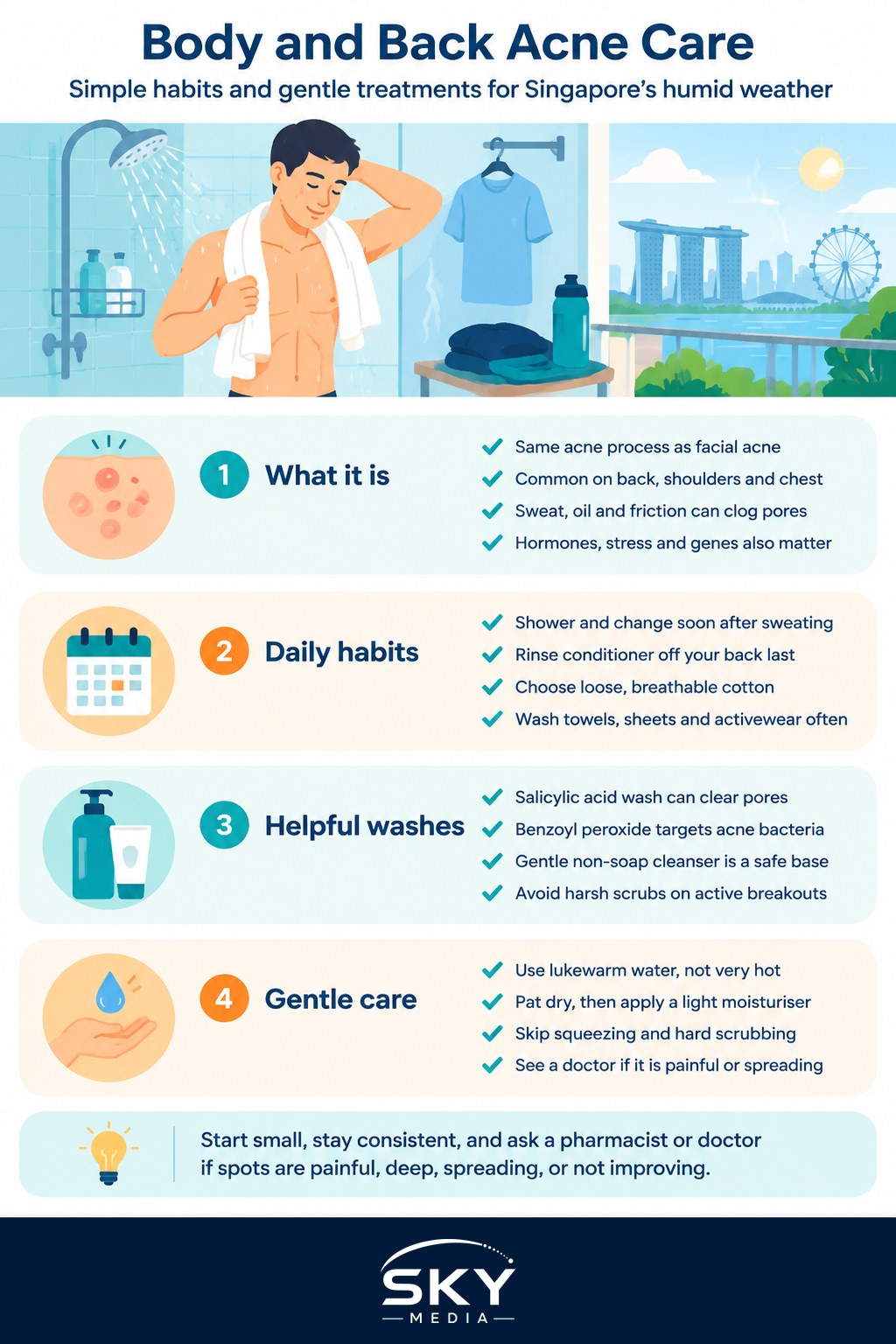
What Body and Back Acne Actually Is
Body acne forms the same way facial acne does. A hair follicle gets blocked with dead skin cells, oil and sometimes trapped sweat, and bacteria that live on everyone’s skin then play a part, which leads to the bumps, whiteheads and inflamed spots you can feel.
The back, shoulders and chest have more oil glands than many other parts of the body, and they are constantly rubbed by clothing, bag straps and gym gear. That mix of oil, friction and warmth is why breakouts settle there so readily. Hormonal shifts, stress and genetics all influence how much you get, which is why two people with similar habits can have very different skin.
It helps to know that back acne is common and treatable, and that it rarely reflects poor hygiene. Scrubbing harder is not the answer and often makes things angrier. The aim is to reduce the conditions that clog pores while being kind to the skin barrier.
Why the Singapore Climate Makes It Worse
Our year-round heat and humidity keep skin damp for longer than in cooler places. Sweat itself does not directly cause acne, but when it mixes with oil and sits under tight clothing, it creates a warm, occluded environment that helps pores clog and bacteria multiply. Commuting in the heat, an outdoor lunch run, or a workout can all leave you sweaty for hours if you do not rinse off and change.
Tight synthetic activewear traps that moisture against your back and chest, and sitting in a damp shirt after being caught in the rain gives breakouts even longer to brew. Aircon offers relief, but moving between humid outdoors and dry, chilled offices can leave skin confused and reactive. None of this means you have done anything wrong; it simply means the everyday habits below matter more here than they might elsewhere.
Daily Habits That Calm Body Acne
Small, repeatable changes tend to do more than any single miracle product. A few sensible habits go a long way in this climate.
- Shower and change soon after sweating rather than sitting in damp gym clothes or a wet shirt.
- Rinse your back last so shampoo and conditioner residue washes off rather than lingering on the skin.
- Choose loose, breathable cotton where you can, and wash activewear after every session.
- Change and wash pillowcases, bedsheets and towels regularly, since they collect oil and sweat.
- Avoid heavy, greasy body lotions on breakout-prone areas; reach for lighter, non-comedogenic formulas.
- Resist squeezing or scrubbing spots, which can worsen inflammation and leave marks.
Consistency matters more than intensity. Give any new habit a few weeks before deciding whether it helps, and change one thing at a time so you can tell what is actually making a difference.
Ingredients and Washes, Compared
Body acne responds to many of the same ingredients as facial acne, usually in wash-off form so they are practical for larger areas. A medicated body wash left on for a short while before rinsing is a common approach. The table below sets out how a few widely used options are generally understood, so you can have a more informed chat with a pharmacist.
| Option | How it is generally used | Good to know |
|---|---|---|
| Salicylic acid wash | Helps clear dead skin from inside pores | Can be drying; start a few times a week |
| Benzoyl peroxide wash | Targets acne-causing bacteria | May bleach coloured towels and fabrics |
| Gentle non-soap cleanser | Everyday washing without stripping skin | A sensible base for most people |
| Rich, fragranced body scrub | Marketed for smoothing skin | Harsh scrubbing can irritate active breakouts |
Whatever you try, patch test on a small area first, introduce one product at a time, and go gently. If you use exfoliating acids on your body, wear daily broad-spectrum sunscreen on any skin that sees the sun, because strong UV reaches you here even on cloudy days. A pharmacist can suggest suitable over-the-counter options and explain how often to use them for your skin.
Gentle Care and What to Avoid
It is tempting to attack body acne with the strongest thing you can find, but a stripped, irritated barrier tends to break out more, not less. Wash with lukewarm water rather than very hot, pat skin dry instead of rubbing, and follow with a light moisturiser so the skin stays comfortable. Fragrance-free formulas are often kinder to reactive skin.
Be wary of very abrasive loofahs, stiff brushes and daily scrubbing, all of which can inflame active spots and spread bacteria. Sunburn and picking both tend to leave dark marks that linger for months in our climate, so protecting and leaving the skin alone is part of the cure. If marks are your main worry, patience and sun protection do more than any quick fix.
When to See a Doctor or Pharmacist
Reach out for professional help if your breakouts are painful, deep and cystic, leaving scars, spreading, or simply not improving after several weeks of sensible care. A doctor or dermatologist can look properly, rule out look-alike conditions such as folliculitis, and guide treatment that suits your skin. There is no need to struggle on alone or feel embarrassed; this is a common reason people visit a clinic.
A pharmacist is a great first port of call for everyday over-the-counter options and honest advice on what is worth trying. If back acne is affecting your confidence or your sleep, that is reason enough to seek help sooner. A short consultation at a pharmacy or a MOH-licensed clinic can save you months of guesswork and help you land on a routine that fits both your skin and Singapore’s weather.
Explore more
Caring for the skin on your body is a whole-routine effort, so a few related reads help. See our guide to body exfoliation and bumpy skin for gentle smoothing without irritation, and our take on deodorant versus antiperspirant for staying fresh in the humidity. If cool water is part of your recovery, cold showers and contrast therapy is a sensible next read.
Frequently Asked Questions
Does wearing a backpack or bag strap cause back acne? It can contribute, since friction, trapped sweat and warmth help clog pores where straps rub. Wash straps and bags regularly, wear breathable layers underneath and change out of sweaty shirts promptly. The cause is usually a mix, not the bag alone.
Is benzoyl peroxide body wash safe on a coloured shirt or towel? Use it with care, because benzoyl peroxide may bleach coloured towels and fabrics. Rinse thoroughly and let skin dry before dressing, or use white towels and sheets. A pharmacist can explain how long to leave it on and how often.
Why do my body pimples leave dark marks? Squeezing, picking and sunburn all tend to leave dark marks that can linger for months in our climate. Leave spots alone and wear broad-spectrum sunscreen on exposed skin. If marks are your main worry, a dermatologist can discuss options.
How do I tell back acne from folliculitis? They can look alike, so it is hard to tell by eye. Folliculitis is inflamed hair follicles, often with small itchy or sore bumps around hairs. A doctor or dermatologist can examine the skin and advise treatment, especially if spots are painful or spreading.
Should I change my bedsheets more often if I have body acne? Yes, washing pillowcases, bedsheets and towels regularly helps, since they collect oil and sweat. This is a cheap, low-effort habit that supports the rest of your routine. Change one thing at a time so you can tell what makes a difference.
Further reading: Benzoyl Peroxide for Acne