
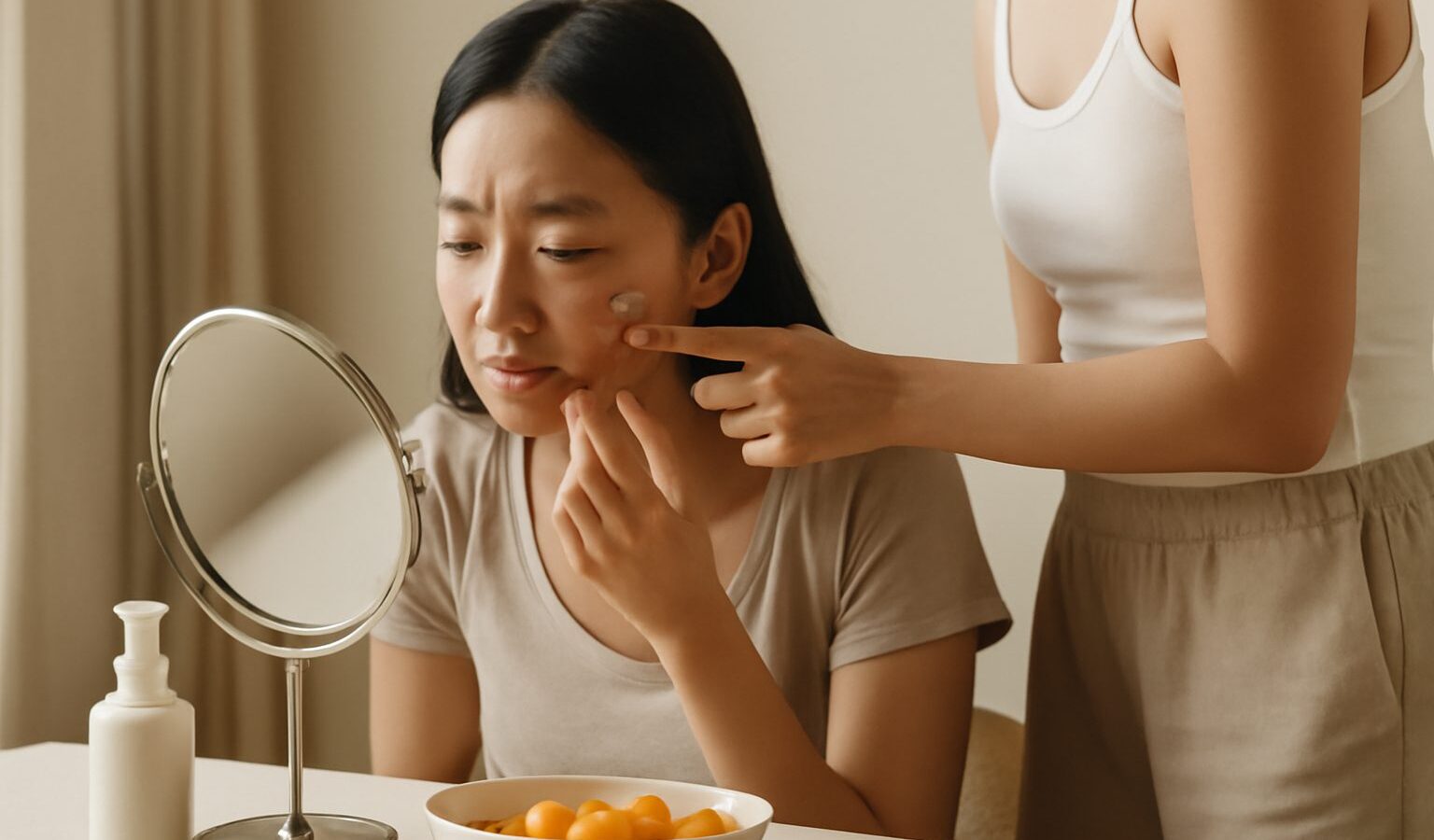
If your skin keeps throwing up small, itchy, uniform bumps that no spot cream seems to fix, you might not be dealing with ordinary breakouts at all. Fungal acne looks a lot like regular acne, but it is a different problem with a different cause, which is exactly why the usual acne products often make no difference. In a climate as warm and sweaty as Singapore’s, telling the two apart is worth the effort, because the wrong routine can keep the cycle going for months.
This is general information to help you understand what might be happening on your skin. It is not a diagnosis or medical advice. If your breakouts are painful, spreading, or simply not settling, please see a doctor, dermatologist or pharmacist.
What Fungal Acne Actually Is
Despite the name, fungal acne is not true acne at all. The clinical term is malassezia folliculitis, and it happens when a yeast that naturally lives on everyone’s skin grows more than usual and irritates the hair follicles. That yeast thrives in warmth, moisture and oil, which is why Singapore’s year-round heat and humidity, plus a lot of sweating, can tip the balance.
Regular acne, by contrast, starts when a follicle gets blocked with dead skin cells and oil, and bacteria then play a part. Both conditions show up as bumps, so it is easy to see why people reach for the same treatments. The trouble is that acne products target a different cause, so they do little for a yeast-driven problem and can sometimes leave skin more irritated.
Fungal acne is common and nothing to be embarrassed about. It is simply your skin’s ecosystem tipping out of balance, often nudged along by heat, trapped sweat and heavy occlusive layers.
How to Tell Them Apart
You cannot always be certain by looking, and only a professional can confirm it, but there are patterns that hint at which one you are dealing with. Fungal acne tends to be strikingly uniform: lots of small bumps of a similar size, often on the forehead, hairline, chest, upper back and shoulders. It is frequently itchy, which regular acne usually is not.
Regular acne is more varied. You get a mix of blackheads, whiteheads, larger inflamed spots and the occasional deeper, tender lump, and it favours the classic oily zones like the nose, chin and jaw.
Here is a simple side-by-side to help you spot the difference.
| Feature | Fungal Acne | Regular Acne |
|---|---|---|
| Underlying cause | Yeast (malassezia) in the follicle | Blocked pores, oil and bacteria |
| Appearance | Small, uniform bumps of similar size | Mixed blackheads, whiteheads, larger spots |
| Itch | Often itchy | Usually not itchy |
| Common spots | Forehead, hairline, chest, back, shoulders | Nose, chin, jaw, cheeks |
| Response to acne creams | Little to no improvement | Often improves gradually |
| Triggers | Heat, sweat, humidity, heavy occlusion | Hormones, oil, clogged pores |
One of the biggest clues is history. If you have diligently used blackhead and spot treatments for weeks with no real change, and the bumps are itchy and uniform, fungal acne becomes more likely. That is your signal to rethink the approach rather than pushing harder with the same products.
Why Singapore’s Climate Makes It Worse
Malassezia loves exactly the conditions we live in. Commuting in the heat, working out, or simply walking to lunch leaves skin damp with sweat, and that lingering moisture is a comfortable home for yeast. Sitting in sweaty gym clothes or a damp shirt after being caught in the rain gives it even longer to flourish, which is why the chest and back are such common sites.
Heavy, rich moisturisers and thick sunscreens can also trap heat and feed the problem for some people, especially on already humid skin. Hair products that drift onto the forehead and hairline are another frequent culprit. None of this means you should skip sun protection or moisturiser, both of which still matter every day; it means choosing lighter, breathable formulas that suit the weather.
Calming Fungal Acne Sensibly
The general aim is to reduce the conditions that let the yeast thrive, and to be gentle while your skin settles. A few practical habits help.
- Shower and change promptly after sweating rather than sitting in damp clothes.
- Choose lightweight, non-greasy moisturisers and sunscreens made for humid weather.
- Keep hair products away from your hairline and rinse your back last in the shower so residue washes off.
- Wash workout gear, pillowcases and towels regularly, and let skin breathe in loose, natural fabrics.
- Avoid piling on rich oils and heavy occlusive layers while things are flaring.
Some over-the-counter washes containing anti-fungal ingredients are commonly used, left on for a short while like a mask before rinsing. A pharmacist can point you to suitable options and explain how to use them. Whenever you introduce anything new, patch test first, and keep wearing broad-spectrum sunscreen daily, because strong UV reaches your skin here even on cloudy days.
Be patient, and change one thing at a time so you can tell what is helping. Skin conditions rarely turn around overnight, and resisting the urge to scrub or overload your routine is part of the fix.
When to See a Professional
If your bumps are painful, spreading, weeping, or clearly getting worse, or if weeks of sensible care bring no change, it is time to see a doctor or dermatologist. They can look properly, sometimes with a simple test, confirm what is going on, and guide treatment. This matters because fungal acne and regular acne need different approaches, and guessing wrong wastes time and money.
You should also seek advice sooner if you are unsure, if breakouts are affecting your confidence, or if you have tried self-care without success. There is no prize for toughing it out. A short consultation at a pharmacy or a MOH-licensed clinic can save you months of frustration and help you land on a routine that actually fits your skin and our climate.
Explore more
Once you understand what is behind your bumps, the right basics make a real difference. See our guide to choosing a moisturiser for humid weather and how to go about patch testing new skincare before you commit. If pores are also a concern, our take on treating blackheads and large pores is a sensible next read.